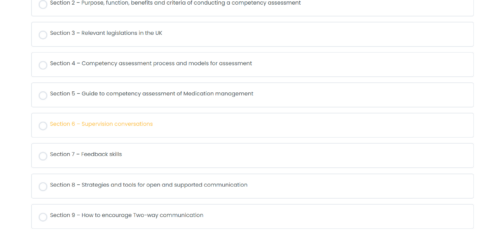
- Explain the purpose and functions of assessing competency
- Describe the benefits of assessing competency
- Understand how to prepare for the competency assessment
- Understand what a competency assessment template or checklist is
- Explain how to conduct competency assessments
- Explain how to document the competency assessment and what should be included in it
- Describe how to coach staff through supportive conversations
- Describe the strategies and tools required for open and supported discussions
- Understand how to encourage Two-Way Communication
- How to provide effective feedback
- Understand how to deal with conflicts in supervision
- Describe what is positive reinforcement and how to use it
- Confidently demonstrate a competency assessment
-
 Prerequisite for this course is the Advanced Medication Management (Face to Face) course. Aim: To confidently complete competency assessments and provide constructive feedback sensitively and supportively. Objectives: By successfully completing this course you will be able to:
 -
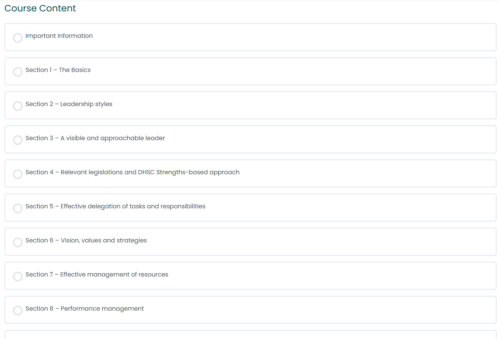
 Aim: To develop effective leaders who will lead and encourage continuous quality improvement. Objectives: By successfully completing this course you will be able to:
- Describe the term leadership and the qualities of a leader
- Understand different leadership styles and apply appropriate approaches based on situational needs.
- Understand the importance of being visible and approachable as a leader
- List the relevant legislation in the UK
- Learn how to effectively delegate tasks and responsibilities
- Describe how staff can understand what the vision, values and strategies of your service are, and how they can achieve them in their role
- Understand how to effectively manage resources and identify the appropriate type and level of resources required to deliver safe and effective service
- Describe how to identify and address poor or variable staff performance
- Learn how to identify the strengths, interests, and developmental needs of staff members
- Understand how to identify and address staff development needs
- Learn techniques for setting SMART goals for staff development
- Understand why providing constructive feedback and recognition can support staff in their development journey
- Develop skills in providing constructive feedback during supervision sessions
- Learn how to respond to feedback in a timely and professional manner
- Demonstrate effective communication and interpersonal skills to support and motivate staff members
- Understand what is active listening and empathetic communication and how to practice it during supervisory interactions
- Understand the importance of promoting staff wellbeing and resilience
- Understand how to support staff to manage their own health, care and wellbeing and recognising the importance of self-care in leadership roles
- Describe how to manage the impact of their emotions and behaviour
- Understand importance of building and maintaining strong relationships with all staff, including clients, families, and community partners
- Understand importance with working in collaboration with others in and across networks
- Understanding the causes of conflict and how to effectively manage it
- Develop skills in active listening, effective communication, and problem-solving
- Develop skills in active listening, empathy, and effective communication
- Develop skills in critical thinking, analysis, and decision-making
- Understand the importance of considering multiple perspectives and gathering information before making decisions and encouraging other have the confidence and opportunity to contribute.
- Learn how to make ethical and informed decisions that align with the values and goals of the organisation and respecting the culture beliefs the individual
- Understand the importance of effectively managing comments and complaints
- Understand the importance of encouraging improvement and innovation to create continuous service improvement