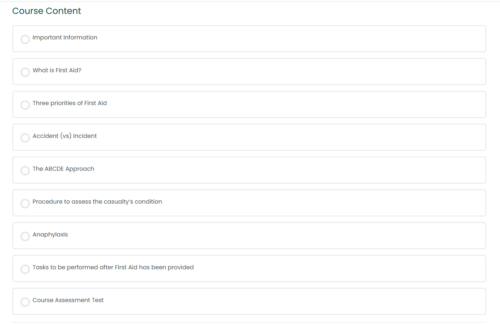
- Describe what is meant by First Aid
- Explain about the 3 priorities of First Aid
- Describe the difference between an accident and an incident
- Describe the procedure to assess the casualty’s condition
- Explain how to follow the Resuscitation Council’s guidelines, including the ABCDE approach
- Explain how to help an unconscious but breathing person
- Explain how to help an unconscious and not breathing person, including cardiopulmonary resuscitation (CPR)
- Identify what a defibrillator is, and how to use an automated external defibrillator (AED)
- Explain how to provide first aid for wounds, bleeding, burns, scalds, choking, seizures, shock, and issues with blood circulation
- Identify the signs of 3 heart conditions
- Identify the signs of a stroke
- Describe the symptoms, triggers, and action plan to help anyone affected by anaphylaxis
- Identify the essential tasks to be performed after providing any form of first aid
-
 Aim: To understand how to preserve life, prevent the situation worsening and promote recovery. Objectives: By successfully completing this course you will be able to:
 -
 Aim: To create a proactive safety culture within the workplace through prompt reporting and thorough investigation of all the accidents and incidents Objectives: By successfully completing this course you will be able to:
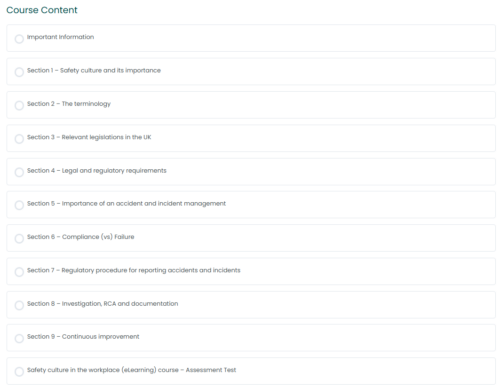
- Describe why is it important to develop a safety culture within the workplace
- Understand incidents, accidents, errors and near misses
- List all the relevant legislations in the UK
- Identify legal and regulatory requirements related to the reporting of accident and incidents
- Describe the consequences of a failure to report an accident or incident
- Explain the process of reporting the accidents and incidents within the workplace
- Explain how to a conduct thorough investigation and identifying the root cause(s)
- Understand the importance of maintaining accurate records of accidents and incidents
- Describe how to engage in continuous improvement by reviewing and updating accident and incident management procedures regularly
-
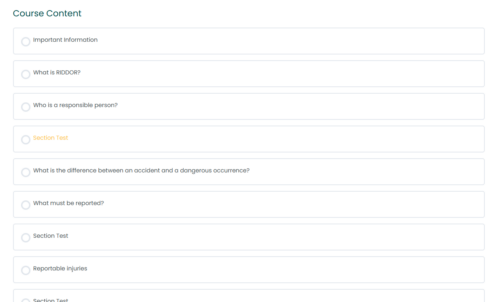
 Aim: To be able to understand the purpose of RIDDOR and comply with this regulation. Objectives: By successfully completing this course you will be able to:
- Describe what RIDDOR is
- Describe what a responsible person is, according to RIDDOR
- Identify the difference between an accident and a dangerous occurrence
- Describe what RIDDOR states must be reported
- Describe when reporting must be done
- Describe which records need to be stored and why
- Describe your role as an employee in this process
-
 Aims: To know how to keep yourself and others safe within the work place and how to maintain a safe environment. Objectives: By successfully completing this course you will be able to:
- Explain how to successfully complete a risk assessment
- Describe what to do in the events of a fire
- Describe how to respond to accidents and sudden illness
- Describe how to carry out a primary survey
- Identify 5 ways to keep yourself and others safe within the work place
- Identify who to contact to report health and safety issues
- Identify 4 types of legislation relating to health and safety
- Describe the symptoms, causes and treatment of Legionnaires disease
- List 5 of your own responsibilities and 5 responsibilities of others within your work place