Aim:
To provide people with responsibility for providing care and support for an autistic person or people, but who could seek support from others for complex management or complex decision-making, with the knowledge and understanding required to support autistic children, young people, and adults.
Objectives:
By successfully completing this course you will be able to:
- Understand the spectrum of autism including abilities, disabilities, and spiky skills profiles
- Understand the importance of equal, timely access to autism assessment and diagnosis and some of the barriers to diagnosis
- Describe the legislations relevant to autism in the UK
- Describe quality care, person-centred support, and strategies to support autistic individuals
- Understand how to support autistic people to deal with change
- Understand how the behaviour of an autistic individual may indicate stress
- Understand how to interpret a change in an autistic individual’s presentation or behaviour
- List common issues faced by autistic people and describe how to support them
- Understand stimming
- Understand the activities that people with autism adopt to ‘self soothe’ or ‘self-regulate’ or just ‘calm down’
- Understand the common communication needs of autistic people
- Understand how health inequality affects autistic people and what are the main causes of it
- List the reasonable adjustments to be put in place to access health care and other services
- Understand the role of health action plans/health passports in signposting important adjustments
- Understand about the types of abuse which may be especially relevant for autistic people
- Understand that people with autism have the right to make decisions and know how to support them in this process
- Describe how to raise a safeguarding concern and where to get information and advice on Mental Capacity Act or Equality issues
- List your responsibilities as a care provider for an autistic person
- Understand the importance of working with others, including what role do family members, carers and supporters play in the lives of autistic people
- including what role family carers and supporters may play in the lives of autistic people
- Understand how to meet the needs autistic people in the workplace
Course Duration:
Face-2-Face session will be delivered at your location for up to 16 attendees. Cost of this course is for all 16 attendees.
eLearning: 3 hours.
Face to Face session: Equivalent to a one day course.
If you are looking to enroll more than one individual, please visit the Group Creation page HERE.

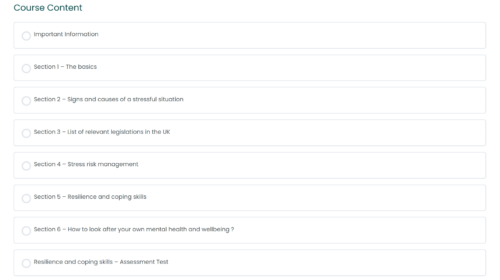
 Aim: To develop a clear understanding of the importance of resilience and coping skills when providing care and support Objectives: By successfully completing this course you will be able to: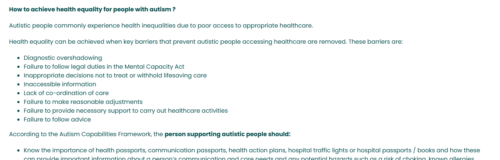
 Aim: To provide people with responsibility for providing care and support for an autistic person or people, but who could seek support from others for complex management or complex decision-making, with the knowledge and understanding required to support autistic children, young people, and adults. Objectives: By successfully completing this course you will be able to: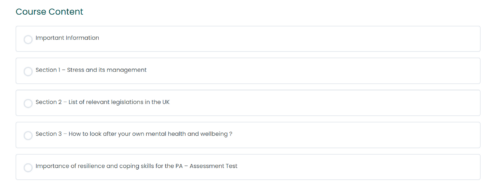
 Aim: To develop a clear understanding of the importance of resilience and coping skills in your role as a personal assistant Objectives: By successfully completing this course you will be able to: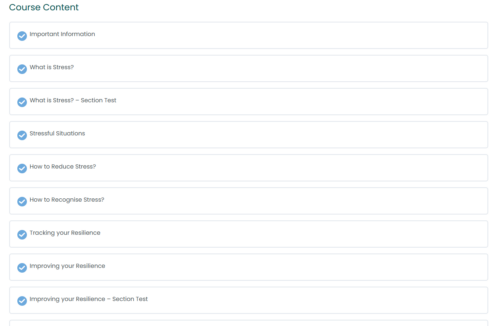
 Aim: To be able to manage your own levels of stress, and be able to gauge and increase your own resilience Objectives: By successfully completing this course you will be able to: