- Understand the fundamentals of dementia
- Describe the types and signs of dementia
- Explain the difference between dementia and other similar conditions
- List relevant legislation in the UK
- Describe the physical, psychological and emotional difficulties faced by people living with dementia
- Distressed Behaviour, possible reasons behind the and strategies to de-escalate them
- Describe how to deliver person-centred care to an individual with dementia
- Explain how to communicate effectively with people living with dementia
- Explain what is meant by “ living well ” and how to create dementia-friendly environments
- Describe the importance of providing effective care at present and in the future
-
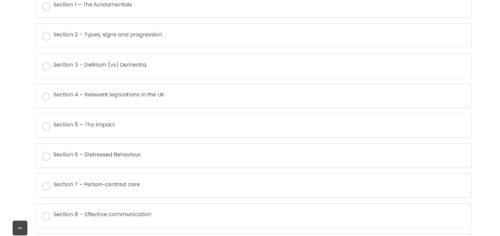
 Aim: A spotlight on understanding and accepting dementia and providing proactive support Objectives: By successfully completing this course you will be able to:
 -
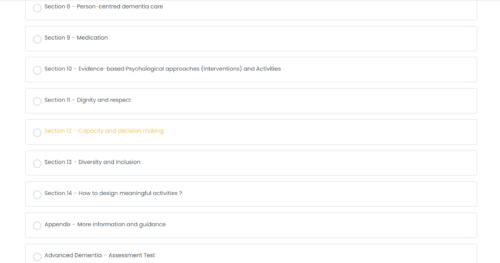
 Aim: To develop an advanced knowledge of dementia and provide the best outcomes for people living with it Objectives: By successfully completing this course you will be able to:
- Understand what dementia is and explain the importance of dementia awareness
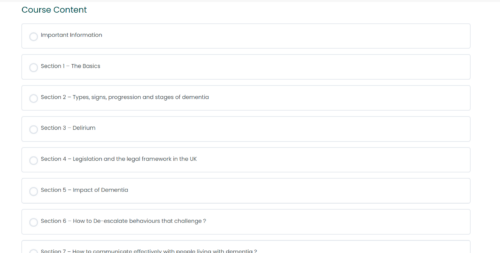
- Describe the types, signs, progression and stages of dementia
- Understand what is delirium and the symptoms associated with it
- Explain the difference between dementia and delirium
- Understand how dementia impacts an individual’s willingness to engage with others
- List all the relevant legislations and the legal framework in the UK
- Describe the physical, psychological and emotional problems faced by people with dementia
- Understand the issues around their wellbeing and quality of life
- Explain why people with dementia present certain behaviours
- Describe the triggers of those behaviours, along with strategies to de-escalate them
- Demonstrate the strategies and skills required to effectively communicate with people living with dementia
- Describe how to deliver person-centred care to an individual with dementia
- Understand the administration of medication to individuals with dementia using a person-centred approach
- Explain how to use evidence-based interventions to address cognitive and functional decline in people with dementia
- Understand how to maintain dignity, empower the individuals to make choices and maintain independence as much as possible
- Describe the ethical considerations in decision-making and capacity assessment
- Understand the importance of equality, diversity and inclusion in dementia care
- Explain how to develop empathy, compassion, and cultural sensitivity in dementia care practice
- Describe how to design meaningful activities to improve the engagement of individuals with advanced dementia
-
 Aim: To provide the best outcomes for people living with dementia. Objectives: By successfully completing this course you will be able to:
- Understand what dementia is and explain the importance of dementia awareness
- Describe the process of dementia identification, assessment, and diagnosis
- Explain about dementia risk reduction and prevention
- Describe what is person-centred dementia care
- Understand the importance of communication, interaction and behaviour in dementia care
- Explain the importance of health and well-being in dementia care
- Describe about the pharmacological interventions in dementia care
- Understand how to safeguard and promote the independence of people with dementia
- Explain the role of family and carers as partners in dementia care
- Describe the importance of equality diversity and inclusion in dementia care
- Understand the law, ethics and safeguarding in dementia care
- Understand what is end of life dementia care
- Explain about the research and evidence-based practice in dementia care
-

 Aim: To make you aware of mental health conditions, dementia, and learning disabilities, and the experiences people have with them. Objectives: By successfully completing this course you will be able to:
- Describe how a mental condition can change the needs of an individual
- Explain the importance of promoting positive mental health and wellbeing
- List 3 adjustments that you may need to make to personalise care delivery
- Recognise 3 early warning signs of mental health conditions, dementia, or learning disabilities
- Describe the relevant legislation
- Describe what mental capacity is and how it relates to the topic