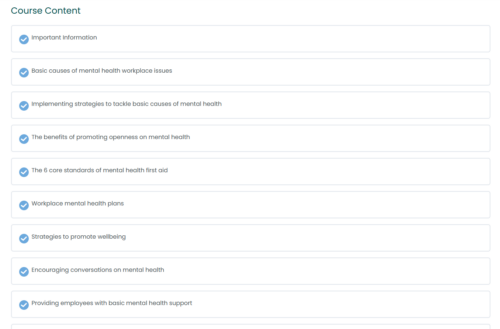
- Identify a minimum of 5 basic workplace causes of mental health issues
- Explain how to implement at least 5 strategies to tackle basic causes of basic mental health issues
- Describe the benefits of promoting openness about mental health
- Identify the 6 core standards of mental health first aid
- Explain how to create a workplace mental health plan
- List at least 6 strategies that you can implement to promote the wellbeing of all members of staff
- Identify at least 3 benefits of encouraging conversations about mental health
- Explain why it is important to provide employees with basic mental health support
- Identify at least 10 factors of the work environment of your team members that promote mental health
- Explain how to implement proactive opportunities for your team members to discuss their health and wellbeing, and the impact their work environment has on it, with their team leader(s)
- List at least 6 techniques for training individuals to be able to treat their colleagues in a way that does not negatively impact their mental health
- List at least 3 benefits of regularly monitoring the mental health of your team members
- List at least 3 methods of monitoring the mental health of your team members
- Explain what an annual wellbeing report is, and to know how to create one
-
 Aim: To ensure that all members of staff are supported in the workplace. Objectives: By successfully completing this course you will be able to:
 -
 Aim: To be able to support individuals with care and understanding, and reduce their need to self-harm Objectives:
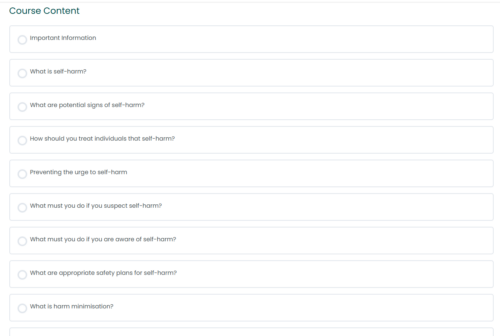
- To describe what self-harm is
- To identify at least 6 signs of self-harm
- To describe how to treat individuals that self-harm with care and compassion
- To describe your safeguarding duties if you suspect an individual is self-harming
- To be able to appropriately respond to signs of self-harm
- To describe your safeguarding duties if an individual is self-harming
- To describe how to deliver appropriate care after an individual has self-harmed
- To be able to describe what harm minimisation strategies are, and how they should be used
- To be aware of potential intervention strategies for long-term progress
-

 Aim: To make you aware of mental health conditions, dementia, and learning disabilities, and the experiences people have with them. Objectives: By successfully completing this course you will be able to:
- Describe how a mental condition can change the needs of an individual
- Explain the importance of promoting positive mental health and wellbeing
- List 3 adjustments that you may need to make to personalise care delivery
- Recognise 3 early warning signs of mental health conditions, dementia, or learning disabilities
- Describe the relevant legislation
- Describe what mental capacity is and how it relates to the topic