Aim: To gain a complete understanding of planning, monitoring, and management of nutritional consistencies.
Objectives:
By successfully completing this course you will be able to:
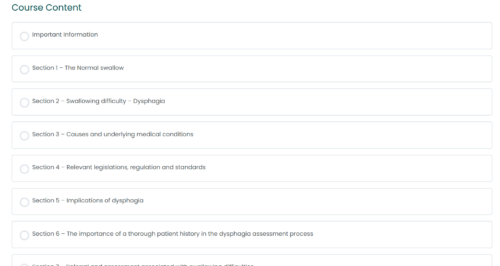
- Understand what is IDDSI, its impact, causes and consequences.
- Understand what is dysphagia
- Explain the risk factors of aspiration and choking and list some strategies to prevent them
- List the relevant legislations in the UK
- Understand the importance of safe management of food production for people affected with dysphagia
- Explain the process of assessment and screening of dysphagia
- Describe the signs and symptoms to identify dysphagia
- Explain importance of early detection of dysphagia
- Understand the importance of patient history in the dysphagia assessment process
- Understand what is diet modification
- Explain the food textures according to IDDSI standard
- Explain how to modify diets according to IDDSI standards
- Explain how to adapt food and drink textures
- Explain how to prepare and test food according to IDDSI standards – Theory only
- Demonstrate how to prepare drinks according to IDDSI standards – Theory and Practical
- Explain the importance of promoting independence and dignity of all the service users
- Understand the importance of proper positioning during meals
- List the equipment and assistive devices which can be used to support individuals with dysphagia
- Describe an overview of any specialised equipment used in this context
- Explain how to use and maintain dysphagia-specific equipment effectively
- Explain the need to gain education and training on safe swallowing strategies
- Understand what does a good eating and drinking care plan look like
- Demonstrate how you will complete the eating and drinking care plan effectively
- Understand the safe feeding techniques
- Understand how environmental factors impact safe swallowing
- Understand why is communication and collaboration important
- Explain how to communicate effectively with individuals and team members
- Understand the need to collaborate with other healthcare professionals
- Describe the importance of documentation and accurate record-keeping
- Explain the process of documentation of assessment results and recommended interventions
- Describe why you should regularly monitor and review the swallowing function and dietary tolerance of the individual
- Understand how to recognise and respond to choking incidents and implement emergency protocols
Course Duration:
Face-2-Face session will be delivered at your location for up to 16 attendees. Cost of this course is for all 16 attendees.
eLearning: 3 hours.
Face to Face session: Equivalent to a one day course.
If you are looking to enroll more than one individual, please visit the Group Creation page HERE.

 Aim: To gain a complete understanding of dysphagia management using IDDSI standards Objectives: By successfully completing this course you will be able to: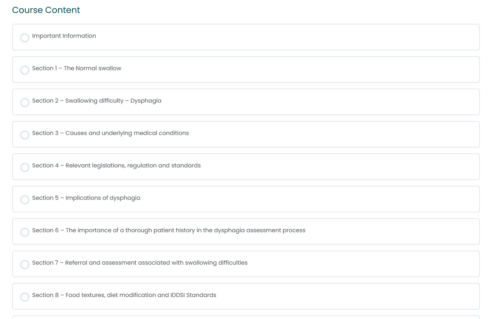
 Aim: To gain a complete understanding of planning, monitoring, and management of nutritional consistencies. Objectives: By successfully completing this course you will be able to: