Welcome to the Halo Staffing face to face course about dysphagia management using IDDSI standards.
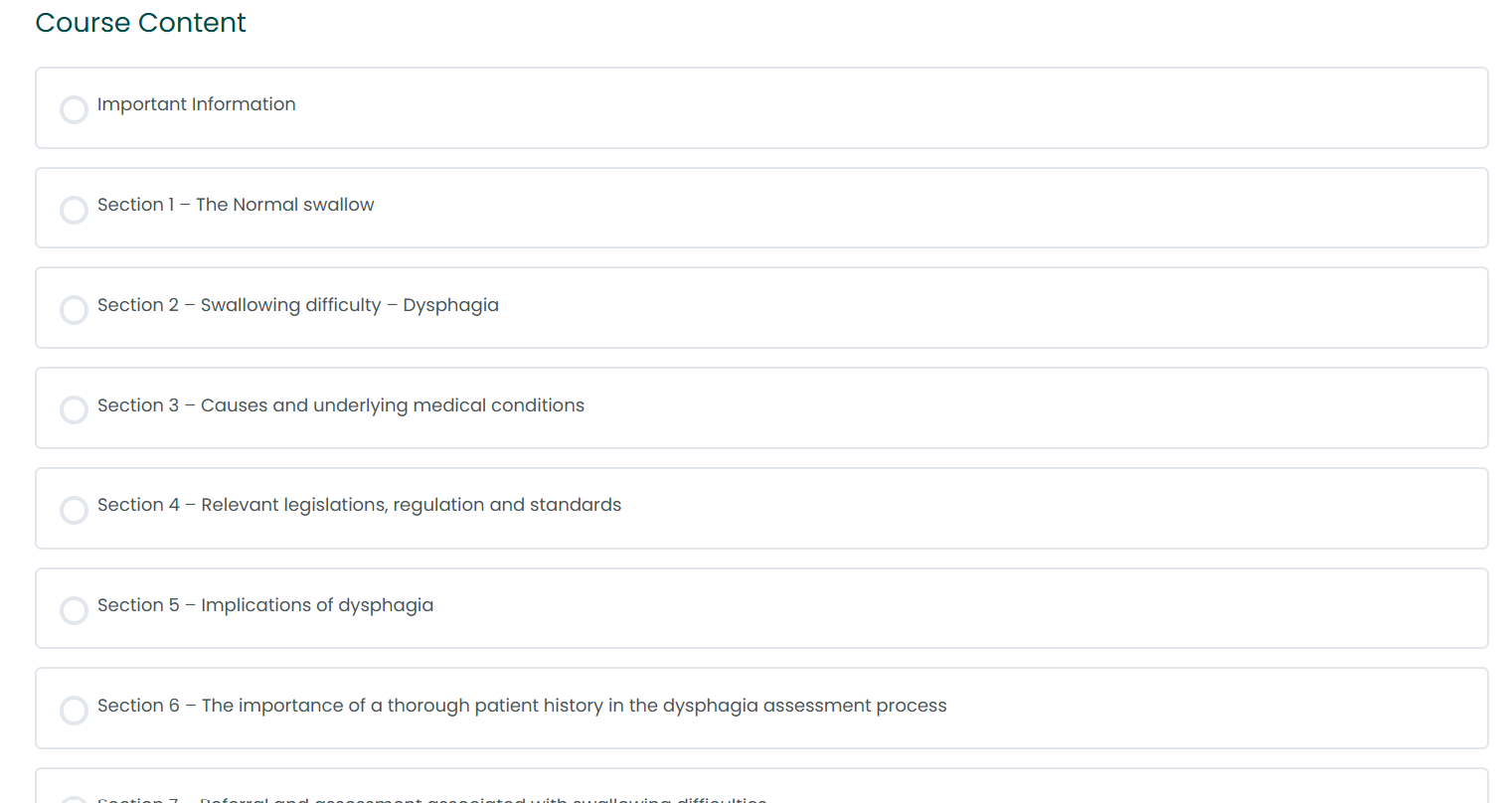
We will begin this course by establishing the difference between a normal swallow and an abnormal swallow.
This next section will be about the signs, symptoms, common causes and underlying medical conditions associated with dysphagia.
Having established that, we will inform you about the implications of dysphagia on a person’s health and wellbeing, here we will explain the risk factors of aspiration and choking and list some strategies to prevent them.
The next section will focus on the importance of maintaining adequate hydration and nutrition with safe and efficient swallowing function.
We will then inform you about the importance of early detection of dysphagia, individual’s diet history in the dysphagia assessment, the process of assessment and screening of dysphagia.
The next section will list all the relevant legislations in the UK.
At this point we will explain the importance of safe management of food production for people affected by dysphagia.
The following section will introduce the International Dysphagia Diet Standardisation Initiative (IDDSI), here we will also inform you about the IDDSI framework and levels, the rationale behind texture modification of food and drink according to IDDSI levels.
We will then add more to this knowledge with some hands-on practice, beginning with texture modification of food according to IDDSI levels. All the delegates will be expected to participate in texture modification and demonstrate their knowledge by testing the texture compliance with IDDSI levels.
The hands-on practice will continue, with the focus now on texture modification of drinks according to IDDSI levels. All the delegates will be expected to participate in texture modification and demonstrate their knowledge by testing the texture compliance with IDDSI levels.
The next section will be about the importance of promoting independence and dignity of all the service users.
After that we will inform you about the importance of proper positioning during meals, list the equipment and assistive devices which can be used to support individuals with dysphagia and explain how to use and maintain dysphagia-specific equipment effectively.
The following section will explain the need to gain education and training on safe swallowing strategies and diet modifications, safe feeding techniques and the environmental factors that impact safe swallowing.
The next section will focus on communication and collaboration, here we will explain how to communicate effectively with individuals and team members and the need to collaborate with other healthcare professionals.
At this point we will inform you about the importance of documentation and accurate record-keeping, the process of documentation of assessment results and recommended interventions, the reason why you should monitor and review the swallowing function and dietary tolerance of the individual on a regular basis.
Finally, we will inform you how to recognise and respond to choking incidents and implement emergency protocols.
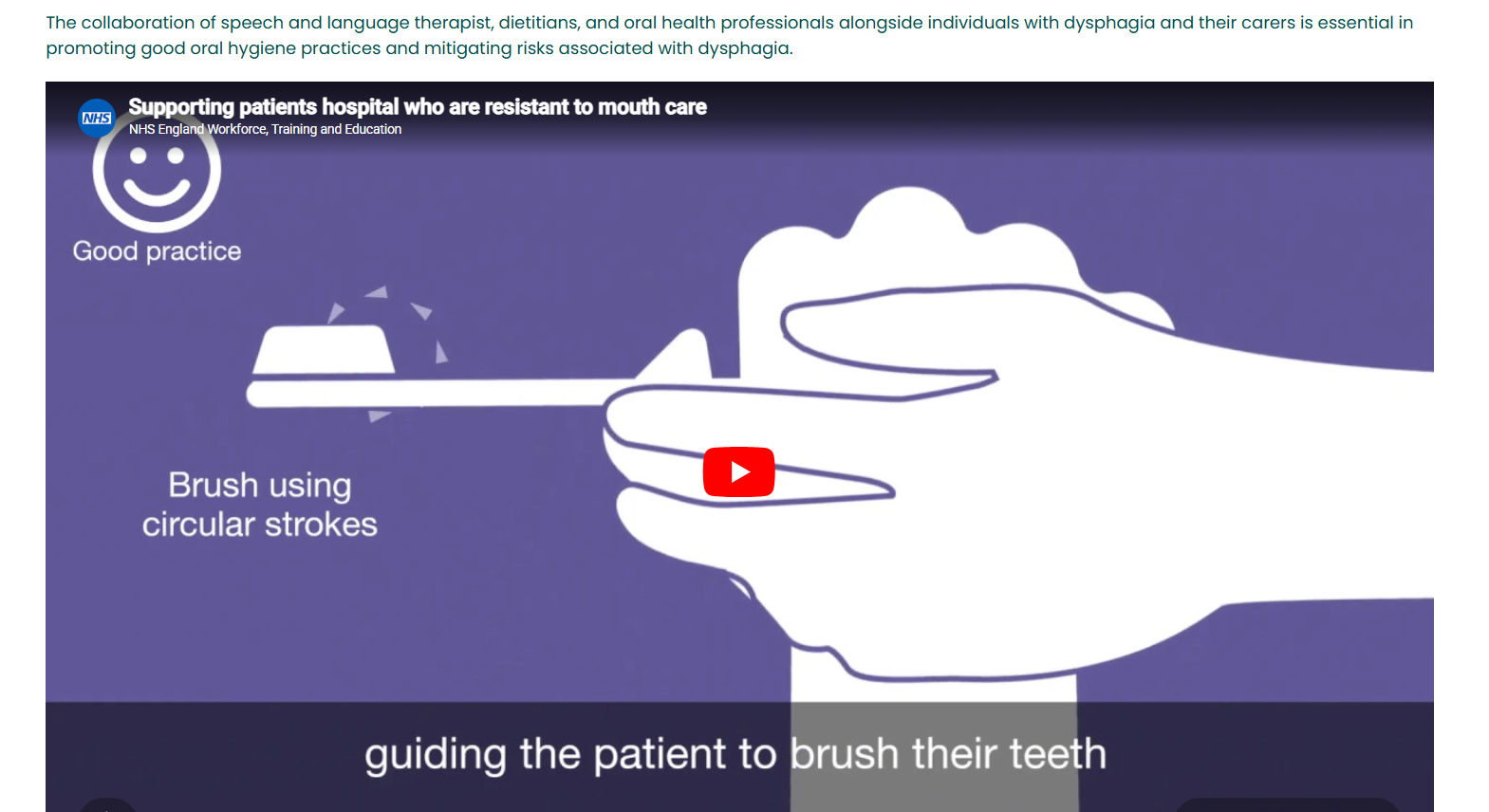
You can view the introduction video of this course below.
Is this for me?
This course has been carefully designed for carers, support workers, nurses and managers who want to gain a complete understanding dysphagia management using IDDSI standards. As specialists in providing staffing solutions Halo Staffing’s courses are relevant for many industries including health and social care for carers, support workers, nurses and managers. Completing this course will ensure that you are fully up to date with relevant content to provide you with the skills and knowledge necessary to excel in your field. On successful completion of this course, you will be issued with a certificate and digital badge valid for 1 year.
Why should I take this course?
You should take this course if it’s necessary for you or your team to learn more about Dysphagia and IDDSI standards, protect people and keep them safe from harm and abuse in a health care setting. Keeping in line with The Health and Safety at Work Act 1974, The Food Safety Act 1990, The Manual Handling Operations Regulations 1992, The Human Rights Act 1998, The Lifting Operations and Lifting Equipment Regulations (LOLER) 1998 , Mental Capacity Act 2005, Safeguarding Vulnerable Groups Act 2006, The Health and Social Care Act 2008, The Equality Act 2010, The Health and Social Care Act 2012, The Care Act 2014, Deprivation of Liberty Safeguards (DoLS), The Date Protection Act 2018, Liberty Protection Safeguards 2021, CQC regulation-14, NICE Clinical Guidelines CG32, Inter Professional Dysphagia Framework (IDF) and the IDDSI Framework.
What are the benefits of taking this course?
This course helps staff overcome inconsistencies in preparing food and drink for individuals with swallowing difficulties. By learning how to apply IDDSI standards and safely modify textures, staff can reduce the risk of choking and aspiration. It also provides practical skills to ensure consistency, safety and dignity during mealtimes. Overall, the course supports safer nutritional care and improves compliance with best practice standards.
What will I learn?
This course will provide you/or your team with an understanding of a normal swallow, an abnormal swallow, the signs, symptoms, common causes and underlying medical conditions associated with dysphagia. The implications of dysphagia on a person’s health and wellbeing, the risk factors of aspiration and choking and strategies to prevent them, the importance of maintaining adequate hydration and nutrition with safe and efficient swallowing function, the importance of early detection of dysphagia, individual’s diet history in the dysphagia assessment, the process of assessment and screening of dysphagia, list all the relevant legislations in the UK, the importance of safe management of food production for people affected by dysphagia, the International Dysphagia Diet Standardisation Initiative (IDDSI) framework and levels, the rationale behind texture modification of food and drink according to IDDSI levels. Hands-on practice, of texture modification of food and Drink according to IDDSI levels. The importance of promoting independence and dignity of all the service users, the importance of proper positioning during meals, list the equipment and assistive devices which can be used to support individuals with dysphagia and explain how to use and maintain dysphagia-specific equipment effectively, the need to gain education and training on safe swallowing strategies and diet modifications, safe feeding techniques and the environmental factors that impact safe swallowing, how to communicate effectively with individuals and team members and the need to collaborate with other healthcare professionals, the importance of documentation and accurate record-keeping, the process of documentation of assessment results and recommended interventions, the reason why you should monitor and review the swallowing function and dietary tolerance of the individual on a regular basis and finally, how to recognise and respond to choking incidents and implement emergency protocols.
Course Duration:
Face-2-Face session will be delivered at your location for up to 16 attendees. Cost of this course is for all 16 attendees.
eLearning: 3 hours.
Face to Face session: Equivalent to a one day course.