Welcome to the Halo Staffing face to face course about IDDSI compliant food and drink consistencies.
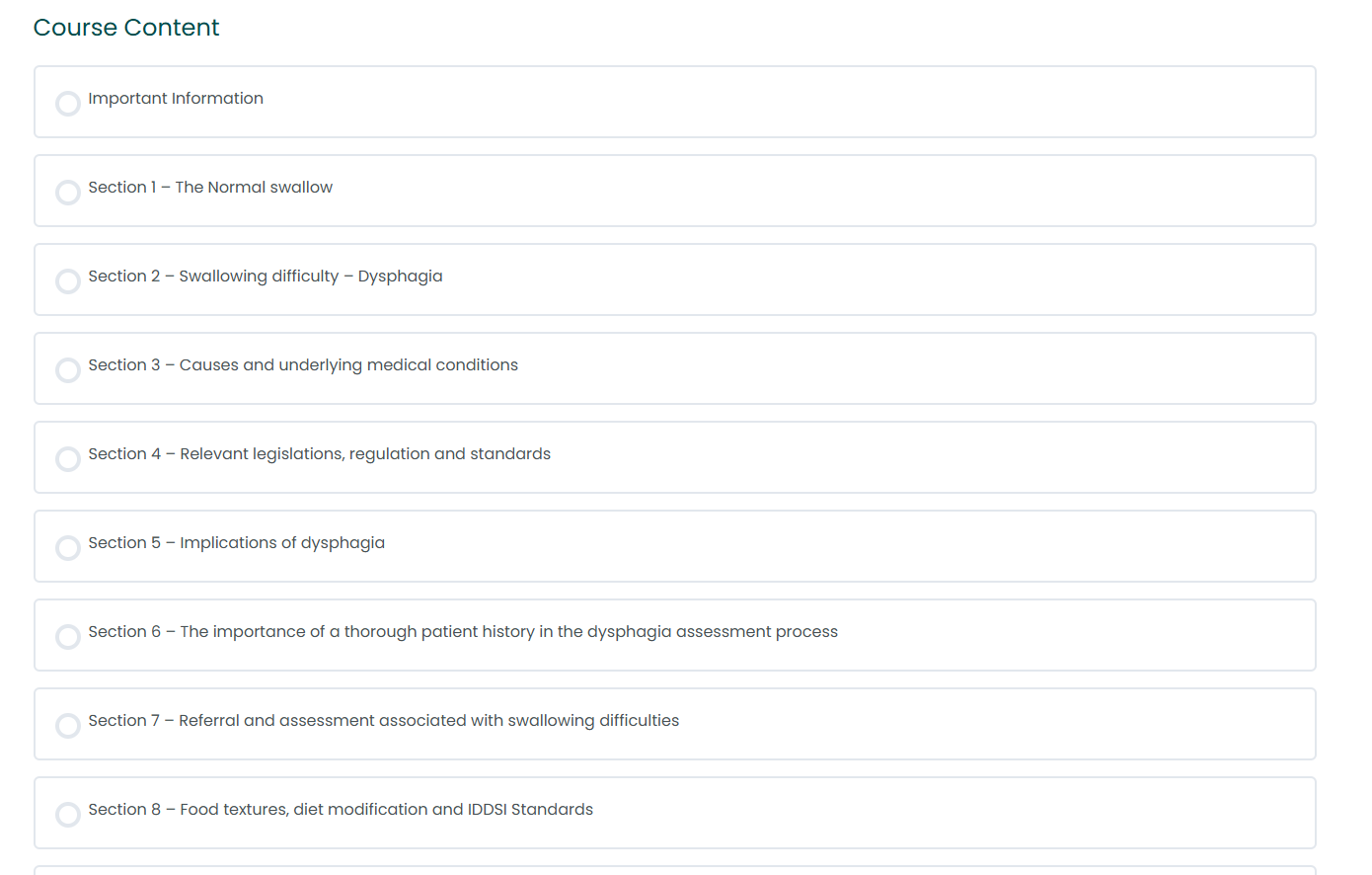
We will begin this course with an explanation of the IDDSI framework, its impact, causes and consequences.
The next section will introduce dysphagia as a medical condition, aspiration and choking as risk factors. We will also list some strategies to prevent them.
Before we delve further into the main topic of this course, we will present a list all the relevant legislations in the UK
The importance of safe management of food production for people affected by dysphagia, will be the main theme of the next section.
We will then explain the need for early detection of dysphagia, the signs and symptoms to look for and the assessment, screening process involved. Here we will also inform you about the importance of the patient history in dysphagia assessment.
At this point we will also inform you about food textures, diet modification, how to modify and adapt food and drink textures as advised by the IDDSI standards. a video explanation of food preparation, a video and practical demonstration preparation of drinks
This will be followed by a video explanation of food preparation, a video explanation and a practical demonstration of drinks preparation according to various IDDSI levels. The learners will also get a chance to practice this along with an opportunity to test if the texture modification is accurate according to the IDDSI standards.
After that, we will proceed further with an emphasis on the importance of promoting independence and dignity of all the service users under your care.
The next section will focus on assistive devices and equipment, guidelines on how to use and maintain them effectively. This section will also inform you about proper positioning during meals.
Having reached at this point, we will summarise the learning done so far by explaining the need for you to gain education and training on safe swallowing strategies.
We will then explain to you what a good eating and drinking care plan looks like. Here you will be given an opportunity to practice adding information in the various sections of this care plan. We will also inform you about safe feeding techniques and the environmental factors that impact safe swallowing.
Communication and collaboration are the main topics of the next section.
This will be followed by a section which will inform you about the importance of documentation and record-keeping.
Finally, we will describe why you should regularly monitor and review the swallowing function and dietary tolerance of the individual and understand how to recognise and respond to choking incidents and implement emergency protocols.
You can view the introduction video of this course below.
Is this for me?
This course has been carefully designed for carers, support workers, nurses and managers who want to gain a complete understanding of planning, monitoring, and management of nutritional consistencies according to the IDDSI framework. As specialists in providing staffing solutions Halo Staffing’s courses are relevant for many industries including health and social care for carers, support workers, nurses and managers. Completing this course will ensure that you are fully up to date with relevant content to provide you with the skills and knowledge necessary to excel in your field. On successful completion of this course, you will be issued with a certificate and digital badge valid for 1 year.
Why should I take this course?
You should take this course if it’s necessary for you or your team to learn more about, IDDSI compliant food and drink consistencies, protect people and keep them safe from harm and abuse in a health care setting. Keeping in line with The Health and Safety at Work Act 1974, The Food Safety Act 1990, The Manual Handling Operations Regulations 1992, The Human Rights Act 1998, The Lifting Operations and Lifting Equipment Regulations (LOLER) 1998 , Mental Capacity Act 2005, Safeguarding Vulnerable Groups Act 2006, The Health and Social Care Act 2008, The Equality Act 2010, The Health and Social Care Act 2012, The Care Act 2014, Deprivation of Liberty Safeguards (DoLS), The Date Protection Act 2018, Liberty Protection Safeguards 2021, CQC regulation14, NICE Clinical Guidelines CG32, Inter Professional Dysphagia Framework (IDF) and the IDDSI Framework.
What are the benefits of taking this course?
This course helps staff overcome challenges in preparing safe and appropriate food and drink for individuals with dysphagia. By learning how to apply IDDSI levels correctly, staff can reduce the risk of choking and ensure consistency. It also supports dignity and person centred care during mealtimes. Overall, the course improves safety, quality and compliance in nutritional care.
What will I learn?
This course will provide you and/or your team with a clear understanding of planning, monitoring, and management of nutritional consistencies. They will learn about the IDDSI framework, its impact, causes and consequences. They will then be informed about dysphagia as a medical condition, aspiration and choking as risk factors, strategies to prevent them and a list all the relevant legislations in the UK.
The course will then progress on to the importance of safe management of food production for people affected by dysphagia. This will be followed by an explanation about the need for early detection of dysphagia, the signs and symptoms to look for and the assessment, screening process involved. Here we will also inform the learners about the importance of the patient history in dysphagia assessment.
Food textures, diet modification, how to modify and adapt food and drink textures as advised by the IDDSI standards will be the next few topics. This will be followed by a video explanation of food preparation, a video explanation and a practical demonstration of drinks preparation according to various IDDSI levels. The learners will also get a chance to practice this along with an opportunity to test if the texture modification is accurate according to the IDDSI standards.
The learners will then learn about the importance of promoting independence and dignity of all the service users, the use of assistive devices and equipment along with guidelines on how to maintain them effectively. This section will also inform the learners about proper positioning during meals. Having reached at this point, we will summarise the learning done so far by explaining the need for them to gain education and training on safe swallowing strategies. We will then inform the learners about an eating and drinking care plan. Here they will be given an opportunity to practice adding information into the various sections of this care plan. Safe feeding techniques and the environmental factors that impact safe swallowing will also be taught.
Communication and collaboration are the main topics of the next section. This will be followed by a section which will inform them about the importance of documentation and record-keeping. Finally, we will teach them about the importance of regular monitoring and reviewing of the swallowing function and dietary tolerance of the individual and inform them how to recognise and respond to choking incidents and implement emergency protocols.
Course Duration:
Face-2-Face session will be delivered at your location for up to 16 attendees. Cost of this course is for all 16 attendees.
eLearning: 3 hours.
Face to Face session: Equivalent to a one day course.