- Understand the person’s disability and circumstances and the impact it has on them as an individual
- Understand any specialist needs that arise from the person’s circumstances
- List all the relevant legislations in the UK
- Be able to support the person in the management of their situation, being led by them in the delivery of the support they choose
- Understand the boundaries of your understanding, including when to seek assistance from other services or from your IE to source appropriate training or development
-
 Aim: To develop a clear understanding of the people’s disability and circumstances as a personal assistant (PA) Objectives: By successfully completing this course you will be able to:
 -
 Aim: To develop a clear understanding of the importance of practicing equality, diversity and inclusion in your work as a personal assistant Objectives: By successfully completing this course you will be able to:
- Understand the importance of equality, diversity and inclusion and human rights
- List the relevant legislations in the UK
- Understand how to work in an inclusive way
-
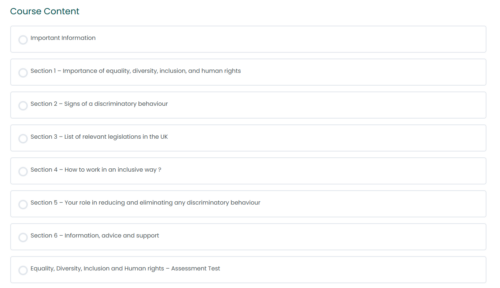
 Aim: To develop and clear understanding of ensuring equality, diversity and inclusion are a part of your practice Objectives: By successfully completing this course you will be able to:
- Understand the importance of equality, diversity, inclusion, and human rights
- Identify the signs of a discriminatory behaviour
- List the relevant legislations in the UK
- Explain how to work in an inclusive way
- Describe what you can do to reduce and eliminate any discriminatory behaviour
- Understand where to get information, advice and support about equality, diversity, inclusion and human rights
-
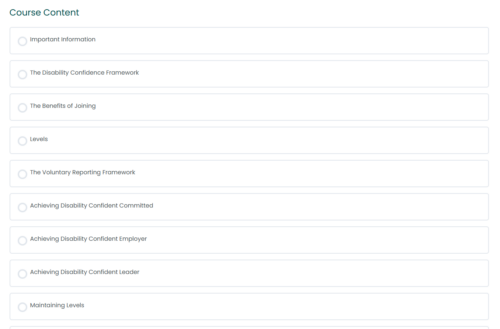
 Aim: To know how to embed inclusivity within your organisation and wider practices, with regards to disabilities and mental health. Objectives: By successfully completing this course you will be able to:
- Describe the Disability Confidence Framework
- List at least 3 benefits of the Disability Confidence Framework
- Explain about the different levels of the Disability Confidence Framework
- Describe how long a typical Disability Confidence Framework accreditation lasts for
- Describe how the Voluntary Reporting Framework works
- Describe the actions necessary to achieve or maintain the different levels of the Disability Confidence Framework
-
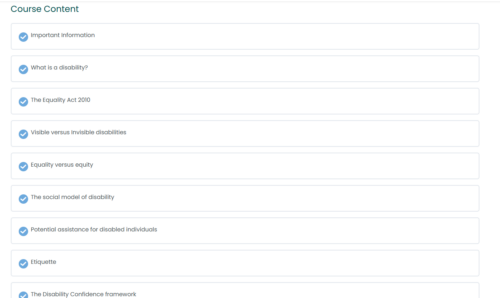
 Aim: To be able treat disabled individuals equally and equitably. Objectives: By successfully completing this course you will be able to:
- Explain what a disability is
- Describe what is contained in the Equality Act 2010, with regards to preventing discrimination against disabled individuals
- Explain the distinction between visible and invisible disabilities
- Describe the concepts of equality and equity
- Describe the social model of disability
- Identify 10 ways that an individual may require assistance due to a disability
- Identify 5 reasonable adjustments to your behaviour that you can make to assist disabled individuals around you
- Explain why it is important to follow the basics of etiquette, and not to make assumptions about disabled people
-
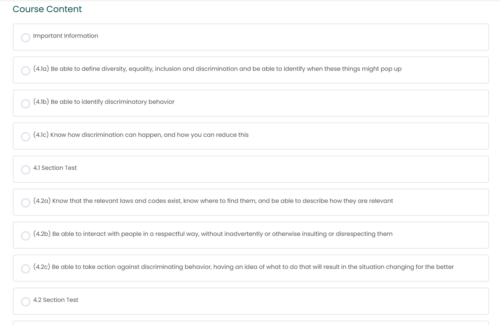
 Aim: To understand what is considered as discrimination, what can cause it, and how to respond in an effective way in order to reduce discrimination. Objectives: By successfully completing this course you will be able to:
- Explain diversity, equality and inclusion
- Explain what discrimination is
- Identify 3 pieces of legislation surrounding this topic
- Describe what you can and cannot do when you come across discrimination within your work place
- Explain how to ensure everyone is included fairly