- Understand the difference between accidents and incidents in an adult social care settings
- Describe how to recognise adverse events, incidents, errors and near misses
- Explain the importance of accident and incident management in adult social care
- List the relevant legislations in the UK
- Identify legal and regulatory requirements related to accident and incident reporting including an understanding of Care Quality Commission (CQC) requirements
- Describe the consequences of a failure to report an accident or incident
- Understand how to conduct risk assessments to prevent accidents and incidents
- Describe the roles and responsibilities in accident and incident management
- Explain the chain of command and reporting procedures
- Describe how to follow regulatory procedures for reporting accidents and incidents accurately and promptly
- Explain how to conduct a thorough investigation of accidents and incidents, identify the root cause and implement corrective actions
- Understand why it is important to maintain accurate documentation and records of accidents and incidents
- Understand why it is important to be honest and to admit to and report errors
- Identify how to communicate effectively when reporting accidents and incidents to colleagues and relevant authorities including next of kin/families
- Understand how to provide appropriate care and support to service users involved in accidents or incidents
- Understand how to handle difficult conversations and provide support
- Explain the importance of providing emotional support to the service users after accidents or incidents
- Describe how to engage in continuous improvement by reviewing and updating accident and incident management procedures regularly
- Understand how to eliminate any immediate dangers, ensuring all the Health & Safety measures are in place to reduce any potential re-occurrence
Advanced leadership training for senior leaders to support organisational impact
-
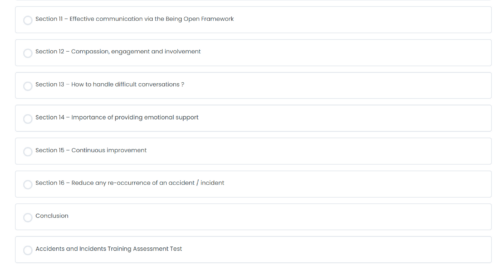
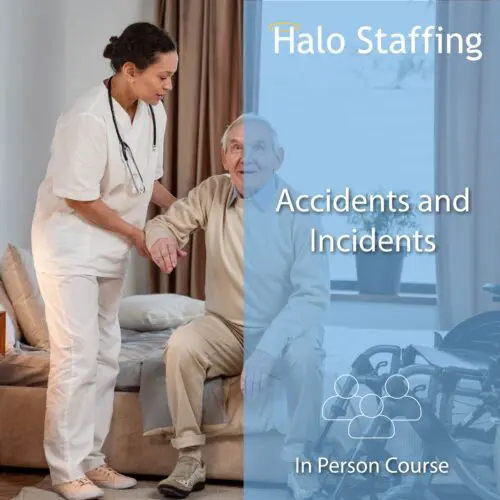 ⭐ TOP SELLER Aim: To develop a clear understanding of the processes and practices required to reduce accidents and incidents in the health and social care sector. Objectives: By successfully completing this course you will be able to:
 -
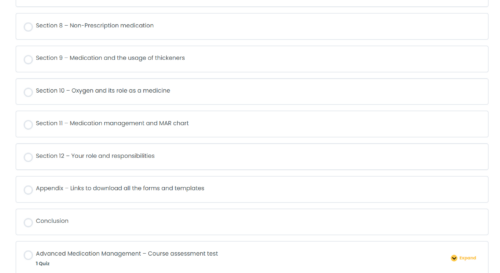
 ⭐ TOP SELLER Aim: To develop an advanced understanding of medication management. Objectives: By successfully completing this course you will be able to:
- Describe the importance of a care home medicines policy
- List the relevant legislations in the UK
- Explain the concept of Medicines Management
- Identify your role and responsibilities in medication management
- Understand the importance of record keeping
- Explain the importance of a MAR chart
- Describe the principles of safe administration of medicines
- Explain why things go wrong and what action should be taken at that time
- Describe how medicines should be handled, record kept, and how to safely destroy medicines which are no longer required
-
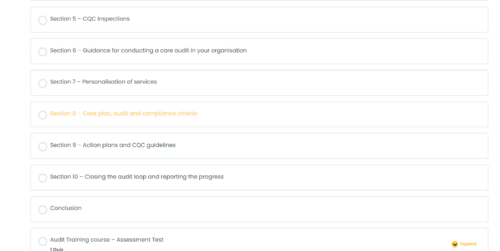
 ⭐ TOP SELLER Aim: To know more about how initiating basic audit processes can strengthen continuous quality improvement and CQC compliance. Objectives: By successfully completing this course you will be able to:
- Understand what care audit is and how you can use it to improve the quality of your services
- Understand the key stages of a care audit
- Describe the relevant legislations in the UK
- Describe the importance of involving and supporting the people who use your services
- List some tips and guidance for conducting care audit in your organisation
- Understand what is meant by supporting personalisation of services
- Understand everything about auditing the care plans
- Describe the importance of audit action plans
- Describe how to close the audit loop and report the progress
-
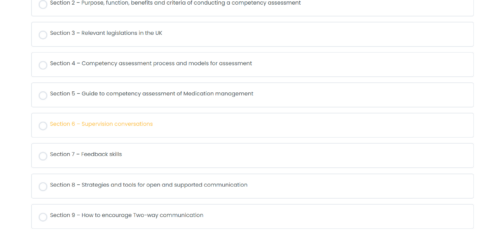
 ⭐ TOP SELLER Prerequisite for this course is the Advanced Medication Management (Face to Face) course. Aim: To confidently complete competency assessments and provide constructive feedback sensitively and supportively. Objectives: By successfully completing this course you will be able to:
- Explain the purpose and functions of assessing competency
- Describe the benefits of assessing competency
- Understand how to prepare for the competency assessment
- Understand what a competency assessment template or checklist is
- Explain how to conduct competency assessments
- Explain how to document the competency assessment and what should be included in it
- Describe how to coach staff through supportive conversations
- Describe the strategies and tools required for open and supported discussions
- Understand how to encourage Two-Way Communication
- How to provide effective feedback
- Understand how to deal with conflicts in supervision
- Describe what is positive reinforcement and how to use it
- Confidently demonstrate a competency assessment
-
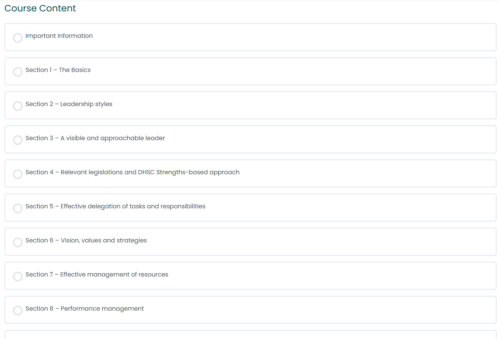
 ⭐ TOP SELLER Aim: To develop effective leaders who will lead and encourage continuous quality improvement. Objectives: By successfully completing this course you will be able to:
- Describe the term leadership and the qualities of a leader
- Understand different leadership styles and apply appropriate approaches based on situational needs.
- Understand the importance of being visible and approachable as a leader
- List the relevant legislation in the UK
- Learn how to effectively delegate tasks and responsibilities
- Describe how staff can understand what the vision, values and strategies of your service are, and how they can achieve them in their role
- Understand how to effectively manage resources and identify the appropriate type and level of resources required to deliver safe and effective service
- Describe how to identify and address poor or variable staff performance
- Learn how to identify the strengths, interests, and developmental needs of staff members
- Understand how to identify and address staff development needs
- Learn techniques for setting SMART goals for staff development
- Understand why providing constructive feedback and recognition can support staff in their development journey
- Develop skills in providing constructive feedback during supervision sessions
- Learn how to respond to feedback in a timely and professional manner
- Demonstrate effective communication and interpersonal skills to support and motivate staff members
- Understand what is active listening and empathetic communication and how to practice it during supervisory interactions
- Understand the importance of promoting staff wellbeing and resilience
- Understand how to support staff to manage their own health, care and wellbeing and recognising the importance of self-care in leadership roles
- Describe how to manage the impact of their emotions and behaviour
- Understand importance of building and maintaining strong relationships with all staff, including clients, families, and community partners
- Understand importance with working in collaboration with others in and across networks
- Understanding the causes of conflict and how to effectively manage it
- Develop skills in active listening, effective communication, and problem-solving
- Develop skills in active listening, empathy, and effective communication
- Develop skills in critical thinking, analysis, and decision-making
- Understand the importance of considering multiple perspectives and gathering information before making decisions and encouraging other have the confidence and opportunity to contribute.
- Learn how to make ethical and informed decisions that align with the values and goals of the organisation and respecting the culture beliefs the individual
- Understand the importance of effectively managing comments and complaints
- Understand the importance of encouraging improvement and innovation to create continuous service improvement
-
 ⭐ TOP SELLER Aim: To develop a clear understanding of robust risk assessment. Objectives: By successfully completing this course you will be able to:
- Understand what is meant by risk, hazards and identify who/what could be harmed
- Describe what is risk assessment
- List the relevant legislations in the UK
- Understand the aspect of liability in this context
- Compliance with regulation and standards
- Understand how to conduct a formal risk assessment in relation to individuals, activities and environments
- Know the CQC inspection process and their criteria with regards to risk assessment
- Understand how to review and update a risk assessment
- Understand the importance of reviewing accidents and incidents and learning from them
- Identify who has the responsibility of managing the risk assessments within the workplace
- Recognise the importance of working with other agencies to manage risks
- Identify risks in the life-context of the individual and their circumstances (and therefore impact on quality of life and individual wellbeing)
- Identify risk perspectives from all the people involved
- Identify weighting of risks (to establish high and low risk concerns, impact on emotional, social and psychological wellbeing)
- Identify current and past strategies for managing risks
- Ethical considerations or dilemmas related to risk assessment decisions (patient’s consent and dignity/religion)
- Understand the key tasks relating to robust risk management.
- Documentation of a risk assessment and where these should be stored