Aim: To develop a clear understanding of the processes and practices required to reduce accidents and incidents in the health and social care sector.
Objectives:
By successfully completing this course you will be able to:
Understand the difference between accidents and incidents in an adult social care settings
Describe how to recognise adverse events, incidents, errors and near misses
Explain the importance of accident and incident management in adult social care
List the relevant legislations in the UK
Identify legal and regulatory requirements related to accident and incident reporting including an understanding of Care Quality Commission (CQC) requirements
Describe the consequences of a failure to report an accident or incident
Understand how to conduct risk assessments to prevent accidents and incidents
Describe the roles and responsibilities in accident and incident management
Explain the chain of command and reporting procedures
Describe how to follow regulatory procedures for reporting accidents and incidents accurately and promptly
Explain how to conduct a thorough investigation of accidents and incidents, identify the root cause and implement corrective actions
Understand why it is important to maintain accurate documentation and records of accidents and incidents
Understand why it is important to be honest and to admit to and report errors
Identify how to communicate effectively when reporting accidents and incidents to colleagues and relevant authorities including next of kin/families
Understand how to provide appropriate care and support to service users involved in accidents or incidents
Understand how to handle difficult conversations and provide support
Explain the importance of providing emotional support to the service users after accidents or incidents
Describe how to engage in continuous improvement by reviewing and updating accident and incident management procedures regularly
Understand how to eliminate any immediate dangers, ensuring all the Health & Safety measures are in place to reduce any potential re-occurrence
Course Duration:
Face-2-Face session will be delivered at your location for up to 16 attendees. Cost of this course is for all 16 attendees.
eLearning: 3 hours.
Face to Face session: Equivalent to a one day course.
If you are looking to enroll more than one individual, please visit the Group Creation page HERE.
Welcome to the Halo Staffing Face-to-Face course on accidents and incidents.
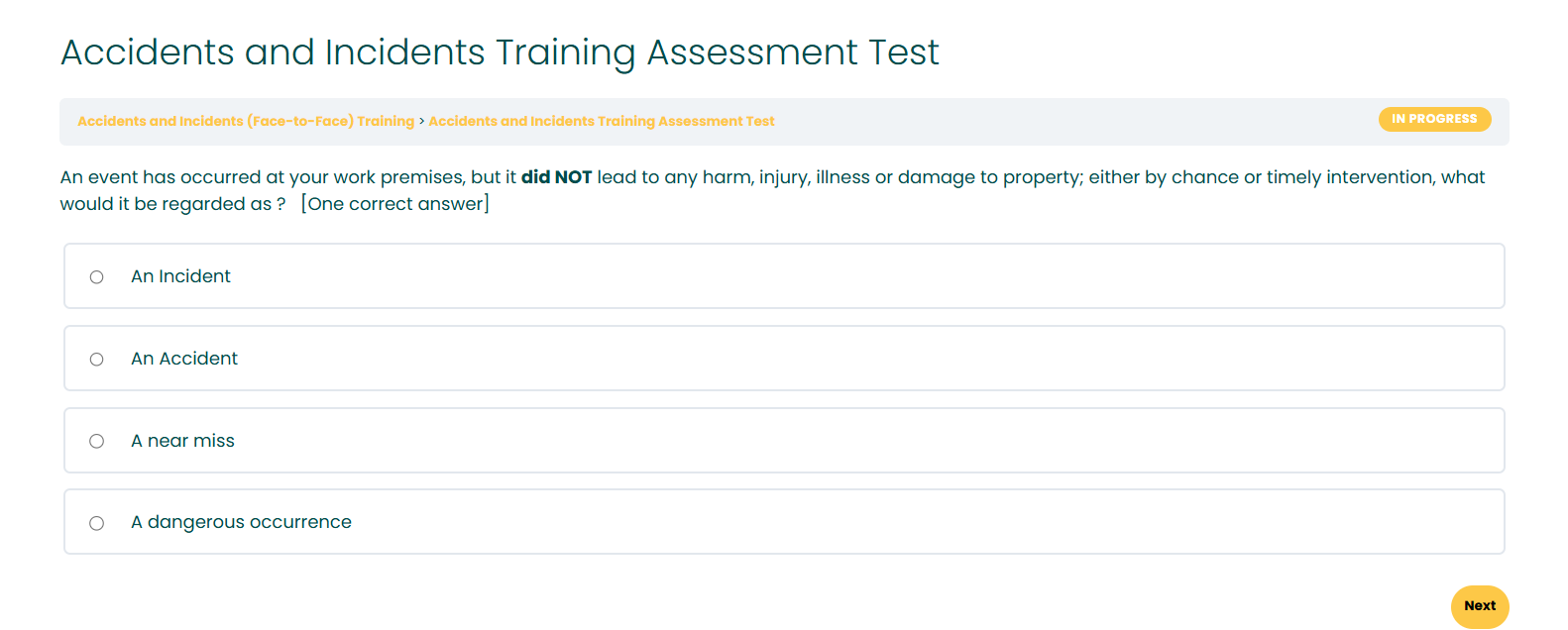
We will begin this course by establishing the basics, here we will inform you about difference between accidents and incidents in adult social care settings.
We will also inform you how to recognise adverse events, incidents, errors and near misses.
Here, we will also explain the importance of accident and incident management in adult social care.
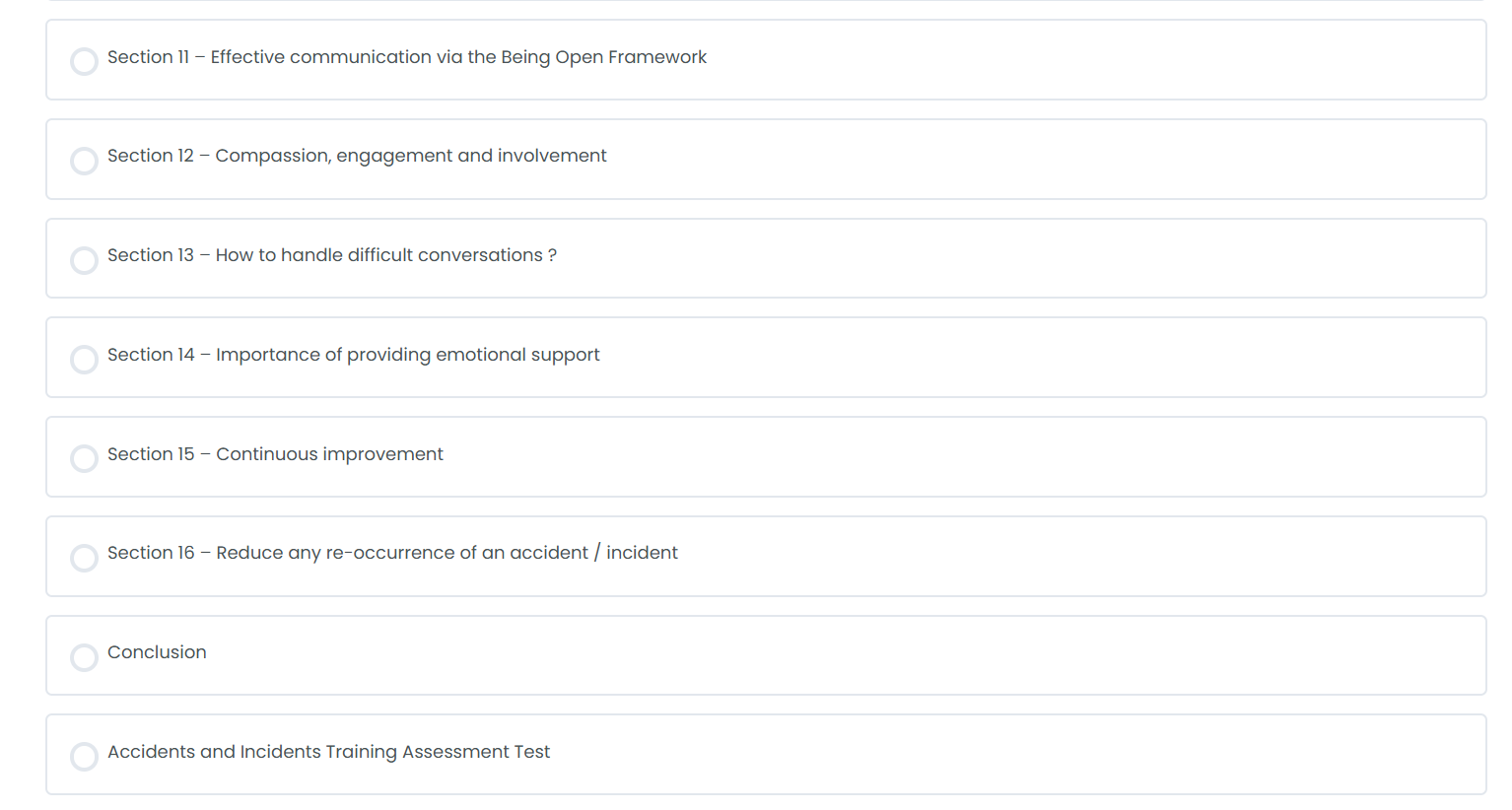
The next section will inform you about all the relevant legislations in the UK.
Legal and regulatory requirements related to accident and incident reporting including an understanding of Care Quality Commission (CQC) requirements, will the next topic of discussion.
We will then inform you about the consequences of a failure to report an accident or incident.
The following topic will inform you how to conduct risk assessments to prevent accidents and incidents.
We then move on to describing the roles and responsibilities in accident and incident management including the chain of command and reporting procedures.
We will also inform you how to follow regulatory procedures for reporting accidents and incidents accurately and promptly.
The next topic will about conducting a thorough investigation of accidents and incidents, identifying the root cause and implementing corrective actions.
The importance of maintaining accurate documentation and records of accidents and incidents, including an admission of any errors in the process; will be the topic of discussion in the next section.
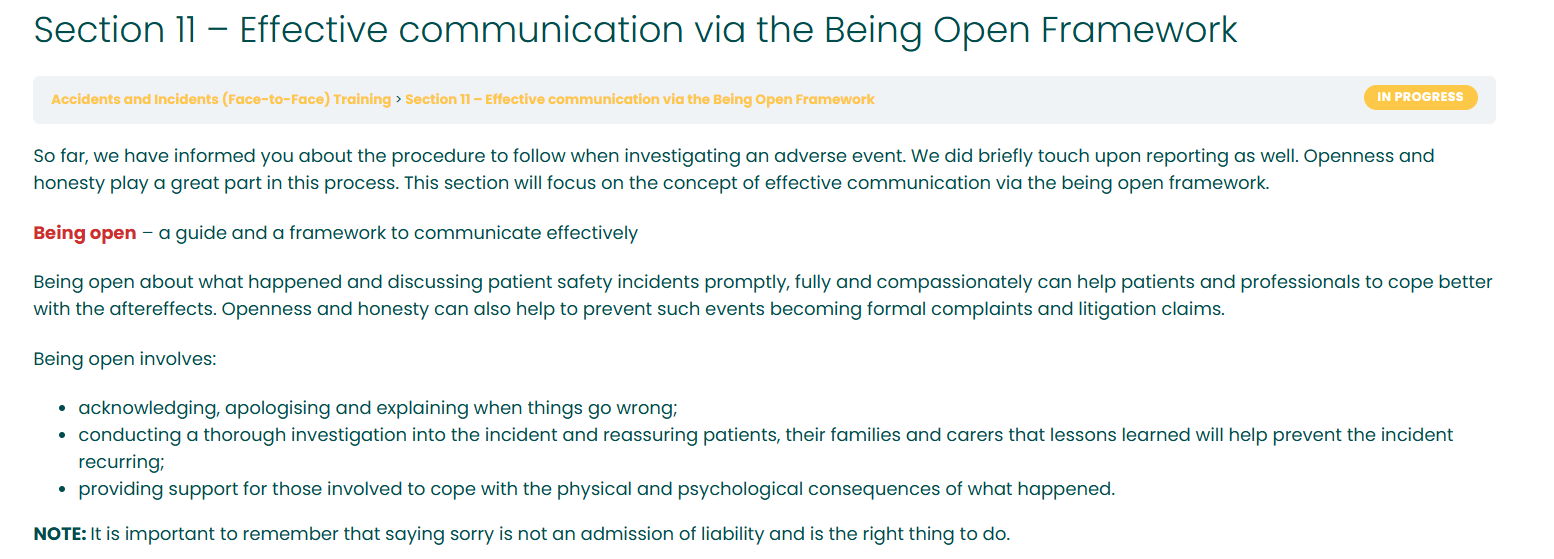
We will inform you how to communicate effectively when reporting accidents and incidents to colleagues and relevant authorities including next of kin/families.
An explanation of how to provide appropriate care and support to service users involved in accidents or incidents, will be discussed next.
Here we will also explain to you how to handle difficult conversations and provide support.
This will be followed by guidance on providing emotional support to the service users after accidents or incidents.
We will then describe how to engage in continuous improvement by reviewing and updating accident and incident management procedures regularly.
Finally, we will inform you how to eliminate any immediate dangers, ensuring all the Health & Safety measures are in place to reduce any potential re-occurrence.
You can view the introduction video of this course below.
Is this for me?
This course has been carefully designed for carers, support workers, nurses and managers who want to learn about the processes and practices required to reduce accidents and incidents in the health and social care sector. As specialists in providing staffing solutions Halo Staffing’s courses are relevant for many industries including health and social care for carers, support workers, nurses and managers. Completing this course will ensure that you are fully up to date with relevant content to provide you with the skills and knowledge necessary to excel in your field. On successful completion of this course, you will be issued with a certificate and digital badge valid for 1 year.
Why should I take this course?
You should take this course if it’s necessary for you or your team to learn about the processes and practices required to reduce accidents and incidents, protect people and keep them safe from harm and abuse in a health care setting. Keeping in line with Health and Safety at Work Act 1974, The Electricity at Work Regulations 1989, Food Safety Act 1990, The Manual Handling Operations Regulations 1992, The Lifting Operations and Lifting Equipment Regulations (LOLER) 1998, The Human Rights Act 1998, The Management of Health and Safety at Work Regulations 1999, Health and Social Care Act 2008, Control of Substance Hazardous to Health (COSHH) Regulations 2002, The Provision and Use of Work Equipment Regulations (PUWER) 2002, The Regulatory Reform (Fire Safety) Order 2005, Mental Capacity Act 2005, The Reporting of Injuries, Diseases and Dangerous Occurrences Regulations 2013 (RIDDOR), The Care Act 2014 and The Data Protection Act 2018.
What are the benefits of taking this course?
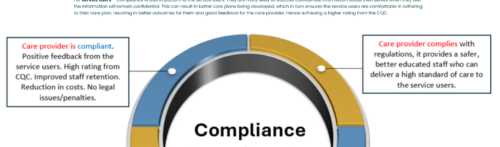
This course helps care leaders and their staff teams build safer services by understanding what causes accidents and incidents and how to respond effectively when they happen. By learning clear reporting, investigation and prevention practices, managers and staff teams can reduce risk, protect people in their care and improve compliance with key health and safety standards – making more confident and services more reliable.
What will I learn?
This course will provide you and/or your team with a clear understanding of the basic terminology, relevant legislations and legal and regulatory requirements related to accident and incident reporting. The importance of accident and incident management in adult social care including the benefits and risks associated with compliance or failure. How to follow the regulatory procedures for reporting accidents and incidents accurately and promptly. Your role and responsibility in the process of accident and incident management including the chain of command and reporting procedures. How to identify the root cause of an accident and incident via a thorough risk assessment and investigation process. The importance of maintaining accurate documentation and records of accidents and incidents, including an admission of any error in the procedure. How to communicate effectively when reporting accidents and incidents to colleagues and relevant authorities including next of kin/families. How to handle difficult conversations, provide appropriate emotional support, engage in continuous improvement by reviewing and updating accident and incident management procedures regularly. And finally, how to eliminate any immediate dangers and reduce the possibility of any re-occurrence of such an event.
Course Duration:
Face-2-Face session will be delivered at your location for up to 16 attendees. Cost of this course is for all 16 attendees.
eLearning: 3 hours.
Face to Face session: Equivalent to a one day course.