- Explain the definition of First Aid
- Identify the 3 priorities of First Aid
- Describe the importance of preventing cross infection
- Explain and demonstrate how to assess the situation and circumstances in order to act safely, promptly, and effectively in an emergency
- Explain and demonstrate how to administer first aid to a casualty who is unconscious but breathing
- Explain and demonstrate how to administer first aid to a casualty who is unconscious and not breathing
- Explain and demonstrate how to perform cardiopulmonary resuscitation (CPR)
- Explain the use of an automated external defibrillator (AED)
- Explain what seizures are and demonstrate how to provide first aid to an individual who is suffering from them
- Explain and demonstrate how to help an individual who is choking
- Explain and demonstrate how to provide first aid for wounds, bleeding, burns, scalds, shock, and issues with blood circulation
- Describe the need for record keeping
-
 Aim: To perform basic first aid in an emergency situation at work. Objectives: By successfully completing this blended course you will be able to:
 -
 Aim: To reduce the effects of injury or illness suffered at work, whether caused by the work itself or not. Objectives: By successfully completing this blended course you will be able to:
- Explain the importance of first aid at work
- Describe the legislation governing first aid at work
- Explain the 2 priorities of first aid at work
- Explain what is meant by adequate and appropriate first aid arrangements
- Describe the difference between an appointed person and a first aider
- Explain and demonstrate how to administer first aid to a casualty with injuries to bones, muscles, ligaments, joints and injuries to the spine
- Explain and demonstrate how to administer first aid to a casualty with chest injuries
- Explain and demonstrate how to provide first aid for burns and scalds, eye injuries, poisoning, and anaphylactic shock
- Recognise the presence of major work-related illnesses
- Explain and demonstrate how to provide first aid for heart attack, stroke, epileptic seizures, asthma attack and diabetic emergencies
- Explain what must be reported under RIDDOR
-
 Aim: To keep people safe by reducing the risk of, and knowing how to react to, fire in the workplace. Objectives: By successfully completing this course you will be able to:
- Describe the characteristics of fire, smoke, and toxic fumes
- Identify at least 6 fire hazards in the work environment
- Explain how to recognise any significant findings of fire risk evaluations
- Explain how to perform basic fire prevention, and the importance of local fire safety protocols
- Describe when it is necessary to raise the fire alarm, how to raise the fire alarm, and what to do if the fire alarm is raised
- Describe the actions to take if fire breaks out or if smoke is detected
- Identify the different types of fire extinguishers
- Explain about the different uses of fire extinguishers
- Identify the safety precautions associated with fire extinguishers
- Explain about the importance of being familiar with evacuation procedures and associated escape routes
-

 Aim: To ensure the safe and secure handling of information within a healthcare setting Objectives: By successfully completing this course, you will be able to:
- Identify at least 7 key principles of information governance
- Describe why information governance is important
- List at least 2 pieces of legislation related to information governance
- List at least 3 different types of information
- Describe how to comply with relevant legislation on information governance
- Identify at least 6 threats to data security
- Identify any breaches of data protection and how to report them
- Describe how to implement security measures to keep confidential information safe
- List the 8 Caldicott Principles
- Recognise how to gain the consent of an individual if it is deemed necessary to share information
- Identify your responsibilities as a healthcare professional under the Freedom of Information Act 2000
- State the benefits of good informational governance
-
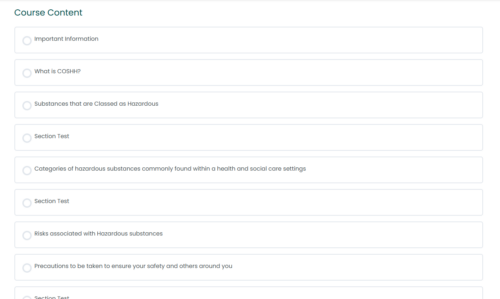
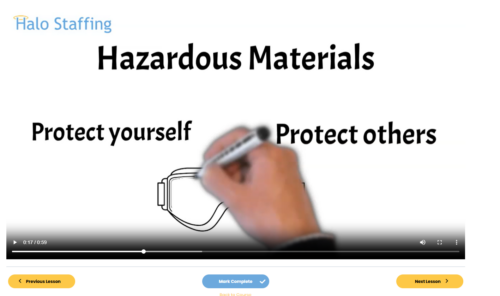
 Aim: To be able to work with hazardous substances safely and effectively. Objectives: By successfully completing this course you will be able to:
- Describe what COSHH stands for
- Identify 5 substances classed as hazardous substances
- Identify 3 different categories of hazardous substances commonly found in a health and social care setting
- List at least 6 likely risks associated with hazardous substances
- Describe the precautions to be taken to ensure your safety and the safety of others around you
- Identify 5 steps in COSHH regulations
- List 5 responsibilities you will have when handling hazardous substances
-
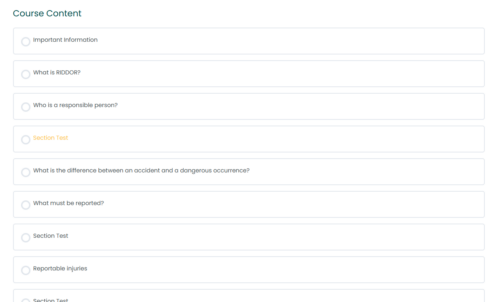
 Aim: To be able to understand the purpose of RIDDOR and comply with this regulation. Objectives: By successfully completing this course you will be able to:
- Describe what RIDDOR is
- Describe what a responsible person is, according to RIDDOR
- Identify the difference between an accident and a dangerous occurrence
- Describe what RIDDOR states must be reported
- Describe when reporting must be done
- Describe which records need to be stored and why
- Describe your role as an employee in this process
-
 Aims: To know how to keep yourself and others safe within the work place and how to maintain a safe environment. Objectives: By successfully completing this course you will be able to:
- Explain how to successfully complete a risk assessment
- Describe what to do in the events of a fire
- Describe how to respond to accidents and sudden illness
- Describe how to carry out a primary survey
- Identify 5 ways to keep yourself and others safe within the work place
- Identify who to contact to report health and safety issues
- Identify 4 types of legislation relating to health and safety
- Describe the symptoms, causes and treatment of Legionnaires disease
- List 5 of your own responsibilities and 5 responsibilities of others within your work place