- Understand your own responsibilities, and the responsibilities of others with regards to health and safety
- Understand and know how to promote fire safety
- List all the relevant legislation in the UK
- Be able to comply with risk assessments provided by your IE
- Understand procedures for responding to accidents and sudden illness and providing basic life support to the person you support
- Understand any medication and healthcare tasks that the person you support requires
- Understand how to safely handle any domestic hazardous substances
- Understand the need to work safely and securely, putting neither yourself nor the person you support at undue risk
-
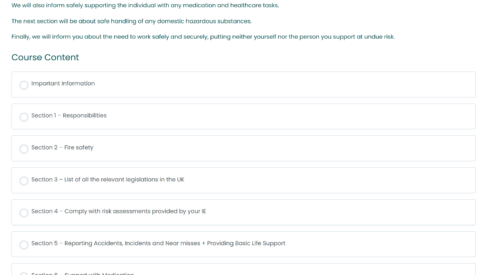
 Aim: To develop a clear understanding of your obligations with regards to the health, safety and wellbeing of everyone Objectives: By successfully completing this course you will be able to:
 -

 Aim: To understand how to use technology to better communicate with each other and with the people you support Objectives: By successfully completing this course you will be able to:
- Describe the various methods of digital communication and their uses
- Understand how to choose the right technology for the situation and adapt your communication style as necessary
- List all the relevant legislations in the UK
- Describe how to use communication technologies safely, securely, and appropriately, with respect for others and in line with your organisation’s policies
- Explain how digital platforms and forums can be useful to collaborate with others
- Understand how to support the service users to use the digital communication tools effectively
-
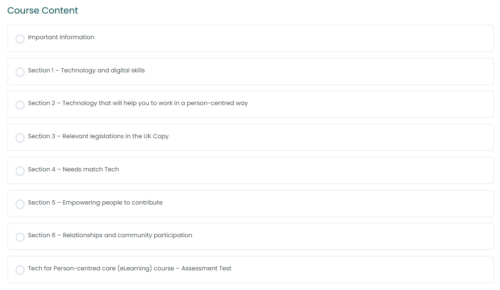
 Aim: To understand, develop and use digital technology and provide the best person-centred care Objectives: By successfully completing this course you will be able to:
- Understand the importance of technology and digital skills in this sector
- Understand how to use technology to work in a person-centred way
- List all the relevant legislations in the UK
- Describe how you can help people to learn about technologies that may benefit them
- Understand how to help people to access their personal information and contribute to their digital social care records
- Explain how to use technology to help people to build and maintain relationships and participate in their community
-
 Aim: To ensure the health, safety, and wellbeing of people in your healthcare organisation Objectives: By successfully completing this course, you will be able to:
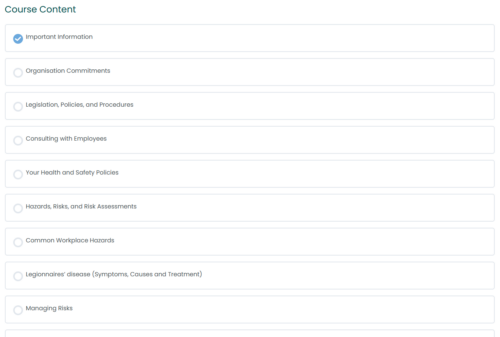
- State why organisations have a commitment to delivering services safely
- Describe at least 4 ways of acting that are in line with the legislation, policies and procedures around the health and safety
- State how to find your organisation’s arrangements for consulting with employees on health and safety matters
- Identify how to find your organisation’s health and safety policies
- State the meaning of the terms hazard, risk, and risk assessment
- Describe at least 8 common workplace hazards
- Describe the symptoms, causes and treatment of Legionnaires disease
- Recognise how identified risks can be managed
- Identify at least 5 ways to apply and promote safe working practices in your job role
- List at least 4 actions you can take to ensure patient safety
- Recognise the importance of reporting health and safety concerns
- State the correct reporting processes used to gather information to help with managing risks
- Identify the appropriate methods to raise health and safety concerns, and who they should be raised to
- Describe your responsibilities in reporting incidents, ill health, and near misses
-

 Aim: To understand what anxiety is and how to assist people who have anxiety Objectives: By successfully completing this course, you will be able to:
- Recognise at least 10 signs of anxiety
- Describe what an anxiety disorder is
- State at least 5 symptoms of a Generalised Anxiety Disorder
- Recognise that a Generalised Anxiety Disorder can affect different people in different ways
- Recognise at least 4 situations that could lead someone to develop an anxiety disorder
- Describe what Cognitive Behavioural Therapy is
- List at least 3 techniques for helping a person with anxiety to cope with the symptoms of an anxiety disorder
- List at least 3 self-help techniques for coping with the symptoms of an anxiety disorder
-
 Aim: To understand and know how to promote fire safety in the workplace Objectives: By successfully completing this course you will be able to:
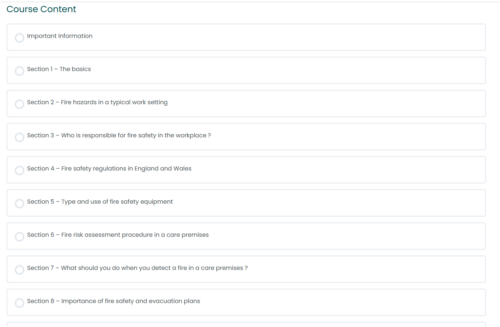
- Establish the basics of this subject
- Describe the fire hazards in a typical work setting
- Understand who is responsible for fire safety in the workplace
- Describe the fire safety regulations in England and Wales
- List the type and use of fire safety equipment found in the work setting
- Describe the fire risk assessment procedure in a care premises
- Understand what you need to do when you detect a fire in the workplace
- Understand the importance of fire safety and evacuation plans
- Understand the implications of ignoring the fire safety guidelines
- Describe the importance of fire safety training in the workplace
-
 Aim: To create a proactive safety culture within the workplace through prompt reporting and thorough investigation of all the accidents and incidents Objectives: By successfully completing this course you will be able to:
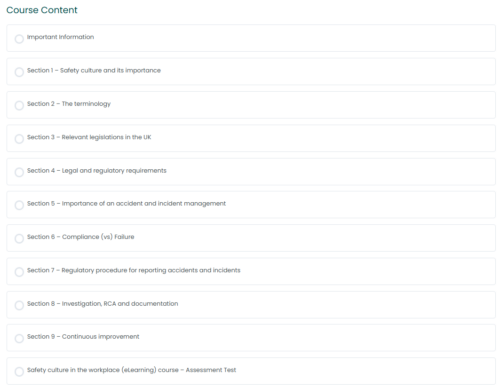
- Describe why is it important to develop a safety culture within the workplace
- Understand incidents, accidents, errors and near misses
- List all the relevant legislations in the UK
- Identify legal and regulatory requirements related to the reporting of accident and incidents
- Describe the consequences of a failure to report an accident or incident
- Explain the process of reporting the accidents and incidents within the workplace
- Explain how to a conduct thorough investigation and identifying the root cause(s)
- Understand the importance of maintaining accurate records of accidents and incidents
- Describe how to engage in continuous improvement by reviewing and updating accident and incident management procedures regularly
-
 Aim: To develop and clear understanding of medication management and good practice Objectives: By successfully completing this course you will be able to:
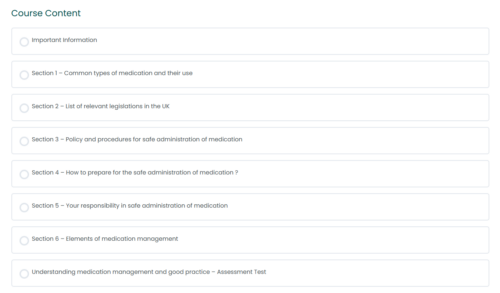
- Know about the common types of medication and their use
- List of relevant legislations in the UK
- Understand policy and procedures relevant to safe administration of medication
- Explain how to prepare for the safe administration of medication
- Describe your responsibility in safe administration of medication
- Understand the elements of medication management
-
 Aim: To develop a clear understanding of all the obligations placed on you as a personal assistant Objectives: By successfully completing this course you will be able to:
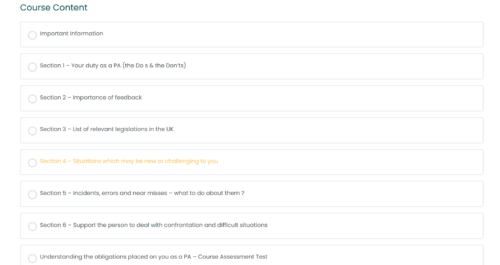
- Understand that you have a duty to provide a certain standard of care that meets the expectations of the person you support or your IE
- Understand how to be open and learn from feedback from the person you support or your IE
- List the relevant legislations in the UK
- Understand how to manage situations that are new or challenging to you, including how to openly discuss this with the person you support or your IE
- Understand how to support people or your IE to deal with incidents, errors and ‘near misses’ and how to learn from them
- Understand how to manage incidents, errors or ‘near misses’ in situations where the person is unable to manage these for themselves
- Understand how to support the person to deal with confrontation and difficult situations where they have asked this of you
-
 Aim: To teach you how to safely administer the medications you are legally authorised to give and minimise the risk of administration errors. Objectives: By successfully completing this course you will be able to:
- Explain what is meant by administration of medicines
- Describe the importance of confidentiality in a health and social care setting
- Explain the importance of consent in a health and social care setting
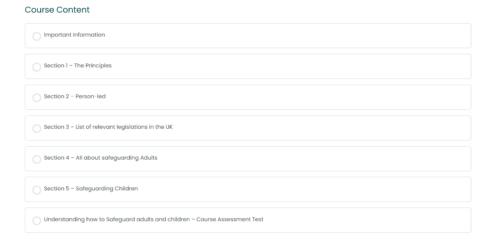
- Explain the importance of safeguarding adults in relation to medication administration
- List the relevant legislations in the UK
- List the types and categories of medication, routes of administration
- Describe what is a MAR chart and how to record information in it
- Describe how to administer and record information about Control drugs
- Describe how to administer and record information about PRN mediation
- Describe how to administer and record information about over-the-counter medication
- Describe how to administer and record information about homely remedies
- Describe the safe administration of topical medication such as emollients and corticosteroids
- Describe how to administer and record information about transdermal patches
- Describe what should be done when placing an order and when receiving the medication
- Understand the storage requirements of medication
- Explain what to do when medication error happens
- Explain what to do when the service user has refused to take the medication
- Explain what to do when the service user has missed a dose of medication
- Explain the procedure for safe return of the refused/unwanted/damaged medication
- Explain how long the medication and their records must be kept after the service user has stopped receiving care from the service provider
- Describe your role in safe administration of medication