


- Identify your learning and development needs and contribute to the creation of a personal development plan
- Describe the process for agreeing a personal development plan and identify who should be involved
- Explain how feedback from others supports personal and professional development and improves ways of working
- Describe the literacy, numeracy, communication and digital skills required to carry out your role effectively
- Identify the sources of information, support and guidance to check and develop your literacy, numeracy, communication and digital skills
- Explain how reflection on situations, learning activities and feedback from others can improve your knowledge, skills and understanding
- Measure your knowledge, performance and understanding against the relevant standards and record progress towards personal development goals
- Identify the learning opportunities available to you and explain the importance of Continuing Professional Development (CPD) in improving your practice
Flexible online training you can complete anytime, designed to fit around a busy schedule
-
 Aim: To develop the knowledge and skills required to safeguard adults from abuse, neglect and harm, while promoting dignity, rights, wellbeing and person-centred care Objectives: By successfully completing this course you will be able to:
 -
 Aim: To develop the knowledge and skills required to safeguard adults from abuse, neglect and harm, while promoting dignity, rights, wellbeing and person-centred care Objectives: By successfully completing this course you will be able to:
- Explain the principles and purpose of adult safeguarding in health and social care settings
- Define an adult at risk and describe their own safeguarding roles and responsibilities
- Recognise the main types, indicators and causes of abuse, neglect and harm
- Explain restrictive practices and apply organisational policies and procedures appropriately
- Identify technology-related safeguarding risks and support individuals to use technology safely
- Promote dignity, respect, rights and wellbeing when providing care and support
- Explain why some individuals may be more vulnerable to abuse, neglect and exploitation
- Describe how person-centred approaches, active participation and partnership working reduce the risk of abuse
- Support individuals to make informed choices and take reasonable steps to keep themselves safe
- Explain local safeguarding arrangements and the importance of multi-agency working
- Respond appropriately to suspected or disclosed abuse by following reporting and safeguarding procedures
- Describe relevant safeguarding legislation, information-sharing requirements and actions to take when barriers to reporting concerns arise
-
 Aim: To enable you to understand your role, responsibilities, agreed ways of working, and opportunities for professional development in this sector Objectives: By successfully completing this course you will be able to:
- Describe the main duties and responsibilities within your role
- Identify the standards, codes of conduct and ways of working that apply to your role
- Explain how personal values, attitudes, beliefs and experiences can influence practice
- Recognise opportunities for professional and career development within the health and social care sector
- Describe your employment rights and responsibilities
- Explain the aims, objectives and values of your organisation
- Explain the importance of working in accordance with agreed ways of working
- Demonstrate how to access relevant workplace policies, procedures and guidance
- Understand your responsibilities to the individuals you support, and others involved in their care and support
-
 Aim: How to support and identify people who are going through depression Objectives: By successfully completing this course you will be able to:
- Understand what depression is
- Depression – Myth vs Reality
- List the relevant legislations in the UK
- Understand how to know if someone is going through depression
- Emotional signs
- Physical signs
- Cognitive signs
- Behavioural and social signs
- Describe the common causes of depression
- Understand the risk factors associated with depression
- Understand the Halo Staffing – N A L S S approach to help
- Depression and suicide – know how to act immediately
- Understand what you SHOULD NOT do
- List of things for you to remember while supporting anyone experiencing depression
-

 Aim: To understand how digital learning can contribute towards development and wellbeing Objectives: By successfully completing this course you will be able to:
- Describe how technology can impact the health and wellbeing of both service users and the care professionals
- Explain the importance of learning and development in the health and social care sector
- List all the relevant legislations in the UK
- Understand where to find digital training opportunities to advance your learning and development
- Know how to take part and benefit from digital learning opportunities, and share such opportunities with others
- Understand how to use technology to review and track your learning and development journey
-
 Aim: To understand how to use technology ethically by respecting people's privacy and choices Objectives: By successfully completing this course you will be able to:
- Describe why technology should be used ethically
- Understand the importance of consent
- List all the relevant legislations in the UK
- Explain the need to involve and support people to make informed choices on the use of technology for their care
- Know what you should do if you are concerned that technology may be negatively impacting someone or their rights
- Summarise your role in using technology for the benefit of people and to enhance their rights
-
 Aim: To understand how to prevent unauthorised access to your systems and data by being safe and secure online Objectives: By successfully completing this course you will be able to:
- Describe the importance of cyber security in the health and social care sector
- Understand the different types of data security threats (both physical and digital)
- List all the relevant legislations in the UK
- Describe the principles of data security
- Describe how to identify signs of online abuse and safeguard others who may be at risk of cyber-crime or other harmful online activity
- Understand how you play a crucial role in avoiding data security threats and keeping the systems and data of your organisation safe
- Know who to report to and how to raise concerns if you become aware of, or suspect, a data breach or any risk to data security
-
 Aim: To understand how to use, share and manage data safely Objectives: By successfully completing this course you will be able to:
- Describe the importance of data in the health and social care sector
- List the various types of data, how it can be collected, kept up-to-date and shared using technology
- List all the relevant legislations in the UK
- Understand the principles of confidentiality and identify who is permitted to access and handle confidential information in line with legal and organisational requirements
- List the circumstances in which sharing the relevant and necessary information takes priority over confidentiality
- Explain why people have a right to review and make choices about how their information is used
- Understand the importance of recording care information in an accurate and timely manner using technology
- Explain why the trustworthiness of the source of information is crucial when finding and using data from the internet
- Summarise your responsibilities with regards to safe, compliant and efficient handling of data in the health and social care sector
-
 Aim: To understand how to use technology to better communicate with each other and with the people you support Objectives: By successfully completing this course you will be able to:
- Describe the various methods of digital communication and their uses
- Understand how to choose the right technology for the situation and adapt your communication style as necessary
- List all the relevant legislations in the UK
- Describe how to use communication technologies safely, securely, and appropriately, with respect for others and in line with your organisation’s policies
- Explain how digital platforms and forums can be useful to collaborate with others
- Understand how to support the service users to use the digital communication tools effectively
-

 Aim: To understand the skills required to make efficient use of technology in a care setting Objectives: By successfully completing this course you will be able to:
- Understand the basics about the technology
- Describe the list of digital devices you may be working with daily
- List of the relevant legislations in the UK
- Understand and match technologies to the care tasks
- Describe how you to make use of accessibility tools on devices and help others to use these tools
- Explain how to use the internet to access websites, search engines or emails as required by your role as a care professional
- Understand how to solve basic problems when using technology
-

 Aim: To understand, develop and use digital technology and provide the best person-centred care Objectives: By successfully completing this course you will be able to:
- Understand the importance of technology and digital skills in this sector
- Understand how to use technology to work in a person-centred way
- List all the relevant legislations in the UK
- Describe how you can help people to learn about technologies that may benefit them
- Understand how to help people to access their personal information and contribute to their digital social care records
- Explain how to use technology to help people to build and maintain relationships and participate in their community
-

 Aim: To understand how to be a good citizen of a modern and diverse Great Britain Objectives: By successfully completing this course you will be able to:
- Understand what British values are
- Explain the general purpose of them
- Understand how they relate to the health and social care sector
- List all the relevant legislations in the UK
- Understand how you can uphold and promote …
- The principle of democracy
- The rule of law
- Individual liberty
- Mutual respect
- Tolerance of those with different faiths and beliefs
- Describe the CQC assessment and evidence categories to demonstrate your compliance
- List a few challenges you may face during the implementation of these values in a care setting and some strategies you can employ to counter them
-
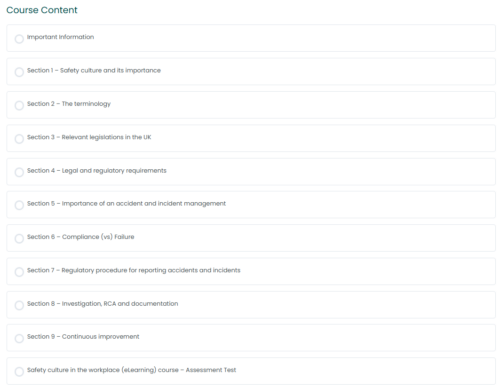
 Aim: To create a proactive safety culture within the workplace through prompt reporting and thorough investigation of all the accidents and incidents Objectives: By successfully completing this course you will be able to:
- Describe why is it important to develop a safety culture within the workplace
- Understand incidents, accidents, errors and near misses
- List all the relevant legislations in the UK
- Identify legal and regulatory requirements related to the reporting of accident and incidents
- Describe the consequences of a failure to report an accident or incident
- Explain the process of reporting the accidents and incidents within the workplace
- Explain how to a conduct thorough investigation and identifying the root cause(s)
- Understand the importance of maintaining accurate records of accidents and incidents
- Describe how to engage in continuous improvement by reviewing and updating accident and incident management procedures regularly
-

 Aim: To provide the knowledge and skills required to create a safe and compliant workplace Objectives: By successfully completing this course you will be able to:
- Describe what is risk assessment
- Describe the compliance and responsibilities associated with this process
- List all the relevant legislations in the UK
- Explain the process of risk assessment
- Understand what robust risk management is
- Explain how to store the relevant documents and ensure effective dissemination of information within the workplace
- Understand the reasons for conducting regular reviews and keeping the risk assessment process up to date
-

 Aim: A spotlight on understanding and accepting dementia and providing proactive support Objectives: By successfully completing this course you will be able to:
- Understand the fundamentals of dementia
- Describe the types and signs of dementia
- Explain the difference between dementia and other similar conditions
- List relevant legislation in the UK
- Describe the physical, psychological and emotional difficulties faced by people living with dementia
- Distressed Behaviour, possible reasons behind the and strategies to de-escalate them
- Describe how to deliver person-centred care to an individual with dementia
- Explain how to communicate effectively with people living with dementia
- Explain what is meant by “ living well ” and how to create dementia-friendly environments
- Describe the importance of providing effective care at present and in the future
-
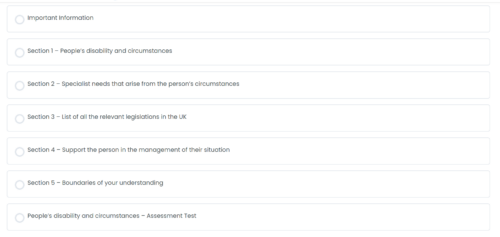
 Aim: To develop a clear understanding of the people’s disability and circumstances as a personal assistant (PA) Objectives: By successfully completing this course you will be able to:
- Understand the person’s disability and circumstances and the impact it has on them as an individual
- Understand any specialist needs that arise from the person’s circumstances
- List all the relevant legislations in the UK
- Be able to support the person in the management of their situation, being led by them in the delivery of the support they choose
- Understand the boundaries of your understanding, including when to seek assistance from other services or from your IE to source appropriate training or development
-

 Aim: To develop a clear understanding of mental capacity and how it can affect how you deliver support to the individual as a personal assistant (PA) Objectives: By successfully completing this course you will be able to:
- Understand the principles of mental capacity as they apply to your role as a PA
- List of all the relevant legislations in the UK
- Understand the application of the principles of mental capacity and consent in your role
-

 Aim: To develop a clear understanding of the benefits of reflective practice in your role as a PA Objectives: By successfully completing this course you will be able to:
- Understand what reflective practice is
- Explain why it is important in your role as a PA
- List the relevant legislations in the UK
- Explain how reflecting on the support you provide can improve your own knowledge, skills and understanding
-
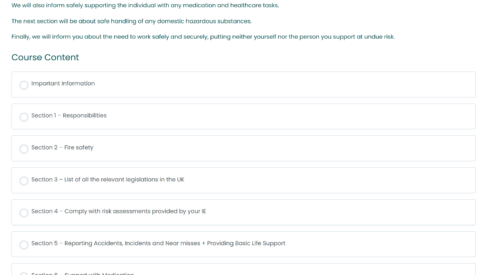
 Aim: To develop a clear understanding of your obligations with regards to the health, safety and wellbeing of everyone Objectives: By successfully completing this course you will be able to:
- Understand your own responsibilities, and the responsibilities of others with regards to health and safety
- Understand and know how to promote fire safety
- List all the relevant legislation in the UK
- Be able to comply with risk assessments provided by your IE
- Understand procedures for responding to accidents and sudden illness and providing basic life support to the person you support
- Understand any medication and healthcare tasks that the person you support requires
- Understand how to safely handle any domestic hazardous substances
- Understand the need to work safely and securely, putting neither yourself nor the person you support at undue risk
-
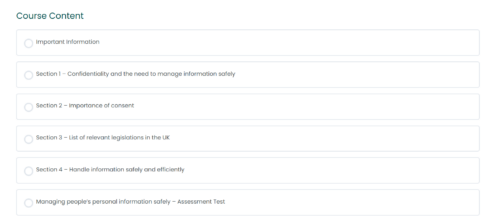
 Aim: To develop a clear understanding of the importance of managing people’s personal information safely Objectives: By successfully completing this course you will be able to:
- Understand the need for safe managing of people’s information
- Understand what information the person you support has agreed to share with others and what they wish to remain confidential
- List all the relevant legislations in the UK
- Understand that the person you support may alter their agreement on what information can be shared with others, providing or withdrawing consent as they see fit
- Understand the need to handle information in accordance with the requirements set by your individual employer (IE)
-
 Aim: To develop a clear understanding of the importance of resilience and coping skills in your role as a personal assistant Objectives: By successfully completing this course you will be able to:
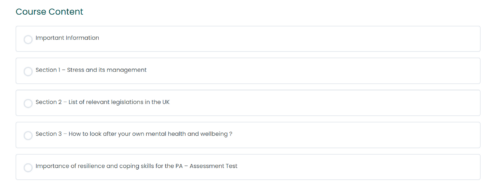
- Understand how to manage stress
- List the relevant legislations in the UK
- Understand how to protect your own mental health and personal wellbeing
-
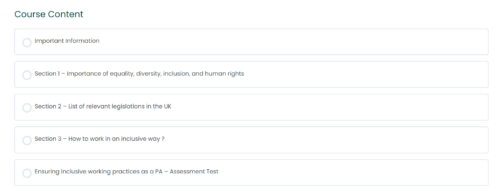
 Aim: To develop a clear understanding of the importance of practicing equality, diversity and inclusion in your work as a personal assistant Objectives: By successfully completing this course you will be able to:
- Understand the importance of equality, diversity and inclusion and human rights
- List the relevant legislations in the UK
- Understand how to work in an inclusive way
-
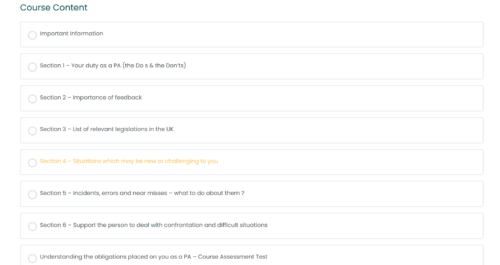
 Aim: To develop a clear understanding of all the obligations placed on you as a personal assistant Objectives: By successfully completing this course you will be able to:
- Understand that you have a duty to provide a certain standard of care that meets the expectations of the person you support or your IE
- Understand how to be open and learn from feedback from the person you support or your IE
- List the relevant legislations in the UK
- Understand how to manage situations that are new or challenging to you, including how to openly discuss this with the person you support or your IE
- Understand how to support people or your IE to deal with incidents, errors and ‘near misses’ and how to learn from them
- Understand how to manage incidents, errors or ‘near misses’ in situations where the person is unable to manage these for themselves
- Understand how to support the person to deal with confrontation and difficult situations where they have asked this of you
-

 Aim: To develop a clear understanding about safeguarding adults and children Objectives: By successfully completing this course you will be able to:
- Understand the core principles of safeguarding adults and how they might apply to your role as a PA
- Understand that you should be led by the person you support in how they want to safeguard themselves from abuse
- List the relevant legislations in the UK
- Understand when the person who receives your support may require safeguarding and in which circumstances they can safeguard themselves
- Understand how to respond to suspected or disclosed abuse, including who this should be reported to
- Understand how to protect the person who receives your support from harm and abuse
- Describe the principles of safeguarding children and what to do when you have concerns
-
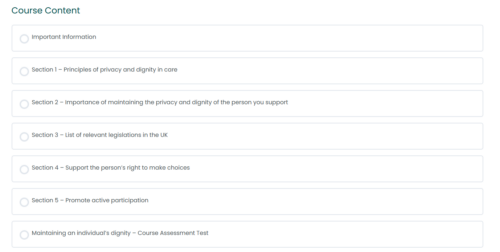
 Aim: To develop a clear understanding of the importance of maintaining an individual’s dignity while providing care and support to them Objectives: By successfully completing this course you will be able to:
- Understand the principles that underpin privacy and dignity in care
- Describe how to maintain the privacy and dignity of the person you support
- List the relevant legislations in the UK
- Explain how to support the person’s right to make choices
- Explain how to support the person to make choices about the support they receive
- Understand how to support the person to be active in their own life (for example, through ‘active participation’)
- Explain how to support the person to actively participate in the support they receive
-
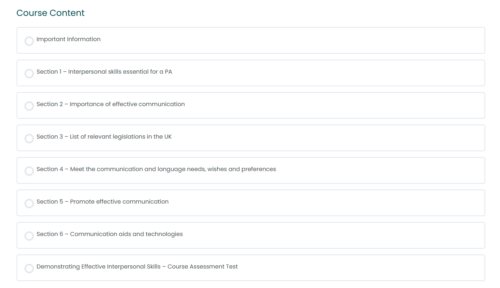
 Aim: To develop a clear understanding and demonstrate effective interpersonal skills in your role as a PA Objectives: By successfully completing this course you will be able to:
- Explain which interpersonal skills are essential for a personal assistant
- Understand the importance of effective communication with your IE and/or the person you support
- List all the relevant legislations in the UK
- Understand how to meet the communication and language needs, wishes and preferences of your IE and/or the person you support
- Understand how to promote effective communication with your IE and/or the person you support and, where relevant, with your fellow personal assistants
- Understand how to work out the preferred communication method with the person you support, including using appropriate communication aids and technologies
-
 Aim: To develop a complete of the role as a personal assistant Objectives: By successfully completing this course you will be able to:
- Understand the basic terminology
- Describe the values and behaviours expected from you as a personal assistant (PA)
- List the relevant legislations and guidelines to be observed in the UK
- Describe the role and list the responsibilities of a PA
- Understand the working relationship between you and the person you support
- Understand how to work in ways that have been agreed with your individual employer and/or the person you support
- Understand the separate working relationship between you and your individual employer (IE) where the IE is separate from the person you support
- Explain how to develop your own knowledge and skills
-
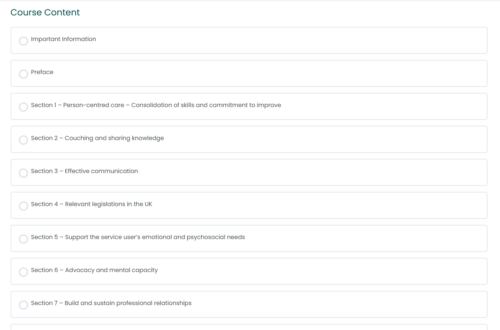
 Aim:To equip care workers, support workers and personal assistants with a clear understanding of delivering person-led support Objectives: By successfully completing this course you will be able to:
- demonstrate commitment to develop and consolidate expertise or skills
- proactively coach and share knowledge and best practice with colleagues
- show strong written and verbal communication skills, including the ability to communicate complex information in a clear and accessible way
- List the relevant legislations in the UK
- be able to support people’s emotional and psychosocial needs and role model effective practice
- be able to use knowledge and understanding of the people you support to advocate for their wishes when they are unable to do so
- know how to build and sustain professional relationships, including establishing accountability and negotiating responsibilities
- be able to work autonomously within your scope of practice and take initiative
- understand your own role, responsibilities and scope (including limitations) of practice
- understand when to ask for additional support and to who and how to escalate
- be confident to speak up when things do not feel right
- know and understand strategies to develop resilience in yourself and know how to seek support to deal with uncertain situations
- recognise and report any factors that may adversely impact safe and effective care provision
- understand what is meant by health inequalities, and your own role in working towards reducing them
- maintain accurate and up-to-date records, ensuring all care interventions and observations are recorded in a timely manner
-
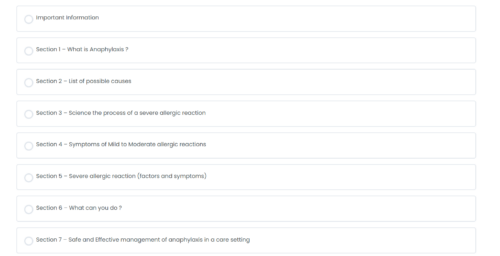
 Aim: To be able to identify and provide effective support to an individual experiencing anaphylaxis Objectives: By successfully completing this course you will be able to:
- Understand what anaphylaxis is
- List 5 possible causes of anaphylaxis
- Describe the science behind a severe allergic reaction
- List the symptoms of mild to moderate allergic reaction
- Severe allergic reaction, anaphylactic shock and full anaphylaxis
- Describe how you can provide effective support to an individual experiencing severe allergic reaction
- List 10 points for safe and efficient anaphylaxis management in a care setting
-
 ⭐ TOP SELLER Aim: To develop a complete understanding of wound care. Objectives: By successfully completing this course you will be able to:
- Understand the anatomy of our skin and its function in our body
- Understand how to recognise different types of wounds
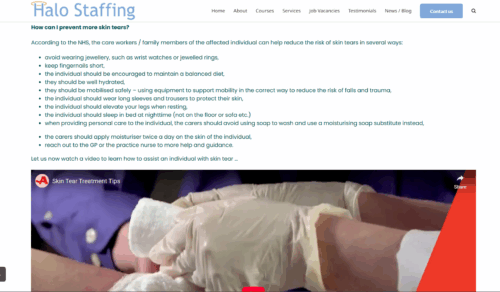
- Understand all about a skin tear
- List of relevant legislations in the UK
- Guidelines and protocols set by the Midlands Partnership NHS Foundation Trust (MPFT)
- Describe the importance of infection control measures in preventing complications
- Describe the process of wound assessment, dressing and management
- Understand all about pressure ulcers
- Describe how to support service users experiencing pain due to wounds
- Understand the process, stages and risks involved in the healing of wounds
- Understand the importance of documentation associated with wound care
- Explain the importance of escalating and reporting issues promptly
- Describe how to support the service users in maintaining good skin care and integrity