

- Recognise the 6 key principles of safeguarding adults
- Describe what harm and abuse is
- Recognise 10 forms of abuse
- List 5 things you can do to help prevent abuse
- List 3 people or points of contact you can report abuse to in order to stop it from happening
- Identify when it is appropriate to use a restrictive practise
- List 3 things that promote dignity and respect, and to be able to state why they are important
Flexible online training you can complete anytime, designed to fit around a busy schedule
-
 Aim: To protect people and keep them safe from harm and abuse. Objectives: By successfully completing this course you will be able to:
 -
 Aim: To teach you the basics of what you need to do to safeguard children that you encounter. Objectives: By successfully completing this course you will be able to:
- Describe what harm and abuse is
- List at least 7 types of abuse that a child could suffer
- List at least 4 signs of abuse
- Describe who to contact should you be aware of child abuse
- Identify at least 3 pieces of legislation in relation to protecting and safeguarding children
-
 Aim: To make you aware of mental health conditions, dementia, and learning disabilities, and the experiences people have with them. Objectives: By successfully completing this course you will be able to:
- Describe how a mental condition can change the needs of an individual
- Explain the importance of promoting positive mental health and wellbeing
- List 3 adjustments that you may need to make to personalise care delivery
- Recognise 3 early warning signs of mental health conditions, dementia, or learning disabilities
- Describe the relevant legislation
- Describe what mental capacity is and how it relates to the topic
-

 Aim: To know how to use communication effectively within your workplace and to understand its benefits. Objectives: By successfully completing this course you will be able to:
- Describe different forms of communication
- Explain the benefits of communicating
- Explain the importance of communication
- Identify 2 pieces of legislation surrounding communication
-
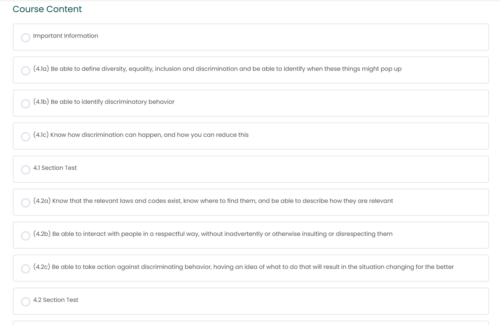
 Aim: To understand what is considered as discrimination, what can cause it, and how to respond in an effective way in order to reduce discrimination. Objectives: By successfully completing this course you will be able to:
- Explain diversity, equality and inclusion
- Explain what discrimination is
- Identify 3 pieces of legislation surrounding this topic
- Describe what you can and cannot do when you come across discrimination within your work place
- Explain how to ensure everyone is included fairly
-
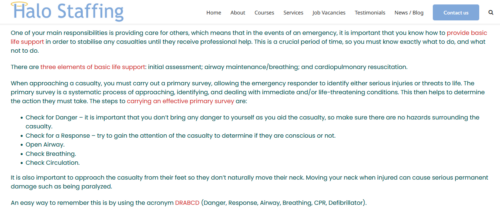
 Aim: To know how to provide basic life support, to save lives in the event of an emergency. Objectives: By successfully completing this course you will be able to:
- Identify the correct procedure to carry out basic life support
- Recall how to carry out a primary survey (initial assessment)
- Recall how to put someone in the recovery position
- Recognise the importance of airway maintenance, and how to deal with obstructed airways
- Recall how to perform cardiopulmonary resuscitation (CPR) for an adult
- Recall how to perform cardiopulmonary resuscitation (CPR) for a child
- Recall how to perform cardiopulmonary resuscitation (CPR) for an Infant
- Recall how to assist an adult that is choking
- Recall how to assist a child that is choking
- Recall how to assist an infant that is choking
- Recognise the importance of record keeping with regards to basic life support
- Identify a minimum of one piece of legislation surrounding basic life support
-
 Aim: To understand person centred values and how to apply them to your role as a health and social care worker. Objectives: By successfully completing this course you will be able to:
- Explain what person-centred values are
- Identify 2 pieces of legislation surrounding person centred values and care
- Describe the importance of promoting dignity
-

 Aim: To understand what the main roles and responsibilities within your job role are. Objectives: By successfully completing this course you will be able to:
- Explain what is meant by agreed ways of working
- Explain what is involved in your role
- Describe the care certificate and code of conduct
- Explain what your rights and responsibilities are in terms of your job role
-
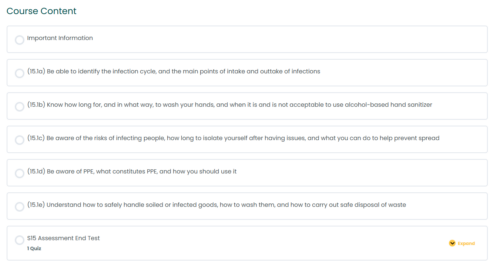
 Aim: To understand how infection is caused and how it can be prevented. Objectives: By successfully completing this course you will be able to:
- Describe the stages of the cycle of infection
- Explain how to maintain basic hand hygiene
- List 5 things you can do in your role to prevent infection
- Explain all of the steps involved in safe clinical disposal
- Describe what constitutes as a PPE
- List 5 items of PPE and describe when they must be worn
-

 Aim: To be able to handle technology and information in a lawful and secure way. Objectives: By successfully completing this course you will be able to:
- Identify the relation between Data, Information and Cyber
- Explain why data security is important in the social care sector
- Identify the 3 areas of data security
- Describe the General Data Protection Regulation (GDPR) 2018
- Explain about the cyber security landscape and the 4 major threats
- Identify counter measures to mitigate the 4 major cyber security threats
- List 5 responsibilities in handling technology and information securely
-
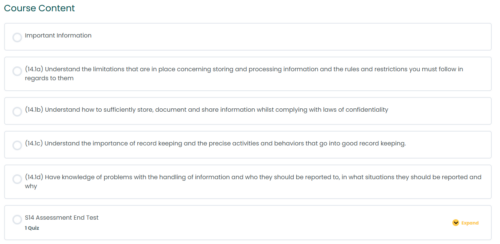
 Aim: To know how to safely and securely document, store and share information within the workplace. Objectives: By successfully completing this course you will be able to:
- Describe what is meant by agreed ways of working
- Describe what legislation is and why it is put in place
- Explain about the secure systems for recording, storing and sharing information
- List 3 ways in which you need to act to maintain confidentiality
- Describe how to keep records up to date, complete, accurate and legible
- Explain who you can report to and why when proper systems haven’t been followed
- Identify 3 different types of documentation in health and social care
- Identify 2 pieces of legislation surrounding data protection
-
 Aims: To know how to keep yourself and others safe within the work place and how to maintain a safe environment. Objectives: By successfully completing this course you will be able to:
- Explain how to successfully complete a risk assessment
- Describe what to do in the events of a fire
- Describe how to respond to accidents and sudden illness
- Describe how to carry out a primary survey
- Identify 5 ways to keep yourself and others safe within the work place
- Identify who to contact to report health and safety issues
- Identify 4 types of legislation relating to health and safety
- Describe the symptoms, causes and treatment of Legionnaires disease
- List 5 of your own responsibilities and 5 responsibilities of others within your work place
-
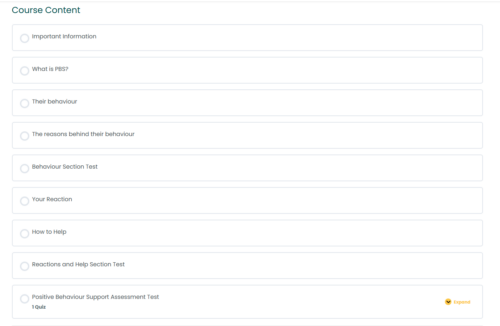
 Aim: To be able to support individuals with their behaviours in a safe. manner. Objectives: By successfully completing this course you will be able to:
- Explain what Positive Behaviour Support is
- Describe potential reasons behind particular behaviours
- Explain how to respond to particular behaviours in a way that helps the individual
- Explain how to have a degree of awareness over your own emotional reactions
- Explain how to act in such a way as to reduce the need for physical intervention
-
 Aim: To have a clear understanding of what your duty of care is. Objectives: By successfully completing this course you will be able to:
- Explain your duty of care
- Describe how to manage conflict and dilemmas
- Explain how to deal with a typical complaint
- Identify 3 pieces of legislation surrounding duty of care
- Describe how to manage errors and incidents
-
 Aims: Understand the importance of personal development, and how to increase the speed and precision of your personal development. Objectives: By successfully completing this course you will be able to:
- Describe what a personal development plan (PDP) is
- Explain how to assess your own knowledge
- Describe how to record your progress
- Recognise flaws in your own abilities, and be able to identify how best to fix them
-
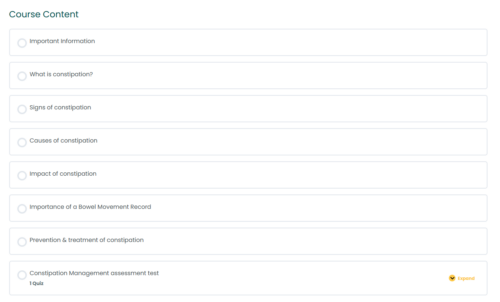
 Aim: To be able to promote wellbeing by preventing or relieving the constipation of others Objectives: By completing this course, you will be able to:
- State what constipation is
- Recognise 5 signs of constipation in others
- State 3 causes of constipation
- Describe the impact of constipation
- Describe the importance of a Bowel Movement Record
- State 5 things you can do to help someone with constipation
-
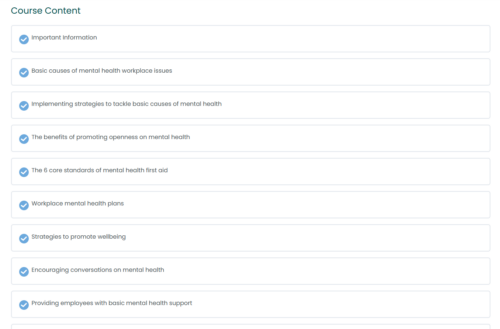
 Aim: To ensure that all members of staff are supported in the workplace. Objectives: By successfully completing this course you will be able to:
- Identify a minimum of 5 basic workplace causes of mental health issues
- Explain how to implement at least 5 strategies to tackle basic causes of basic mental health issues
- Describe the benefits of promoting openness about mental health
- Identify the 6 core standards of mental health first aid
- Explain how to create a workplace mental health plan
- List at least 6 strategies that you can implement to promote the wellbeing of all members of staff
- Identify at least 3 benefits of encouraging conversations about mental health
- Explain why it is important to provide employees with basic mental health support
- Identify at least 10 factors of the work environment of your team members that promote mental health
- Explain how to implement proactive opportunities for your team members to discuss their health and wellbeing, and the impact their work environment has on it, with their team leader(s)
- List at least 6 techniques for training individuals to be able to treat their colleagues in a way that does not negatively impact their mental health
- List at least 3 benefits of regularly monitoring the mental health of your team members
- List at least 3 methods of monitoring the mental health of your team members
- Explain what an annual wellbeing report is, and to know how to create one
-

 ⭐ TOP SELLER Aim: To be able to support individuals with dysphagia (swallowing problems). Objectives: By successfully completing this course you will be able to:
- Explain what ‘dysphagia’ is
- Identify at least 4 signs of dysphagia
- Explain the causes of dysphagia
- Explain about the complications of dysphagia
- Describe how dysphagia affects children
- Describe the treatment of dysphagia
- Explain about your role in supporting individuals with dysphagia
-
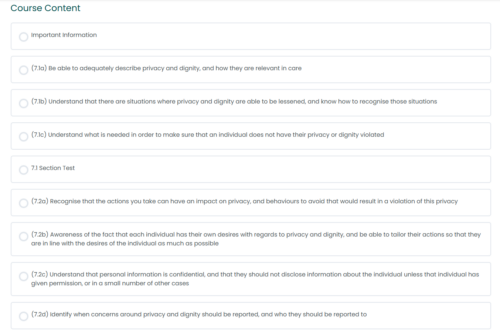
 Aim: To understand the importance of privacy and dignity within health and social care, and how to implement them into your work. Objectives: By successfully completing this course you will be able to:
- Explain what is meant by privacy and dignity
- Describe the principles behind keeping an individual’s privacy and dignity
- List 3 ways to maintain the privacy and dignity of an individual
- Explain how to support the “right to choose” of an individual
- Describe what an informed choice is, and how to support an individual to have one
- Explain what active participation is, and 3 ways to promote it
-
 Aim: To be able to ensure that any individual in your care is hydrated and has good nutrition. Objectives: By successfully completing this course you will be able to:
- Explain how to handle food safely
- Explain how to keep food preparation hygienic
- Explain what good and poor nutrition is, and the signs of each
- List 3 ways to support someone in line with their care plan with regards to nutrition and hydration
-
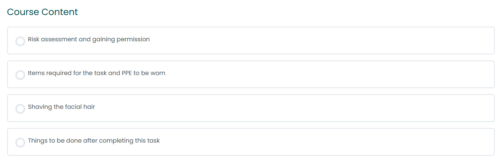
 Aim: To be able to shave the facial hair of others safely and effectively. Objectives: By successfully completing this course you will be able to:
- Perform risk assessment and gain permission
- Describe the items required for shaving
- Describe the PPE required for this task
- Perform the shave in a careful and methodical manner
- Describe what to do if you observe any cut or bleeding
- Describe how to update the records and body map
-

 Aim: To be able treat disabled individuals equally and equitably. Objectives: By successfully completing this course you will be able to:
- Explain what a disability is
- Describe what is contained in the Equality Act 2010, with regards to preventing discrimination against disabled individuals
- Explain the distinction between visible and invisible disabilities
- Describe the concepts of equality and equity
- Describe the social model of disability
- Identify 10 ways that an individual may require assistance due to a disability
- Identify 5 reasonable adjustments to your behaviour that you can make to assist disabled individuals around you
- Explain why it is important to follow the basics of etiquette, and not to make assumptions about disabled people
-
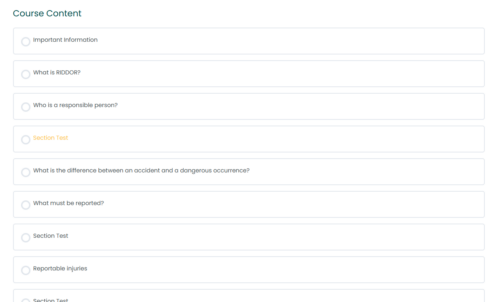
 Aim: To be able to understand the purpose of RIDDOR and comply with this regulation. Objectives: By successfully completing this course you will be able to:
- Describe what RIDDOR is
- Describe what a responsible person is, according to RIDDOR
- Identify the difference between an accident and a dangerous occurrence
- Describe what RIDDOR states must be reported
- Describe when reporting must be done
- Describe which records need to be stored and why
- Describe your role as an employee in this process
-
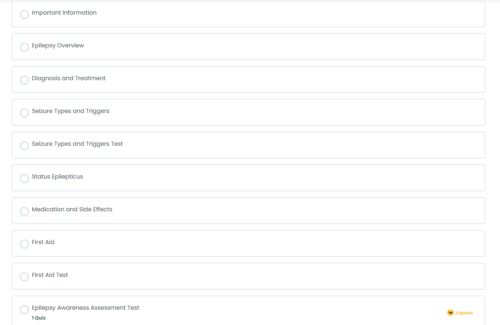
 Aim: To assist individuals with knowing what to do when caring for an individual with epilepsy. Objectives: By successfully completing this course you will be able to:
- Describe what epilepsy is
- List 5 different types of seizure
- List 5 different seizure triggers
- Describe what status epilepticus is
- Explain what to do when status epilepticus occurs
- Explain what to do in the event of a seizure
-

 Aim: To teach you how to safely move and handle an object or individual, and reduce the risk of manual handling injuries. Objectives: By successfully completing this course you will be able to:
- List 2-3 relevant laws
- List 3 hazards in relation to moving and handling
- Explain the risk assessment process
- Identify good/bad posture
- Explain safe lifting technique of a box from the floor
- Explain safe techniques for assisting standing and walking
- Explain the safe use of hoists, slide sheets, and turntables
-

 Aim: To be able to set up effective workstations that do not negatively affect your health Objectives:
- To be able to set up a workstation effectively
- To be able to set up a routine with regular breaks
- To be able to recognise when your eyes are straining
-

 Aim: To be able to manage your own levels of stress, and be able to gauge and increase your own resilience Objectives: By successfully completing this course you will be able to:
- Recognise four different categories of signs of stress
- Identify at least four different signs of stress
- Recognise what can contribute to a stressful situation
- Identify three things you can do to help deal with a stressful situation
- Identify three ways to reduce your stress levels
- Gauge what your level of resilience is
- List 3 things you can do to increase your level of resilience
-

 Aim: To reduce the risk of contracting and spreading COVID-19. Objectives: By successfully completing this course you will be able to:
- Recognise when PPE is required
- List at least 3 different types of PPE
- Recognise the correct process for donning and removing PPE
- Recognise the correct process for disposing of PPE
-
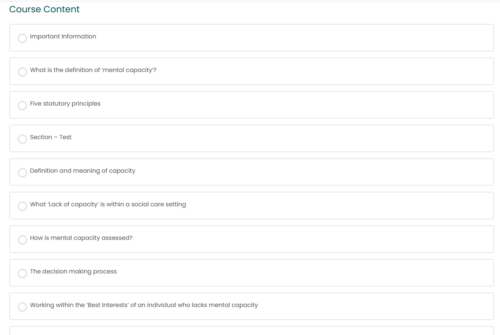
 Aim: To understand the definition of mental capacity and how it plays a vital part within a Health and Social care setting. Objectives: By successfully completing this course you will be able to:
- Explain the definition of ‘mental capacity’
- Identify at least 5 different causes of lack of mental capacity and the effects on a day-to-day basis
- Identify and list all five statutory principles
- Explain the process of assessing a person who lacks mental capacity
- Explain the decision process and why working in an individual’s best interest is vital
- Describe the powers and bodies that support the mental capacity act
- Describe the importance of code of practice
- Explain the intentions of the Deprivation of Liberty Safeguards and be familiar with restraints and restrictive practices
-
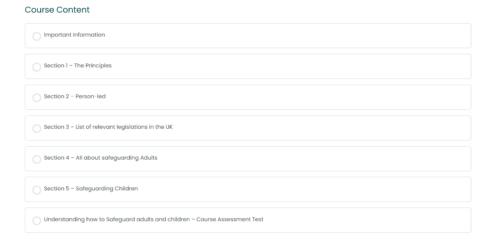
 Aim: To teach you how to safely administer the medications you are legally authorised to give and minimise the risk of administration errors. Objectives: By successfully completing this course you will be able to:
- Explain what is meant by administration of medicines
- Describe the importance of confidentiality in a health and social care setting
- Explain the importance of consent in a health and social care setting
- Explain the importance of safeguarding adults in relation to medication administration
- List the relevant legislations in the UK
- List the types and categories of medication, routes of administration
- Describe what is a MAR chart and how to record information in it
- Describe how to administer and record information about Control drugs
- Describe how to administer and record information about PRN mediation
- Describe how to administer and record information about over-the-counter medication
- Describe how to administer and record information about homely remedies
- Describe the safe administration of topical medication such as emollients and corticosteroids
- Describe how to administer and record information about transdermal patches
- Describe what should be done when placing an order and when receiving the medication
- Understand the storage requirements of medication
- Explain what to do when medication error happens
- Explain what to do when the service user has refused to take the medication
- Explain what to do when the service user has missed a dose of medication
- Explain the procedure for safe return of the refused/unwanted/damaged medication
- Explain how long the medication and their records must be kept after the service user has stopped receiving care from the service provider
- Describe your role in safe administration of medication