


- Understand the fundamentals of dementia
- Describe the types and signs of dementia
- Explain the difference between dementia and other similar conditions
- List relevant legislation in the UK
- Describe the physical, psychological and emotional difficulties faced by people living with dementia
- Distressed Behaviour, possible reasons behind the and strategies to de-escalate them
- Describe how to deliver person-centred care to an individual with dementia
- Explain how to communicate effectively with people living with dementia
- Explain what is meant by “ living well ” and how to create dementia-friendly environments
- Describe the importance of providing effective care at present and in the future
Flexible online training you can complete anytime, designed to fit around a busy schedule
-

 Aim: A spotlight on understanding and accepting dementia and providing proactive support Objectives: By successfully completing this course you will be able to:
 -
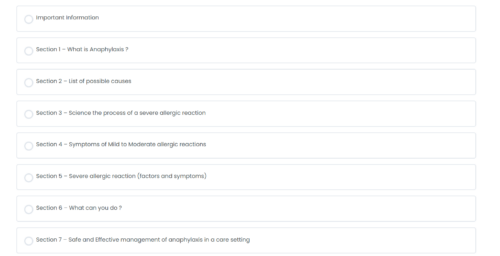
 Aim: To be able to identify and provide effective support to an individual experiencing anaphylaxis Objectives: By successfully completing this course you will be able to:
- Understand what anaphylaxis is
- List 5 possible causes of anaphylaxis
- Describe the science behind a severe allergic reaction
- List the symptoms of mild to moderate allergic reaction
- Severe allergic reaction, anaphylactic shock and full anaphylaxis
- Describe how you can provide effective support to an individual experiencing severe allergic reaction
- List 10 points for safe and efficient anaphylaxis management in a care setting
-

 Aim: To make you aware of mental health conditions, dementia, and learning disabilities, and the experiences people have with them. Objectives: By successfully completing this course you will be able to:
- Describe how a mental condition can change the needs of an individual
- Explain the importance of promoting positive mental health and wellbeing
- List 3 adjustments that you may need to make to personalise care delivery
- Recognise 3 early warning signs of mental health conditions, dementia, or learning disabilities
- Describe the relevant legislation
- Describe what mental capacity is and how it relates to the topic
-
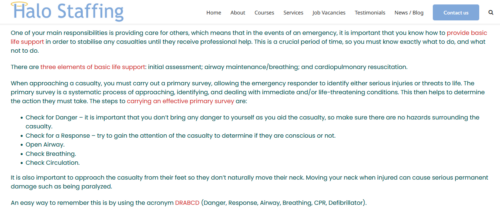
 Aim: To know how to provide basic life support, to save lives in the event of an emergency. Objectives: By successfully completing this course you will be able to:
- Identify the correct procedure to carry out basic life support
- Recall how to carry out a primary survey (initial assessment)
- Recall how to put someone in the recovery position
- Recognise the importance of airway maintenance, and how to deal with obstructed airways
- Recall how to perform cardiopulmonary resuscitation (CPR) for an adult
- Recall how to perform cardiopulmonary resuscitation (CPR) for a child
- Recall how to perform cardiopulmonary resuscitation (CPR) for an Infant
- Recall how to assist an adult that is choking
- Recall how to assist a child that is choking
- Recall how to assist an infant that is choking
- Recognise the importance of record keeping with regards to basic life support
- Identify a minimum of one piece of legislation surrounding basic life support
-
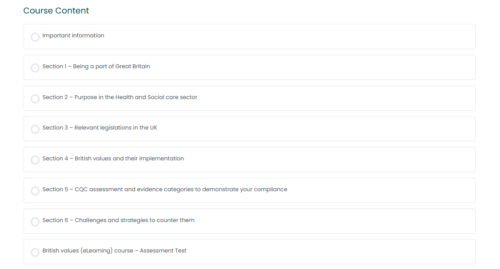
 Aim: To understand how to be a good citizen of a modern and diverse Great Britain Objectives: By successfully completing this course you will be able to:
- Understand what British values are
- Explain the general purpose of them
- Understand how they relate to the health and social care sector
- List all the relevant legislations in the UK
- Understand how you can uphold and promote …
- The principle of democracy
- The rule of law
- Individual liberty
- Mutual respect
- Tolerance of those with different faiths and beliefs
- Describe the CQC assessment and evidence categories to demonstrate your compliance
- List a few challenges you may face during the implementation of these values in a care setting and some strategies you can employ to counter them
-

 Aim: To be able to safely administer Midazolam buccally. Objectives: By successfully completing this course you will be able to:
- Identify a situation where buccal Midazolam may be needed
- Describe how to safely and successfully administer buccal Midazolam
-

 Aim: To know how to use communication effectively within your workplace and to understand its benefits. Objectives: By successfully completing this course you will be able to:
- Describe different forms of communication
- Explain the benefits of communicating
- Explain the importance of communication
- Identify 2 pieces of legislation surrounding communication
-

 Aim: To be able to effectively and responsibly respond to, manage, and react to complaints. Objectives: By successfully completing this course you will be able to:
- Recognise when an individual is making a complaint
- Describe 3 types of customer complaints
- Explain how to effectively listen to and understand customer complaints
- Describe what the customer is hoping to achieve by making the complaint
- Explain why it is important for you to understand and help the customer understand, what is achievable as a result of the complaint, and be clear as to what the possible outcomes may be
- Describe an estimate for what the timeframe for dealing with the complaint may be
- Explain how to set firm boundaries with individuals making complaints, and be able to firmly and decisively act when those boundaries are breached
-

 Aim: To be able to promote wellbeing by preventing or relieving the constipation of others Objectives: By completing this course, you will be able to:
- State what constipation is
- Recognise 5 signs of constipation in others
- State 3 causes of constipation
- Describe the impact of constipation
- Describe the importance of a Bowel Movement Record
- State 5 things you can do to help someone with constipation
-
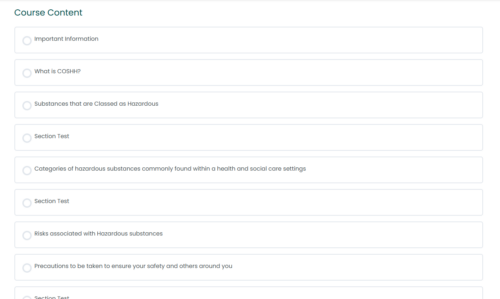
 Aim: To be able to work with hazardous substances safely and effectively. Objectives: By successfully completing this course you will be able to:
- Describe what COSHH stands for
- Identify 5 substances classed as hazardous substances
- Identify 3 different categories of hazardous substances commonly found in a health and social care setting
- List at least 6 likely risks associated with hazardous substances
- Describe the precautions to be taken to ensure your safety and the safety of others around you
- Identify 5 steps in COSHH regulations
- List 5 responsibilities you will have when handling hazardous substances
-

 Aim: To reduce the risk of contracting and spreading COVID-19. Objectives: By successfully completing this course you will be able to:
- Recognise when PPE is required
- List at least 3 different types of PPE
- Recognise the correct process for donning and removing PPE
- Recognise the correct process for disposing of PPE
-
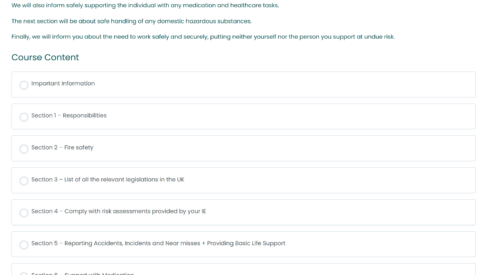
 Aim: To develop a clear understanding of your obligations with regards to the health, safety and wellbeing of everyone Objectives: By successfully completing this course you will be able to:
- Understand your own responsibilities, and the responsibilities of others with regards to health and safety
- Understand and know how to promote fire safety
- List all the relevant legislation in the UK
- Be able to comply with risk assessments provided by your IE
- Understand procedures for responding to accidents and sudden illness and providing basic life support to the person you support
- Understand any medication and healthcare tasks that the person you support requires
- Understand how to safely handle any domestic hazardous substances
- Understand the need to work safely and securely, putting neither yourself nor the person you support at undue risk
-
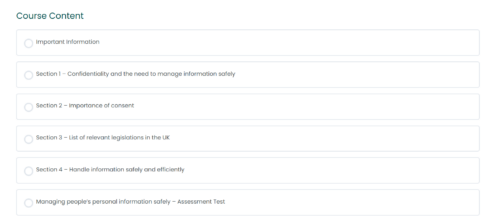
 Aim: To develop a clear understanding of the importance of managing people’s personal information safely Objectives: By successfully completing this course you will be able to:
- Understand the need for safe managing of people’s information
- Understand what information the person you support has agreed to share with others and what they wish to remain confidential
- List all the relevant legislations in the UK
- Understand that the person you support may alter their agreement on what information can be shared with others, providing or withdrawing consent as they see fit
- Understand the need to handle information in accordance with the requirements set by your individual employer (IE)
-
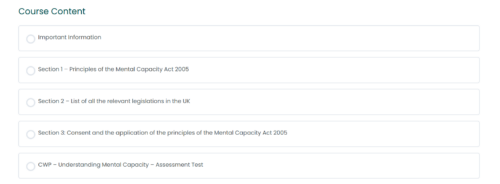
 Aim: To develop a clear understanding of mental capacity and how it can affect how you deliver support to the individual as a personal assistant (PA) Objectives: By successfully completing this course you will be able to:
- Understand the principles of mental capacity as they apply to your role as a PA
- List of all the relevant legislations in the UK
- Understand the application of the principles of mental capacity and consent in your role
-
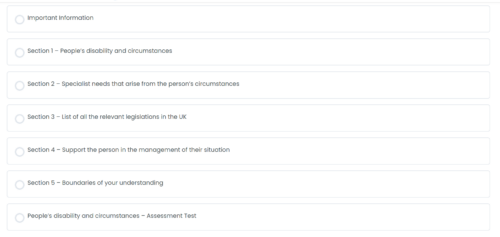
 Aim: To develop a clear understanding of the people’s disability and circumstances as a personal assistant (PA) Objectives: By successfully completing this course you will be able to:
- Understand the person’s disability and circumstances and the impact it has on them as an individual
- Understand any specialist needs that arise from the person’s circumstances
- List all the relevant legislations in the UK
- Be able to support the person in the management of their situation, being led by them in the delivery of the support they choose
- Understand the boundaries of your understanding, including when to seek assistance from other services or from your IE to source appropriate training or development
-

 Aim: To develop a clear understanding of the benefits of reflective practice in your role as a PA Objectives: By successfully completing this course you will be able to:
- Understand what reflective practice is
- Explain why it is important in your role as a PA
- List the relevant legislations in the UK
- Explain how reflecting on the support you provide can improve your own knowledge, skills and understanding
-

 Aim: To be able to handle technology and information in a lawful and secure way. Objectives: By successfully completing this course you will be able to:
- Identify the relation between Data, Information and Cyber
- Explain why data security is important in the social care sector
- Identify the 3 areas of data security
- Describe the General Data Protection Regulation (GDPR) 2018
- Explain about the cyber security landscape and the 4 major threats
- Identify counter measures to mitigate the 4 major cyber security threats
- List 5 responsibilities in handling technology and information securely
-
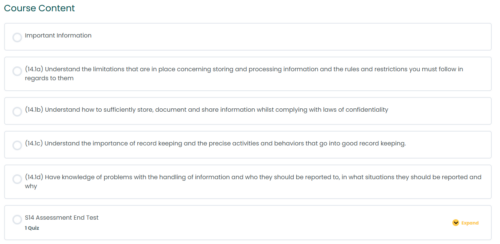
 Aim: To know how to safely and securely document, store and share information within the workplace. Objectives: By successfully completing this course you will be able to:
- Describe what is meant by agreed ways of working
- Describe what legislation is and why it is put in place
- Explain about the secure systems for recording, storing and sharing information
- List 3 ways in which you need to act to maintain confidentiality
- Describe how to keep records up to date, complete, accurate and legible
- Explain who you can report to and why when proper systems haven’t been followed
- Identify 3 different types of documentation in health and social care
- Identify 2 pieces of legislation surrounding data protection
-
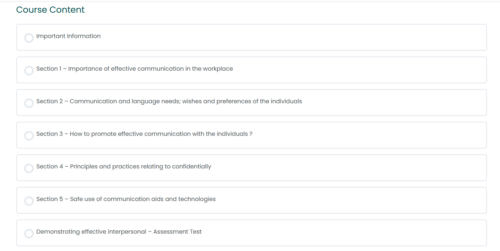
 Aim: To develop a clear understanding of effective communication and interpersonal skills Objectives: By successfully completing this course you will be able to:
- Understand the importance of effective communication in the workplace
- Understand how to meet the communication and language needs, wishes and preferences of individuals
- Understand how to promote effective communication with individuals
- Understand the principles and practices relating to confidentially
- Use a range of communication methods, and support the appropriate and safe use of communication aids and technologies
-
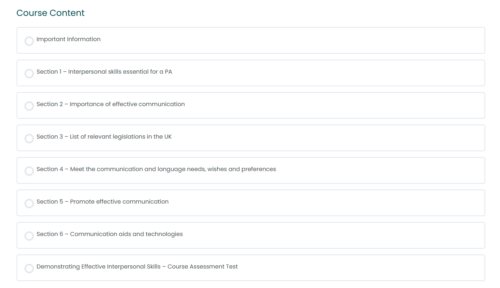
 Aim: To develop a clear understanding and demonstrate effective interpersonal skills in your role as a PA Objectives: By successfully completing this course you will be able to:
- Explain which interpersonal skills are essential for a personal assistant
- Understand the importance of effective communication with your IE and/or the person you support
- List all the relevant legislations in the UK
- Understand how to meet the communication and language needs, wishes and preferences of your IE and/or the person you support
- Understand how to promote effective communication with your IE and/or the person you support and, where relevant, with your fellow personal assistants
- Understand how to work out the preferred communication method with the person you support, including using appropriate communication aids and technologies
-
 Aim: How to support and identify people who are going through depression Objectives: By successfully completing this course you will be able to:
- Understand what depression is
- Depression – Myth vs Reality
- List the relevant legislations in the UK
- Understand how to know if someone is going through depression
- Emotional signs
- Physical signs
- Cognitive signs
- Behavioural and social signs
- Describe the common causes of depression
- Understand the risk factors associated with depression
- Understand the Halo Staffing – N A L S S approach to help
- Depression and suicide – know how to act immediately
- Understand what you SHOULD NOT do
- List of things for you to remember while supporting anyone experiencing depression
-

 Aim: To be able to promote the wellbeing of an individual with diabetes Objectives: By completing this course, you will be able to:
- Understand what diabetes is
- Explain the difference between Type 1 and Type 2 of diabetes
- Describe what pre-diabetes is
- Symptoms of diabetes
- Complications of diabetes
- Understand how to live a productive life with diabetes
-

 Aim: To understand how to prevent unauthorised access to your systems and data by being safe and secure online Objectives: By successfully completing this course you will be able to:
- Describe the importance of cyber security in the health and social care sector
- Understand the different types of data security threats (both physical and digital)
- List all the relevant legislations in the UK
- Describe the principles of data security
- Describe how to identify signs of online abuse and safeguard others who may be at risk of cyber-crime or other harmful online activity
- Understand how you play a crucial role in avoiding data security threats and keeping the systems and data of your organisation safe
- Know who to report to and how to raise concerns if you become aware of, or suspect, a data breach or any risk to data security
-
 Aim: To understand how to use technology to better communicate with each other and with the people you support Objectives: By successfully completing this course you will be able to:
- Describe the various methods of digital communication and their uses
- Understand how to choose the right technology for the situation and adapt your communication style as necessary
- List all the relevant legislations in the UK
- Describe how to use communication technologies safely, securely, and appropriately, with respect for others and in line with your organisation’s policies
- Explain how digital platforms and forums can be useful to collaborate with others
- Understand how to support the service users to use the digital communication tools effectively
-
 Aim: To understand how digital learning can contribute towards development and wellbeing Objectives: By successfully completing this course you will be able to:
- Describe how technology can impact the health and wellbeing of both service users and the care professionals
- Explain the importance of learning and development in the health and social care sector
- List all the relevant legislations in the UK
- Understand where to find digital training opportunities to advance your learning and development
- Know how to take part and benefit from digital learning opportunities, and share such opportunities with others
- Understand how to use technology to review and track your learning and development journey
-
 Aim: To understand how to use technology ethically by respecting people's privacy and choices Objectives: By successfully completing this course you will be able to:
- Describe why technology should be used ethically
- Understand the importance of consent
- List all the relevant legislations in the UK
- Explain the need to involve and support people to make informed choices on the use of technology for their care
- Know what you should do if you are concerned that technology may be negatively impacting someone or their rights
- Summarise your role in using technology for the benefit of people and to enhance their rights
-

 Aim: To understand the skills required to make efficient use of technology in a care setting Objectives: By successfully completing this course you will be able to:
- Understand the basics about the technology
- Describe the list of digital devices you may be working with daily
- List of the relevant legislations in the UK
- Understand and match technologies to the care tasks
- Describe how you to make use of accessibility tools on devices and help others to use these tools
- Explain how to use the internet to access websites, search engines or emails as required by your role as a care professional
- Understand how to solve basic problems when using technology
-
 Aim: To understand how to use, share and manage data safely Objectives: By successfully completing this course you will be able to:
- Describe the importance of data in the health and social care sector
- List the various types of data, how it can be collected, kept up-to-date and shared using technology
- List all the relevant legislations in the UK
- Understand the principles of confidentiality and identify who is permitted to access and handle confidential information in line with legal and organisational requirements
- List the circumstances in which sharing the relevant and necessary information takes priority over confidentiality
- Explain why people have a right to review and make choices about how their information is used
- Understand the importance of recording care information in an accurate and timely manner using technology
- Explain why the trustworthiness of the source of information is crucial when finding and using data from the internet
- Summarise your responsibilities with regards to safe, compliant and efficient handling of data in the health and social care sector
-
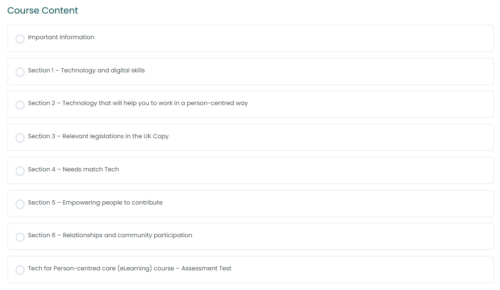
 Aim: To understand, develop and use digital technology and provide the best person-centred care Objectives: By successfully completing this course you will be able to:
- Understand the importance of technology and digital skills in this sector
- Understand how to use technology to work in a person-centred way
- List all the relevant legislations in the UK
- Describe how you can help people to learn about technologies that may benefit them
- Understand how to help people to access their personal information and contribute to their digital social care records
- Explain how to use technology to help people to build and maintain relationships and participate in their community
-

 Aim: To know how to embed inclusivity within your organisation and wider practices, with regards to disabilities and mental health. Objectives: By successfully completing this course you will be able to:
- Describe the Disability Confidence Framework
- List at least 3 benefits of the Disability Confidence Framework
- Explain about the different levels of the Disability Confidence Framework
- Describe how long a typical Disability Confidence Framework accreditation lasts for
- Describe how the Voluntary Reporting Framework works
- Describe the actions necessary to achieve or maintain the different levels of the Disability Confidence Framework