- Describe the main duties and responsibilities within your role
- Identify the standards, codes of conduct and ways of working that apply to your role
- Explain how personal values, attitudes, beliefs and experiences can influence practice
- Recognise opportunities for professional and career development within the health and social care sector
- Describe your employment rights and responsibilities
- Explain the aims, objectives and values of your organisation
- Explain the importance of working in accordance with agreed ways of working
- Demonstrate how to access relevant workplace policies, procedures and guidance
- Understand your responsibilities to the individuals you support, and others involved in their care and support
Mandatory online training to help meet compliance and regulatory requirements
-
 Aim: To enable you to understand your role, responsibilities, agreed ways of working, and opportunities for professional development in this sector Objectives: By successfully completing this course you will be able to:
 -
 Aim: To develop the knowledge and skills required to safeguard adults from abuse, neglect and harm, while promoting dignity, rights, wellbeing and person-centred care Objectives: By successfully completing this course you will be able to:
- Explain the principles and purpose of adult safeguarding in health and social care settings
- Define an adult at risk and describe their own safeguarding roles and responsibilities
- Recognise the main types, indicators and causes of abuse, neglect and harm
- Explain restrictive practices and apply organisational policies and procedures appropriately
- Identify technology-related safeguarding risks and support individuals to use technology safely
- Promote dignity, respect, rights and wellbeing when providing care and support
- Explain why some individuals may be more vulnerable to abuse, neglect and exploitation
- Describe how person-centred approaches, active participation and partnership working reduce the risk of abuse
- Support individuals to make informed choices and take reasonable steps to keep themselves safe
- Explain local safeguarding arrangements and the importance of multi-agency working
- Respond appropriately to suspected or disclosed abuse by following reporting and safeguarding procedures
- Describe relevant safeguarding legislation, information-sharing requirements and actions to take when barriers to reporting concerns arise
-
 Aim: To develop the knowledge and skills required to safeguard adults from abuse, neglect and harm, while promoting dignity, rights, wellbeing and person-centred care Objectives: By successfully completing this course you will be able to:
- Identify your learning and development needs and contribute to the creation of a personal development plan
- Describe the process for agreeing a personal development plan and identify who should be involved
- Explain how feedback from others supports personal and professional development and improves ways of working
- Describe the literacy, numeracy, communication and digital skills required to carry out your role effectively
- Identify the sources of information, support and guidance to check and develop your literacy, numeracy, communication and digital skills
- Explain how reflection on situations, learning activities and feedback from others can improve your knowledge, skills and understanding
- Measure your knowledge, performance and understanding against the relevant standards and record progress towards personal development goals
- Identify the learning opportunities available to you and explain the importance of Continuing Professional Development (CPD) in improving your practice
-

 Aim: To understand what the main roles and responsibilities within your job role are. Objectives: By successfully completing this course you will be able to:
- Explain what is meant by agreed ways of working
- Explain what is involved in your role
- Describe the care certificate and code of conduct
- Explain what your rights and responsibilities are in terms of your job role
-

 Aims: Understand the importance of personal development, and how to increase the speed and precision of your personal development. Objectives: By successfully completing this course you will be able to:
- Describe what a personal development plan (PDP) is
- Explain how to assess your own knowledge
- Describe how to record your progress
- Recognise flaws in your own abilities, and be able to identify how best to fix them
-
 Aim: To have a clear understanding of what your duty of care is. Objectives: By successfully completing this course you will be able to:
- Explain your duty of care
- Describe how to manage conflict and dilemmas
- Explain how to deal with a typical complaint
- Identify 3 pieces of legislation surrounding duty of care
- Describe how to manage errors and incidents
-
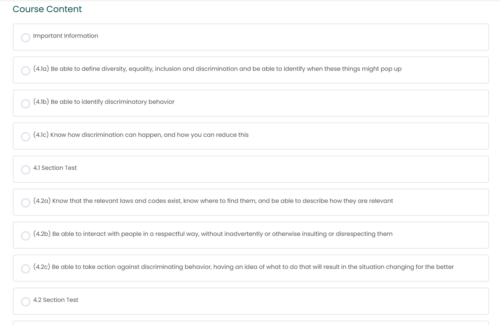
 Aim: To understand what is considered as discrimination, what can cause it, and how to respond in an effective way in order to reduce discrimination. Objectives: By successfully completing this course you will be able to:
- Explain diversity, equality and inclusion
- Explain what discrimination is
- Identify 3 pieces of legislation surrounding this topic
- Describe what you can and cannot do when you come across discrimination within your work place
- Explain how to ensure everyone is included fairly
-
 Aim: To understand person centred values and how to apply them to your role as a health and social care worker. Objectives: By successfully completing this course you will be able to:
- Explain what person-centred values are
- Identify 2 pieces of legislation surrounding person centred values and care
- Describe the importance of promoting dignity
-

 Aim: To know how to use communication effectively within your workplace and to understand its benefits. Objectives: By successfully completing this course you will be able to:
- Describe different forms of communication
- Explain the benefits of communicating
- Explain the importance of communication
- Identify 2 pieces of legislation surrounding communication
-
 Aim: To understand the importance of privacy and dignity within health and social care, and how to implement them into your work. Objectives: By successfully completing this course you will be able to:
- Explain what is meant by privacy and dignity
- Describe the principles behind keeping an individual’s privacy and dignity
- List 3 ways to maintain the privacy and dignity of an individual
- Explain how to support the “right to choose” of an individual
- Describe what an informed choice is, and how to support an individual to have one
- Explain what active participation is, and 3 ways to promote it
-
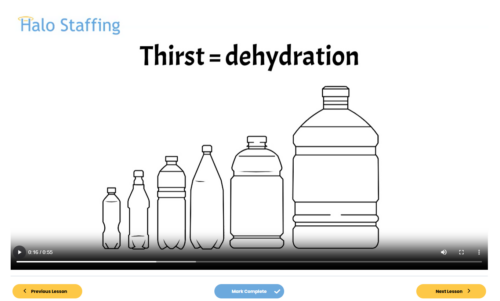
 Aim: To be able to ensure that any individual in your care is hydrated and has good nutrition. Objectives: By successfully completing this course you will be able to:
- Explain how to handle food safely
- Explain how to keep food preparation hygienic
- Explain what good and poor nutrition is, and the signs of each
- List 3 ways to support someone in line with their care plan with regards to nutrition and hydration
-

 Aim: To make you aware of mental health conditions, dementia, and learning disabilities, and the experiences people have with them. Objectives: By successfully completing this course you will be able to:
- Describe how a mental condition can change the needs of an individual
- Explain the importance of promoting positive mental health and wellbeing
- List 3 adjustments that you may need to make to personalise care delivery
- Recognise 3 early warning signs of mental health conditions, dementia, or learning disabilities
- Describe the relevant legislation
- Describe what mental capacity is and how it relates to the topic
-
 Aim: To protect people and keep them safe from harm and abuse. Objectives: By successfully completing this course you will be able to:
- Recognise the 6 key principles of safeguarding adults
- Describe what harm and abuse is
- Recognise 10 forms of abuse
- List 5 things you can do to help prevent abuse
- List 3 people or points of contact you can report abuse to in order to stop it from happening
- Identify when it is appropriate to use a restrictive practise
- List 3 things that promote dignity and respect, and to be able to state why they are important
-
 Aim: To teach you the basics of what you need to do to safeguard children that you encounter. Objectives: By successfully completing this course you will be able to:
- Describe what harm and abuse is
- List at least 7 types of abuse that a child could suffer
- List at least 4 signs of abuse
- Describe who to contact should you be aware of child abuse
- Identify at least 3 pieces of legislation in relation to protecting and safeguarding children
-
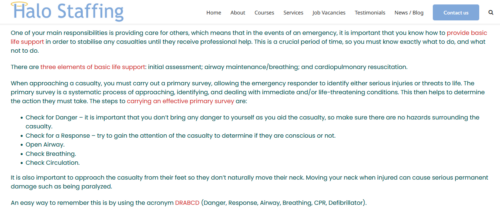
 Aim: To know how to provide basic life support, to save lives in the event of an emergency. Objectives: By successfully completing this course you will be able to:
- Identify the correct procedure to carry out basic life support
- Recall how to carry out a primary survey (initial assessment)
- Recall how to put someone in the recovery position
- Recognise the importance of airway maintenance, and how to deal with obstructed airways
- Recall how to perform cardiopulmonary resuscitation (CPR) for an adult
- Recall how to perform cardiopulmonary resuscitation (CPR) for a child
- Recall how to perform cardiopulmonary resuscitation (CPR) for an Infant
- Recall how to assist an adult that is choking
- Recall how to assist a child that is choking
- Recall how to assist an infant that is choking
- Recognise the importance of record keeping with regards to basic life support
- Identify a minimum of one piece of legislation surrounding basic life support
-
 Aims: To know how to keep yourself and others safe within the work place and how to maintain a safe environment. Objectives: By successfully completing this course you will be able to:
- Explain how to successfully complete a risk assessment
- Describe what to do in the events of a fire
- Describe how to respond to accidents and sudden illness
- Describe how to carry out a primary survey
- Identify 5 ways to keep yourself and others safe within the work place
- Identify who to contact to report health and safety issues
- Identify 4 types of legislation relating to health and safety
- Describe the symptoms, causes and treatment of Legionnaires disease
- List 5 of your own responsibilities and 5 responsibilities of others within your work place
-
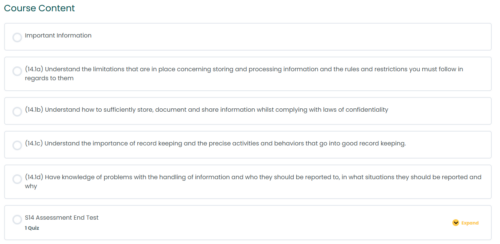
 Aim: To know how to safely and securely document, store and share information within the workplace. Objectives: By successfully completing this course you will be able to:
- Describe what is meant by agreed ways of working
- Describe what legislation is and why it is put in place
- Explain about the secure systems for recording, storing and sharing information
- List 3 ways in which you need to act to maintain confidentiality
- Describe how to keep records up to date, complete, accurate and legible
- Explain who you can report to and why when proper systems haven’t been followed
- Identify 3 different types of documentation in health and social care
- Identify 2 pieces of legislation surrounding data protection
-
 Aim: To understand how infection is caused and how it can be prevented. Objectives: By successfully completing this course you will be able to:
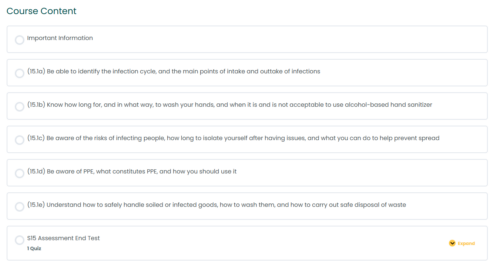
- Describe the stages of the cycle of infection
- Explain how to maintain basic hand hygiene
- List 5 things you can do in your role to prevent infection
- Explain all of the steps involved in safe clinical disposal
- Describe what constitutes as a PPE
- List 5 items of PPE and describe when they must be worn