Our care training courses are suitable for individuals wishing to develop their skills, new care workers, care workers who are looking to update their knowledge and for providing care training courses for the staff you employ. You can buy our courses individually or as a group, you can quickly and easily purchase multiple courses through our Group Creation page which can be found HERE.
Search
Search by any keywords specific to find the course you are looking for.
Stafford
London
Bristol
Stafford
Goole
London
Bristol
Birmingham
Horsham
Gillingham
Falkirk
Central London
Birmingham
Coventry
Nottingham
Leicester
Mansfield
Cambridge
Manchester
Liverpool
Leeds
Doncaster
Newcastle Upon Tyne
Bristol
Bournemouth
Exeter
Glasgow
Edinburgh
Cardiff
Newport
Norwich
Luton
Chelmsford
No matter where you’re based, we can provide training to support your learning and development. Our courses reach learners and organisations across the UK, offering accessible and practical opportunities to build skills, meet training needs and support continued development.
-
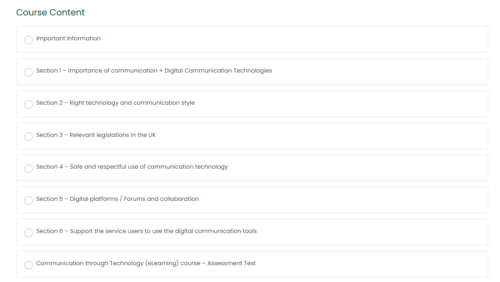
 Aim: To understand how to use technology to better communicate with each other and with the people you support Objectives: By successfully completing this course you will be able to:
- Describe the various methods of digital communication and their uses
- Understand how to choose the right technology for the situation and adapt your communication style as necessary
- List all the relevant legislations in the UK
- Describe how to use communication technologies safely, securely, and appropriately, with respect for others and in line with your organisation’s policies
- Explain how digital platforms and forums can be useful to collaborate with others
- Understand how to support the service users to use the digital communication tools effectively
-
 Aim: To understand how digital learning can contribute towards development and wellbeing Objectives: By successfully completing this course you will be able to:
- Describe how technology can impact the health and wellbeing of both service users and the care professionals
- Explain the importance of learning and development in the health and social care sector
- List all the relevant legislations in the UK
- Understand where to find digital training opportunities to advance your learning and development
- Know how to take part and benefit from digital learning opportunities, and share such opportunities with others
- Understand how to use technology to review and track your learning and development journey
-
 Aim: To understand how to use technology ethically by respecting people's privacy and choices Objectives: By successfully completing this course you will be able to:
- Describe why technology should be used ethically
- Understand the importance of consent
- List all the relevant legislations in the UK
- Explain the need to involve and support people to make informed choices on the use of technology for their care
- Know what you should do if you are concerned that technology may be negatively impacting someone or their rights
- Summarise your role in using technology for the benefit of people and to enhance their rights
-

 Aim: To understand the skills required to make efficient use of technology in a care setting Objectives: By successfully completing this course you will be able to:
- Understand the basics about the technology
- Describe the list of digital devices you may be working with daily
- List of the relevant legislations in the UK
- Understand and match technologies to the care tasks
- Describe how you to make use of accessibility tools on devices and help others to use these tools
- Explain how to use the internet to access websites, search engines or emails as required by your role as a care professional
- Understand how to solve basic problems when using technology
-
 Aim: To understand how to use, share and manage data safely Objectives: By successfully completing this course you will be able to:
- Describe the importance of data in the health and social care sector
- List the various types of data, how it can be collected, kept up-to-date and shared using technology
- List all the relevant legislations in the UK
- Understand the principles of confidentiality and identify who is permitted to access and handle confidential information in line with legal and organisational requirements
- List the circumstances in which sharing the relevant and necessary information takes priority over confidentiality
- Explain why people have a right to review and make choices about how their information is used
- Understand the importance of recording care information in an accurate and timely manner using technology
- Explain why the trustworthiness of the source of information is crucial when finding and using data from the internet
- Summarise your responsibilities with regards to safe, compliant and efficient handling of data in the health and social care sector
-
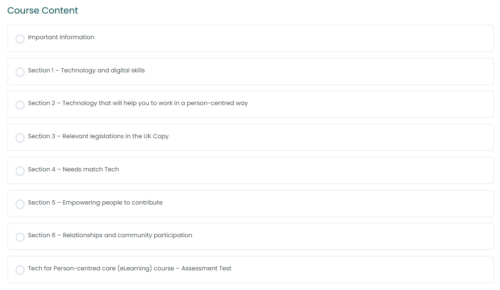
 Aim: To understand, develop and use digital technology and provide the best person-centred care Objectives: By successfully completing this course you will be able to:
- Understand the importance of technology and digital skills in this sector
- Understand how to use technology to work in a person-centred way
- List all the relevant legislations in the UK
- Describe how you can help people to learn about technologies that may benefit them
- Understand how to help people to access their personal information and contribute to their digital social care records
- Explain how to use technology to help people to build and maintain relationships and participate in their community
-

 Aim: To know how to embed inclusivity within your organisation and wider practices, with regards to disabilities and mental health. Objectives: By successfully completing this course you will be able to:
- Describe the Disability Confidence Framework
- List at least 3 benefits of the Disability Confidence Framework
- Explain about the different levels of the Disability Confidence Framework
- Describe how long a typical Disability Confidence Framework accreditation lasts for
- Describe how the Voluntary Reporting Framework works
- Describe the actions necessary to achieve or maintain the different levels of the Disability Confidence Framework
-

 Aim: To be able treat disabled individuals equally and equitably. Objectives: By successfully completing this course you will be able to:
- Explain what a disability is
- Describe what is contained in the Equality Act 2010, with regards to preventing discrimination against disabled individuals
- Explain the distinction between visible and invisible disabilities
- Describe the concepts of equality and equity
- Describe the social model of disability
- Identify 10 ways that an individual may require assistance due to a disability
- Identify 5 reasonable adjustments to your behaviour that you can make to assist disabled individuals around you
- Explain why it is important to follow the basics of etiquette, and not to make assumptions about disabled people
-
 Aim: To have a clear understanding of what your duty of care is. Objectives: By successfully completing this course you will be able to:
- Explain your duty of care
- Describe how to manage conflict and dilemmas
- Explain how to deal with a typical complaint
- Identify 3 pieces of legislation surrounding duty of care
- Describe how to manage errors and incidents
-

 ⭐ TOP SELLER Aim: To be able to support individuals with dysphagia (swallowing problems). Objectives: By successfully completing this course you will be able to:
- Explain what ‘dysphagia’ is
- Identify at least 4 signs of dysphagia
- Explain the causes of dysphagia
- Explain about the complications of dysphagia
- Describe how dysphagia affects children
- Describe the treatment of dysphagia
- Explain about your role in supporting individuals with dysphagia
-
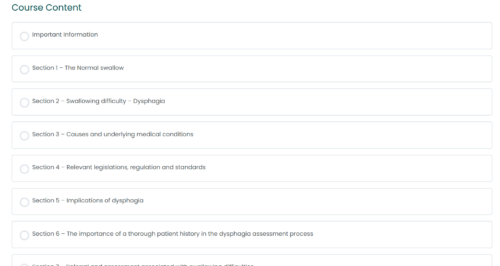
 Aim: To gain a complete understanding of dysphagia management using IDDSI standards Objectives: By successfully completing this course you will be able to:
- Understand the difference between a normal swallow and an abnormal swallow
- Understand what is dysphagia, the signs and symptoms associated with this condition
- Identify common causes and underlying medical conditions associated with dysphagia
- Understand the implications of dysphagia on a person’s health and wellbeing
- Explain the risk factors of aspiration and choking and list some strategies to prevent them
- Describe the importance of maintaining adequate hydration and nutrition with safe and efficient swallowing function
- Explain why is early detection of dysphagia is important
- Understand the importance of the individual’s diet history in the dysphagia assessment process
- Explain about the process of assessment and screening of dysphagia
- Participate in a group discussion – real life examples and best practices to manage dysphagia in different care settings
- List the relevant legislations in the UK
- Explain the importance of safe management of food production for people affected by dysphagia.
- Understand what is the International Dysphagia Diet Standardisation Initiative (IDDSI), impact, causes and consequences
- Describe the IDDSI framework and levels
- Understand the rationale behind texture modification of food and drink according to IDDSI levels
- Understand texture modification of food according to IDDSI levels
- Participate in texture modification and demonstrate your knowledge by testing the texture compliance with IDDSI levels
- Understand texture modification of drinks according to IDDSI levels
- Participate in texture modification and demonstrate your knowledge by testing the texture compliance with IDDSI levels
- Explain the importance of promoting independence and dignity of all the service users
- Understand the importance of proper positioning during meals
- List the equipment and assistive devices which can be used to support individuals with dysphagia
- Explain how to use and maintain dysphagia-specific equipment effectively
- Explain the need to gain education and training on safe swallowing strategies and diet modifications
- Understand the safe feeding techniques
- Understand how environmental factors impact safe swallowing
- Understand why is communication and collaboration important
- Explain how to communicate effectively with individuals and team members
- Understand the need to collaborate with other healthcare professionals
- Describe the importance of documentation and accurate record-keeping
- Explain the process of documentation of assessment results and recommended interventions
- Describe why you should regularly monitor and review the swallowing function and dietary tolerance of the individual
- Understand how to recognise and respond to choking incidents and implement emergency protocols
-
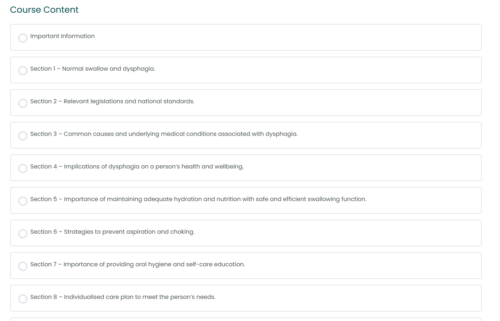
 ⭐ TOP SELLER Aim: To gain a complete understanding of and be able to support individuals with dysphagia (swallowing problems). Objectives: By successfully completing this course you will be able to:
- Demonstrate a complete understanding of swallowing process and dysphagia including its signs and symptoms
- Describe the legislations relevant to dysphagia in the UK
- Identify common causes and underlying medical conditions associated with dysphagia
- Understand the implications of dysphagia on a person’s health and wellbeing
- Describe the importance of maintaining adequate hydration and nutrition with safe and efficient swallowing function
- Describe how to reduce the signs and symptoms of swallowing difficulty including the utilisation of various strategies to prevent aspiration and choking
- Understand the importance of providing oral hygiene and self-care education
- Understand how to create an individualised care plan to meet each person's needs
- Identify your role in supporting individuals with dysphagia
- Understand how to develop practical skills to support people with dysphagia in eating and drinking safely.
- Identify when and how to make a referral, understand the process of assessment, and describe the various clinical assessment techniques used in evaluating the swallowing function
- Describe the importance of a thorough patient history in dysphagia assessment process
- Recognise when you need to collaborate with other healthcare professionals
- Describe how to communicate effectively with the individual and their family members about the implications of dysphagia
- Understand the ethical considerations related to dysphagia assessment and treatment
- Describe the cultural factors that may impact a patient's experience and adherence to treatment.
-
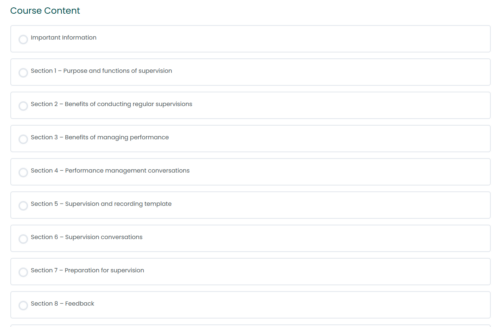
 ⭐ TOP SELLER Aim: To enable managers and leaders to hold open and supported conversations and be able to provide effective supervision. Objectives: By successfully completing this course you will be able to:
- Explain the purpose and functions of supervision
- Understand the benefits of conducting regular supervisions
- Describe the benefits of managing performance
- Explain how to conduct performance conversations
- Understand what a supervision template or checklist is
- Describe how to coach staff through supervision conversations
- Understand how to prepare for the supervision
- List a few tips for giving feedback
- Understand how to deal with conflicts in supervision
- Explain how to document the supervision and what should be included in it
- List the behaviours needed for sensitive or complex conversations
- Describe the strategies and tools required for open and supported discussions
- Understand how to encourage Two-Way Communication
- Describe what is positive reinforcement and how to use it
- Understand the importance of personal and professional development
- Describe what is wellbeing and emotional support
-
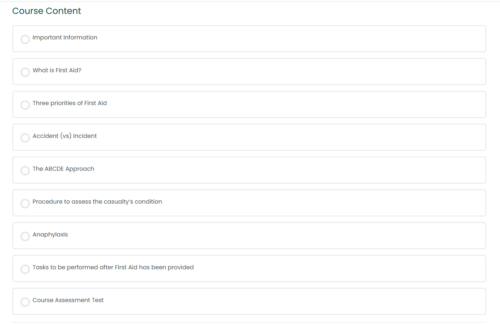
 Aim: To understand how to preserve life, prevent the situation worsening and promote recovery. Objectives: By successfully completing this course you will be able to:
- Describe what is meant by First Aid
- Explain about the 3 priorities of First Aid
- Describe the difference between an accident and an incident
- Describe the procedure to assess the casualty’s condition
- Explain how to follow the Resuscitation Council’s guidelines, including the ABCDE approach
- Explain how to help an unconscious but breathing person
- Explain how to help an unconscious and not breathing person, including cardiopulmonary resuscitation (CPR)
- Identify what a defibrillator is, and how to use an automated external defibrillator (AED)
- Explain how to provide first aid for wounds, bleeding, burns, scalds, choking, seizures, shock, and issues with blood circulation
- Identify the signs of 3 heart conditions
- Identify the signs of a stroke
- Describe the symptoms, triggers, and action plan to help anyone affected by anaphylaxis
- Identify the essential tasks to be performed after providing any form of first aid
-
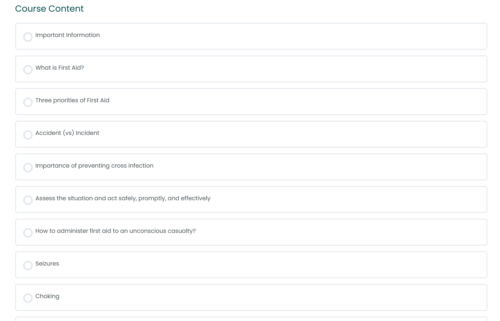
 Aim: To perform basic first aid in an emergency situation at work. Objectives: By successfully completing this blended course you will be able to:
- Explain the definition of First Aid
- Identify the 3 priorities of First Aid
- Describe the importance of preventing cross infection
- Explain and demonstrate how to assess the situation and circumstances in order to act safely, promptly, and effectively in an emergency
- Explain and demonstrate how to administer first aid to a casualty who is unconscious but breathing
- Explain and demonstrate how to administer first aid to a casualty who is unconscious and not breathing
- Explain and demonstrate how to perform cardiopulmonary resuscitation (CPR)
- Explain the use of an automated external defibrillator (AED)
- Explain what seizures are and demonstrate how to provide first aid to an individual who is suffering from them
- Explain and demonstrate how to help an individual who is choking
- Explain and demonstrate how to provide first aid for wounds, bleeding, burns, scalds, shock, and issues with blood circulation
- Describe the need for record keeping
-
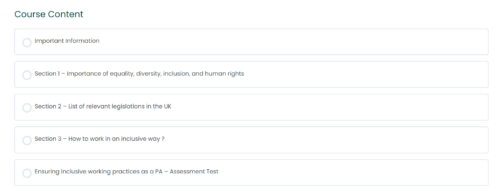
 Aim: To develop a clear understanding of the importance of practicing equality, diversity and inclusion in your work as a personal assistant Objectives: By successfully completing this course you will be able to:
- Understand the importance of equality, diversity and inclusion and human rights
- List the relevant legislations in the UK
- Understand how to work in an inclusive way
-
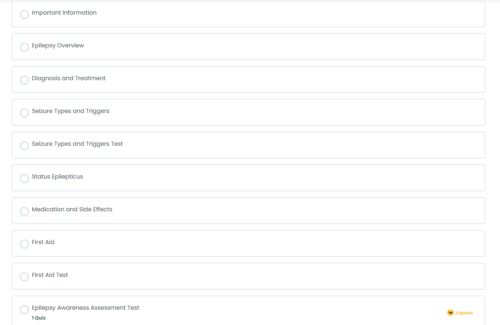
 Aim: To assist individuals with knowing what to do when caring for an individual with epilepsy. Objectives: By successfully completing this course you will be able to:
- Describe what epilepsy is
- List 5 different types of seizure
- List 5 different seizure triggers
- Describe what status epilepticus is
- Explain what to do when status epilepticus occurs
- Explain what to do in the event of a seizure
-
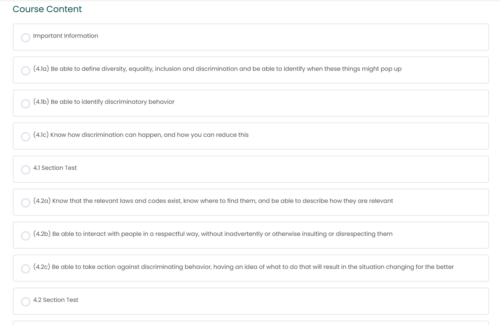
 Aim: To understand what is considered as discrimination, what can cause it, and how to respond in an effective way in order to reduce discrimination. Objectives: By successfully completing this course you will be able to:
- Explain diversity, equality and inclusion
- Explain what discrimination is
- Identify 3 pieces of legislation surrounding this topic
- Describe what you can and cannot do when you come across discrimination within your work place
- Explain how to ensure everyone is included fairly
-
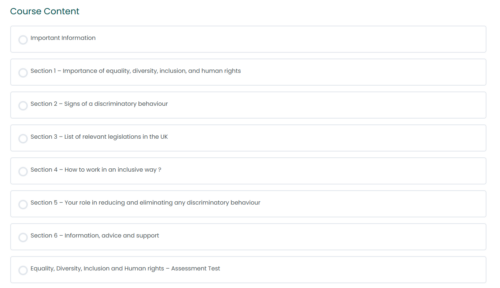
 Aim: To develop and clear understanding of ensuring equality, diversity and inclusion are a part of your practice Objectives: By successfully completing this course you will be able to:
- Understand the importance of equality, diversity, inclusion, and human rights
- Identify the signs of a discriminatory behaviour
- List the relevant legislations in the UK
- Explain how to work in an inclusive way
- Describe what you can do to reduce and eliminate any discriminatory behaviour
- Understand where to get information, advice and support about equality, diversity, inclusion and human rights
-

 Aim: To keep people safe by reducing the risk of, and knowing how to react to, fire in the workplace. Objectives: By successfully completing this course you will be able to:
- Describe the characteristics of fire, smoke, and toxic fumes
- Identify at least 6 fire hazards in the work environment
- Explain how to recognise any significant findings of fire risk evaluations
- Explain how to perform basic fire prevention, and the importance of local fire safety protocols
- Describe when it is necessary to raise the fire alarm, how to raise the fire alarm, and what to do if the fire alarm is raised
- Describe the actions to take if fire breaks out or if smoke is detected
- Identify the different types of fire extinguishers
- Explain about the different uses of fire extinguishers
- Identify the safety precautions associated with fire extinguishers
- Explain about the importance of being familiar with evacuation procedures and associated escape routes
-
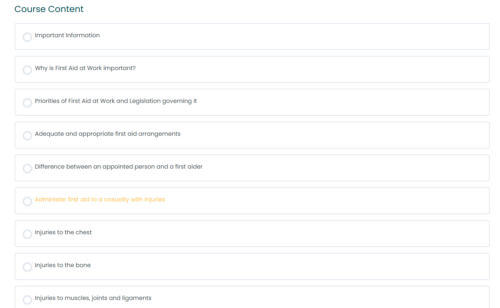
 Aim: To reduce the effects of injury or illness suffered at work, whether caused by the work itself or not. Objectives: By successfully completing this blended course you will be able to:
- Explain the importance of first aid at work
- Describe the legislation governing first aid at work
- Explain the 2 priorities of first aid at work
- Explain what is meant by adequate and appropriate first aid arrangements
- Describe the difference between an appointed person and a first aider
- Explain and demonstrate how to administer first aid to a casualty with injuries to bones, muscles, ligaments, joints and injuries to the spine
- Explain and demonstrate how to administer first aid to a casualty with chest injuries
- Explain and demonstrate how to provide first aid for burns and scalds, eye injuries, poisoning, and anaphylactic shock
- Recognise the presence of major work-related illnesses
- Explain and demonstrate how to provide first aid for heart attack, stroke, epileptic seizures, asthma attack and diabetic emergencies
- Explain what must be reported under RIDDOR
-
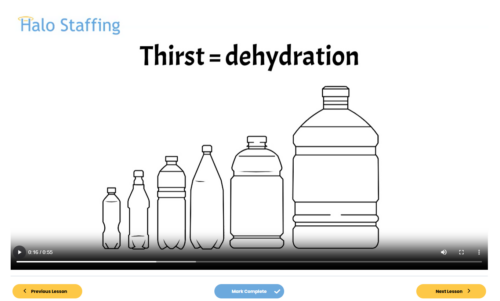
 Aim: To be able to ensure that any individual in your care is hydrated and has good nutrition. Objectives: By successfully completing this course you will be able to:
- Explain how to handle food safely
- Explain how to keep food preparation hygienic
- Explain what good and poor nutrition is, and the signs of each
- List 3 ways to support someone in line with their care plan with regards to nutrition and hydration
-
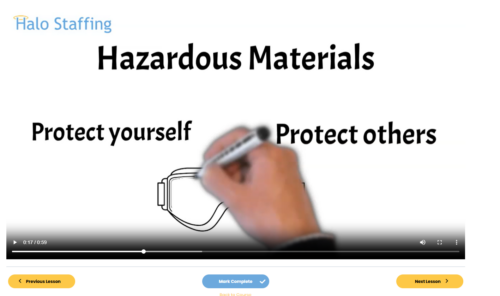
 Aims: To know how to keep yourself and others safe within the work place and how to maintain a safe environment. Objectives: By successfully completing this course you will be able to:
- Explain how to successfully complete a risk assessment
- Describe what to do in the events of a fire
- Describe how to respond to accidents and sudden illness
- Describe how to carry out a primary survey
- Identify 5 ways to keep yourself and others safe within the work place
- Identify who to contact to report health and safety issues
- Identify 4 types of legislation relating to health and safety
- Describe the symptoms, causes and treatment of Legionnaires disease
- List 5 of your own responsibilities and 5 responsibilities of others within your work place
-
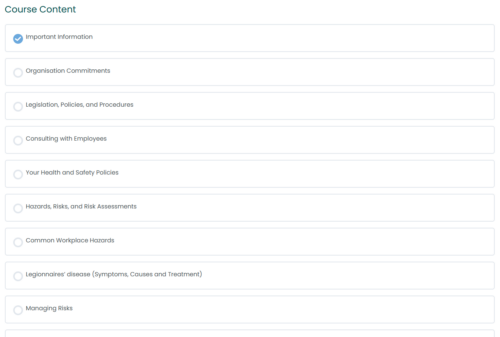
 Aim: To ensure the health, safety, and wellbeing of people in your healthcare organisation Objectives: By successfully completing this course, you will be able to:
- State why organisations have a commitment to delivering services safely
- Describe at least 4 ways of acting that are in line with the legislation, policies and procedures around the health and safety
- State how to find your organisation’s arrangements for consulting with employees on health and safety matters
- Identify how to find your organisation’s health and safety policies
- State the meaning of the terms hazard, risk, and risk assessment
- Describe at least 8 common workplace hazards
- Describe the symptoms, causes and treatment of Legionnaires disease
- Recognise how identified risks can be managed
- Identify at least 5 ways to apply and promote safe working practices in your job role
- List at least 4 actions you can take to ensure patient safety
- Recognise the importance of reporting health and safety concerns
- State the correct reporting processes used to gather information to help with managing risks
- Identify the appropriate methods to raise health and safety concerns, and who they should be raised to
- Describe your responsibilities in reporting incidents, ill health, and near misses
-
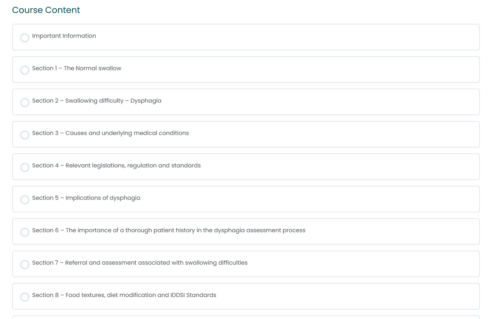
 ⭐ TOP SELLER Aim: To gain a complete understanding of planning, monitoring, and management of nutritional consistencies. Objectives: By successfully completing this course you will be able to:
- Understand what is IDDSI, its impact, causes and consequences.
- Understand what is dysphagia
- Explain the risk factors of aspiration and choking and list some strategies to prevent them
- List the relevant legislations in the UK
- Understand the importance of safe management of food production for people affected with dysphagia
- Explain the process of assessment and screening of dysphagia
- Describe the signs and symptoms to identify dysphagia
- Explain importance of early detection of dysphagia
- Understand the importance of patient history in the dysphagia assessment process
- Understand what is diet modification
- Explain the food textures according to IDDSI standard
- Explain how to modify diets according to IDDSI standards
- Explain how to adapt food and drink textures
- Explain how to prepare and test food according to IDDSI standards – Theory only
- Demonstrate how to prepare drinks according to IDDSI standards – Theory and Practical
- Explain the importance of promoting independence and dignity of all the service users
- Understand the importance of proper positioning during meals
- List the equipment and assistive devices which can be used to support individuals with dysphagia
- Describe an overview of any specialised equipment used in this context
- Explain how to use and maintain dysphagia-specific equipment effectively
- Explain the need to gain education and training on safe swallowing strategies
- Understand what does a good eating and drinking care plan look like
- Demonstrate how you will complete the eating and drinking care plan effectively
- Understand the safe feeding techniques
- Understand how environmental factors impact safe swallowing
- Understand why is communication and collaboration important
- Explain how to communicate effectively with individuals and team members
- Understand the need to collaborate with other healthcare professionals
- Describe the importance of documentation and accurate record-keeping
- Explain the process of documentation of assessment results and recommended interventions
- Describe why you should regularly monitor and review the swallowing function and dietary tolerance of the individual
- Understand how to recognise and respond to choking incidents and implement emergency protocols
-
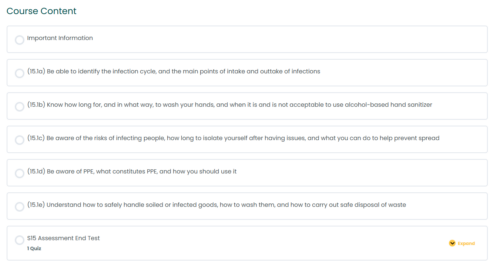
 Aim: To understand how infection is caused and how it can be prevented. Objectives: By successfully completing this course you will be able to:
- Describe the stages of the cycle of infection
- Explain how to maintain basic hand hygiene
- List 5 things you can do in your role to prevent infection
- Explain all of the steps involved in safe clinical disposal
- Describe what constitutes as a PPE
- List 5 items of PPE and describe when they must be worn
-

 Aim: To ensure the safe and secure handling of information within a healthcare setting Objectives: By successfully completing this course, you will be able to:
- Identify at least 7 key principles of information governance
- Describe why information governance is important
- List at least 2 pieces of legislation related to information governance
- List at least 3 different types of information
- Describe how to comply with relevant legislation on information governance
- Identify at least 6 threats to data security
- Identify any breaches of data protection and how to report them
- Describe how to implement security measures to keep confidential information safe
- List the 8 Caldicott Principles
- Recognise how to gain the consent of an individual if it is deemed necessary to share information
- Identify your responsibilities as a healthcare professional under the Freedom of Information Act 2000
- State the benefits of good informational governance
-
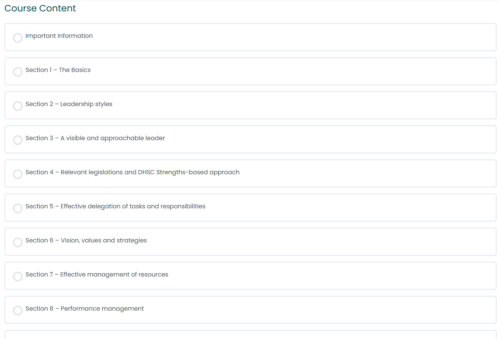
 ⭐ TOP SELLER Aim: To develop effective leaders who will lead and encourage continuous quality improvement. Objectives: By successfully completing this course you will be able to:
- Describe the term leadership and the qualities of a leader
- Understand different leadership styles and apply appropriate approaches based on situational needs.
- Understand the importance of being visible and approachable as a leader
- List the relevant legislation in the UK
- Learn how to effectively delegate tasks and responsibilities
- Describe how staff can understand what the vision, values and strategies of your service are, and how they can achieve them in their role
- Understand how to effectively manage resources and identify the appropriate type and level of resources required to deliver safe and effective service
- Describe how to identify and address poor or variable staff performance
- Learn how to identify the strengths, interests, and developmental needs of staff members
- Understand how to identify and address staff development needs
- Learn techniques for setting SMART goals for staff development
- Understand why providing constructive feedback and recognition can support staff in their development journey
- Develop skills in providing constructive feedback during supervision sessions
- Learn how to respond to feedback in a timely and professional manner
- Demonstrate effective communication and interpersonal skills to support and motivate staff members
- Understand what is active listening and empathetic communication and how to practice it during supervisory interactions
- Understand the importance of promoting staff wellbeing and resilience
- Understand how to support staff to manage their own health, care and wellbeing and recognising the importance of self-care in leadership roles
- Describe how to manage the impact of their emotions and behaviour
- Understand importance of building and maintaining strong relationships with all staff, including clients, families, and community partners
- Understand importance with working in collaboration with others in and across networks
- Understanding the causes of conflict and how to effectively manage it
- Develop skills in active listening, effective communication, and problem-solving
- Develop skills in active listening, empathy, and effective communication
- Develop skills in critical thinking, analysis, and decision-making
- Understand the importance of considering multiple perspectives and gathering information before making decisions and encouraging other have the confidence and opportunity to contribute.
- Learn how to make ethical and informed decisions that align with the values and goals of the organisation and respecting the culture beliefs the individual
- Understand the importance of effectively managing comments and complaints
- Understand the importance of encouraging improvement and innovation to create continuous service improvement
-
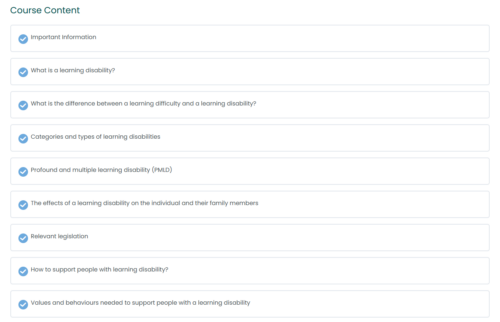
 Aim: Support disabled people to live, learn and work as independently as they choose. Objectives: By successfully completing this course you will be able to:
- Explain what a learning disability is
- Identify the difference between a learning difficulty and a learning disability
- List at least 3 categories and 10 types of learning disabilities
- Explain what is profound and multiple learning disability (PMLD)
- Explain the effects of learning disability on the person and their family
- List at least 3 pieces of legislation relevant to learning disability
- Describe how to support people with learning disability
- List 10 values and behaviours needed to support people with a learning disability
- Describe the role of partners in care and support
-

 Aim: To be able to safely and efficiently work by yourself without close or direct supervision. Objectives: By successfully completing this course you will be able to:
- Describe at least 3 things to consider reducing the risks of lone working
- List at least 3 situations that may make a lone worker more at risk of violence
- Explain how to successfully complete a risk assessment
- Describe how lone working can affect stress levels and mental health
- Describe how the training needs of a lone worker can differ