- Understand the anatomy of our skin and its function in our body
- Understand how to recognise different types of wounds
- Understand all about a skin tear
- List of relevant legislations in the UK
- Guidelines and protocols set by the Midlands Partnership NHS Foundation Trust (MPFT)
- Describe the importance of infection control measures in preventing complications
- Describe the process of wound assessment, dressing and management
- Understand all about pressure ulcers
- Describe how to support service users experiencing pain due to wounds
- Understand the process, stages and risks involved in the healing of wounds
- Understand the importance of documentation associated with wound care
- Explain the importance of escalating and reporting issues promptly
- Describe how to support the service users in maintaining good skin care and integrity
-
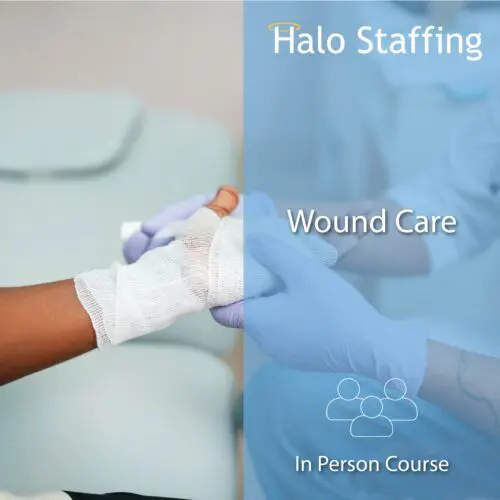 ⭐ TOP SELLER Aim: To develop a complete understanding of wound care. Objectives: By successfully completing this course you will be able to:
 -
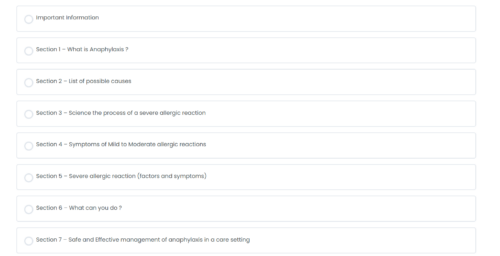
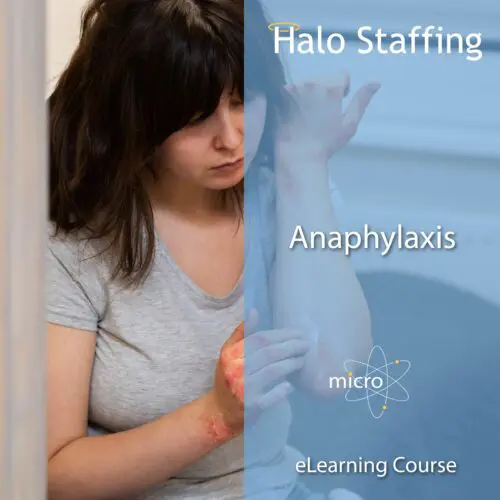 Aim: To be able to identify and provide effective support to an individual experiencing anaphylaxis Objectives: By successfully completing this course you will be able to:
- Understand what anaphylaxis is
- List 5 possible causes of anaphylaxis
- Describe the science behind a severe allergic reaction
- List the symptoms of mild to moderate allergic reaction
- Severe allergic reaction, anaphylactic shock and full anaphylaxis
- Describe how you can provide effective support to an individual experiencing severe allergic reaction
- List 10 points for safe and efficient anaphylaxis management in a care setting
-

 Aim: To be able to effectively and responsibly respond to, manage, and react to complaints. Objectives: By successfully completing this course you will be able to:
- Recognise when an individual is making a complaint
- Describe 3 types of customer complaints
- Explain how to effectively listen to and understand customer complaints
- Describe what the customer is hoping to achieve by making the complaint
- Explain why it is important for you to understand and help the customer understand, what is achievable as a result of the complaint, and be clear as to what the possible outcomes may be
- Describe an estimate for what the timeframe for dealing with the complaint may be
- Explain how to set firm boundaries with individuals making complaints, and be able to firmly and decisively act when those boundaries are breached
-

 Aim: To be able to promote wellbeing by preventing or relieving the constipation of others Objectives: By completing this course, you will be able to:
- State what constipation is
- Recognise 5 signs of constipation in others
- State 3 causes of constipation
- Describe the impact of constipation
- Describe the importance of a Bowel Movement Record
- State 5 things you can do to help someone with constipation
-
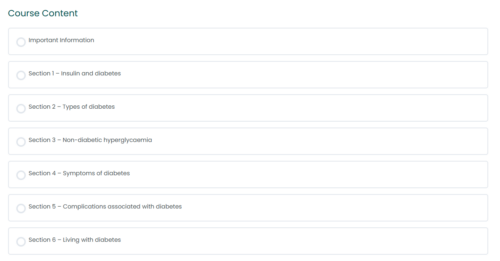
 Aim: To be able to promote the wellbeing of an individual with diabetes Objectives: By completing this course, you will be able to:
- Understand what diabetes is
- Explain the difference between Type 1 and Type 2 of diabetes
- Describe what pre-diabetes is
- Symptoms of diabetes
- Complications of diabetes
- Understand how to live a productive life with diabetes
-

 Aim: To know how to embed inclusivity within your organisation and wider practices, with regards to disabilities and mental health. Objectives: By successfully completing this course you will be able to:
- Describe the Disability Confidence Framework
- List at least 3 benefits of the Disability Confidence Framework
- Explain about the different levels of the Disability Confidence Framework
- Describe how long a typical Disability Confidence Framework accreditation lasts for
- Describe how the Voluntary Reporting Framework works
- Describe the actions necessary to achieve or maintain the different levels of the Disability Confidence Framework
-

 Aim: To be able treat disabled individuals equally and equitably. Objectives: By successfully completing this course you will be able to:
- Explain what a disability is
- Describe what is contained in the Equality Act 2010, with regards to preventing discrimination against disabled individuals
- Explain the distinction between visible and invisible disabilities
- Describe the concepts of equality and equity
- Describe the social model of disability
- Identify 10 ways that an individual may require assistance due to a disability
- Identify 5 reasonable adjustments to your behaviour that you can make to assist disabled individuals around you
- Explain why it is important to follow the basics of etiquette, and not to make assumptions about disabled people
-

 Aim: To keep people safe by reducing the risk of, and knowing how to react to, fire in the workplace. Objectives: By successfully completing this course you will be able to:
- Describe the characteristics of fire, smoke, and toxic fumes
- Identify at least 6 fire hazards in the work environment
- Explain how to recognise any significant findings of fire risk evaluations
- Explain how to perform basic fire prevention, and the importance of local fire safety protocols
- Describe when it is necessary to raise the fire alarm, how to raise the fire alarm, and what to do if the fire alarm is raised
- Describe the actions to take if fire breaks out or if smoke is detected
- Identify the different types of fire extinguishers
- Explain about the different uses of fire extinguishers
- Identify the safety precautions associated with fire extinguishers
- Explain about the importance of being familiar with evacuation procedures and associated escape routes
-

 Aim: To ensure the safe and secure handling of information within a healthcare setting Objectives: By successfully completing this course, you will be able to:
- Identify at least 7 key principles of information governance
- Describe why information governance is important
- List at least 2 pieces of legislation related to information governance
- List at least 3 different types of information
- Describe how to comply with relevant legislation on information governance
- Identify at least 6 threats to data security
- Identify any breaches of data protection and how to report them
- Describe how to implement security measures to keep confidential information safe
- List the 8 Caldicott Principles
- Recognise how to gain the consent of an individual if it is deemed necessary to share information
- Identify your responsibilities as a healthcare professional under the Freedom of Information Act 2000
- State the benefits of good informational governance
-

 Aim: To be able to safely and efficiently work by yourself without close or direct supervision. Objectives: By successfully completing this course you will be able to:
- Describe at least 3 things to consider reducing the risks of lone working
- List at least 3 situations that may make a lone worker more at risk of violence
- Explain how to successfully complete a risk assessment
- Describe how lone working can affect stress levels and mental health
- Describe how the training needs of a lone worker can differ
-

 Aim: To be able to brush the teeth of others safely and effectively. Objectives: By successfully completing this course you will be able to:
- Perform risk assessment and gain permission
- Describe the items required for this task
- Describe the PPE required for this task
- Brush the teeth in a careful and methodical manner
- Understand what to do if you observe any issues
- Describe how to update the records
-
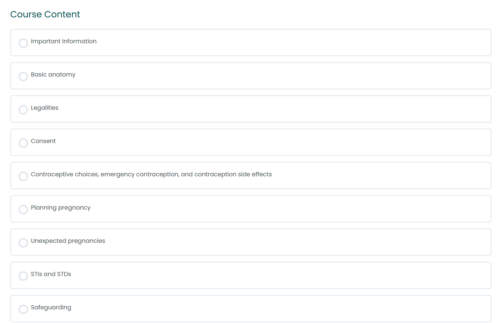
 Aim: To be able to promote good sexual and reproductive health. Objectives: By successfully completing this course you will be able to:
- Describe the legal standing around your involvement in caring for an individual’s sexual health
- Identify the basic anatomy involved in sexual health
- Describe the specifics of consent, and where consent has and has not been given
- List 10 different contraceptive methods, and their side effects
- Describe what do when an individual may be planning a pregnancy
- Describe what to do when an individual has an unexpected pregnancy
- Identify 5 Sexually Transmitted Infections and Sexually Transmitted Diseases
- Describe what to do when an individual is concerned they may have a Sexually Transmitted Infection or Sexually Transmitted Disease
- Identify the appropriate steps involved when safeguarding an individual’s sexual health
- Explain how to get an individual to be involved in their own sexual health
-

 Aim: To be able to shave the facial hair of others safely and effectively. Objectives: By successfully completing this course you will be able to:
- Perform risk assessment and gain permission
- Describe the items required for shaving
- Describe the PPE required for this task
- Perform the shave in a careful and methodical manner
- Describe what to do if you observe any cut or bleeding
- Describe how to update the records and body map
-

 Aim: To be able to set up effective workstations that do not negatively affect your health Objectives:
- To be able to set up a workstation effectively
- To be able to set up a routine with regular breaks
- To be able to recognise when your eyes are straining
-

 Aim: To be able to manage your own levels of stress, and be able to gauge and increase your own resilience Objectives: By successfully completing this course you will be able to:
- Recognise four different categories of signs of stress
- Identify at least four different signs of stress
- Recognise what can contribute to a stressful situation
- Identify three things you can do to help deal with a stressful situation
- Identify three ways to reduce your stress levels
- Gauge what your level of resilience is
- List 3 things you can do to increase your level of resilience
-
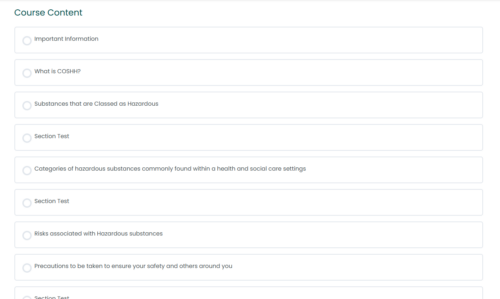
 Aim: To be able to work with hazardous substances safely and effectively. Objectives: By successfully completing this course you will be able to:
- Describe what COSHH stands for
- Identify 5 substances classed as hazardous substances
- Identify 3 different categories of hazardous substances commonly found in a health and social care setting
- List at least 6 likely risks associated with hazardous substances
- Describe the precautions to be taken to ensure your safety and the safety of others around you
- Identify 5 steps in COSHH regulations
- List 5 responsibilities you will have when handling hazardous substances
-

 Aim: To be able to handle technology and information in a lawful and secure way. Objectives: By successfully completing this course you will be able to:
- Identify the relation between Data, Information and Cyber
- Explain why data security is important in the social care sector
- Identify the 3 areas of data security
- Describe the General Data Protection Regulation (GDPR) 2018
- Explain about the cyber security landscape and the 4 major threats
- Identify counter measures to mitigate the 4 major cyber security threats
- List 5 responsibilities in handling technology and information securely
-

 ⭐ TOP SELLER Aim: To be able to support individuals with dysphagia (swallowing problems). Objectives: By successfully completing this course you will be able to:
- Explain what ‘dysphagia’ is
- Identify at least 4 signs of dysphagia
- Explain the causes of dysphagia
- Explain about the complications of dysphagia
- Describe how dysphagia affects children
- Describe the treatment of dysphagia
- Explain about your role in supporting individuals with dysphagia
-

 Aim: To develop a culture where your team can achieve their full potential. Objectives: By successfully completing this course you will be able to:
- Identify 5 important aspects of a personal development plan
- List at least 3 benefits of setting and using personal development plans
- Describe 2 key theories of personal development
- Identify what an individual needs to develop
- Explain how to help an individual identify the most effective ways for them to develop
- Describe how you can guide an individual in setting realistic timeframes for their development
- Describe what a SMART target is
-
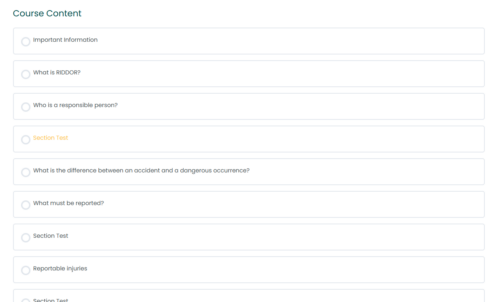
 Aim: To be able to understand the purpose of RIDDOR and comply with this regulation. Objectives: By successfully completing this course you will be able to:
- Describe what RIDDOR is
- Describe what a responsible person is, according to RIDDOR
- Identify the difference between an accident and a dangerous occurrence
- Describe what RIDDOR states must be reported
- Describe when reporting must be done
- Describe which records need to be stored and why
- Describe your role as an employee in this process
-
 Aim: To understand what the main roles and responsibilities within your job role are. Objectives: By successfully completing this course you will be able to:
- Explain what is meant by agreed ways of working
- Explain what is involved in your role
- Describe the care certificate and code of conduct
- Explain what your rights and responsibilities are in terms of your job role
-
 Aims: Understand the importance of personal development, and how to increase the speed and precision of your personal development. Objectives: By successfully completing this course you will be able to:
- Describe what a personal development plan (PDP) is
- Explain how to assess your own knowledge
- Describe how to record your progress
- Recognise flaws in your own abilities, and be able to identify how best to fix them
-
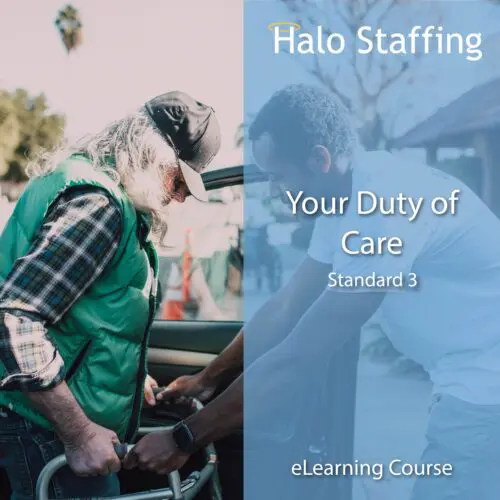 Aim: To have a clear understanding of what your duty of care is. Objectives: By successfully completing this course you will be able to:
- Explain your duty of care
- Describe how to manage conflict and dilemmas
- Explain how to deal with a typical complaint
- Identify 3 pieces of legislation surrounding duty of care
- Describe how to manage errors and incidents
-

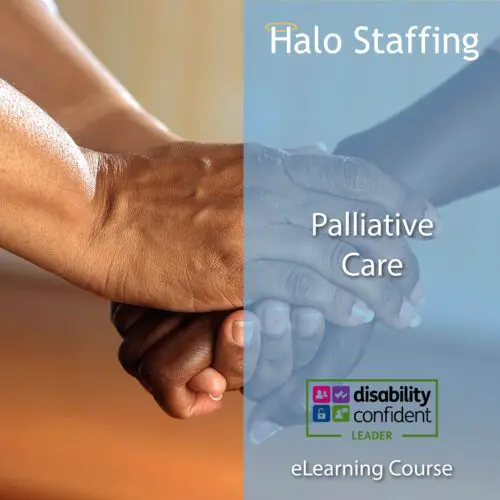 Aim: To be able to care for and assist individuals with being as comfortable as possible during palliative and end-of-life care. Objectives: By successfully completing this course you will be able to:
- Describe what palliative care is
- List 3 reasons an individual may require palliative care
- Describe the steps and processes involved when performing palliative care
- Describe what end-of-life care is
- Explain the steps and processes involved when performing end-of-life care
- Describe how you can help relieve the symptoms of an individual in the last weeks of their life
- Describe at least 3 actions you can take to help you cope emotionally when caring for individuals who are approaching the end of their life
-
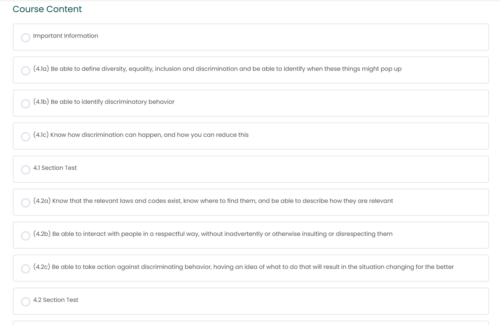
 Aim: To understand what is considered as discrimination, what can cause it, and how to respond in an effective way in order to reduce discrimination. Objectives: By successfully completing this course you will be able to:
- Explain diversity, equality and inclusion
- Explain what discrimination is
- Identify 3 pieces of legislation surrounding this topic
- Describe what you can and cannot do when you come across discrimination within your work place
- Explain how to ensure everyone is included fairly
-
 Aim: To understand person centred values and how to apply them to your role as a health and social care worker. Objectives: By successfully completing this course you will be able to:
- Explain what person-centred values are
- Identify 2 pieces of legislation surrounding person centred values and care
- Describe the importance of promoting dignity
-

 Aim: To know how to use communication effectively within your workplace and to understand its benefits. Objectives: By successfully completing this course you will be able to:
- Describe different forms of communication
- Explain the benefits of communicating
- Explain the importance of communication
- Identify 2 pieces of legislation surrounding communication
-
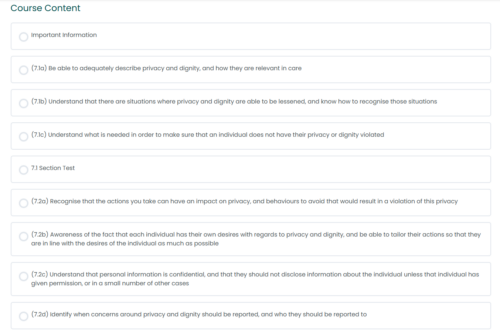
 Aim: To understand the importance of privacy and dignity within health and social care, and how to implement them into your work. Objectives: By successfully completing this course you will be able to:
- Explain what is meant by privacy and dignity
- Describe the principles behind keeping an individual’s privacy and dignity
- List 3 ways to maintain the privacy and dignity of an individual
- Explain how to support the “right to choose” of an individual
- Describe what an informed choice is, and how to support an individual to have one
- Explain what active participation is, and 3 ways to promote it
-
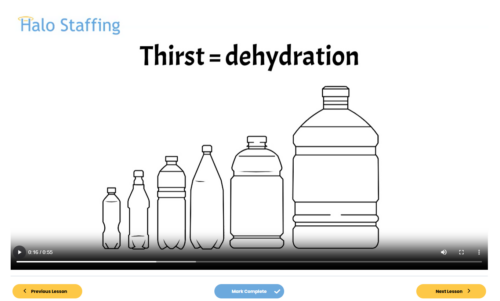
 Aim: To be able to ensure that any individual in your care is hydrated and has good nutrition. Objectives: By successfully completing this course you will be able to:
- Explain how to handle food safely
- Explain how to keep food preparation hygienic
- Explain what good and poor nutrition is, and the signs of each
- List 3 ways to support someone in line with their care plan with regards to nutrition and hydration
-
 Aim: To make you aware of mental health conditions, dementia, and learning disabilities, and the experiences people have with them. Objectives: By successfully completing this course you will be able to:
- Describe how a mental condition can change the needs of an individual
- Explain the importance of promoting positive mental health and wellbeing
- List 3 adjustments that you may need to make to personalise care delivery
- Recognise 3 early warning signs of mental health conditions, dementia, or learning disabilities
- Describe the relevant legislation
- Describe what mental capacity is and how it relates to the topic