Our care training courses are suitable for individuals wishing to develop their skills, new care workers, care workers who are looking to update their knowledge and for providing care training courses for the staff you employ. You can buy our courses individually or as a group, you can quickly and easily purchase multiple courses through our Group Creation page which can be found HERE.
Search
Search by any keywords specific to find the course you are looking for.
Stafford
London
Bristol
Stafford
Goole
London
Bristol
Birmingham
Horsham
Gillingham
Falkirk
Central London
Birmingham
Coventry
Nottingham
Leicester
Mansfield
Cambridge
Manchester
Liverpool
Leeds
Doncaster
Newcastle Upon Tyne
Bristol
Bournemouth
Exeter
Glasgow
Edinburgh
Cardiff
Newport
Norwich
Luton
Chelmsford
No matter where you’re based, we can provide training to support your learning and development. Our courses reach learners and organisations across the UK, offering accessible and practical opportunities to build skills, meet training needs and support continued development.
-

 Aim: To be able to shave the facial hair of others safely and effectively. Objectives: By successfully completing this course you will be able to:
- Perform risk assessment and gain permission
- Describe the items required for shaving
- Describe the PPE required for this task
- Perform the shave in a careful and methodical manner
- Describe what to do if you observe any cut or bleeding
- Describe how to update the records and body map
-

 Aim: To be able to brush the teeth of others safely and effectively. Objectives: By successfully completing this course you will be able to:
- Perform risk assessment and gain permission
- Describe the items required for this task
- Describe the PPE required for this task
- Brush the teeth in a careful and methodical manner
- Understand what to do if you observe any issues
- Describe how to update the records
-
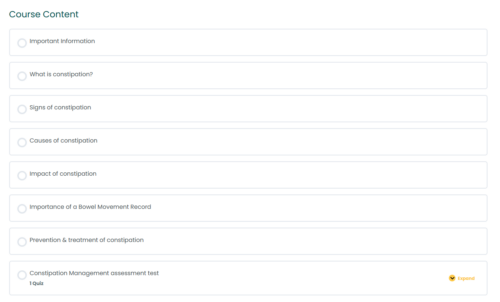
 Aim: To be able to promote wellbeing by preventing or relieving the constipation of others Objectives: By completing this course, you will be able to:
- State what constipation is
- Recognise 5 signs of constipation in others
- State 3 causes of constipation
- Describe the impact of constipation
- Describe the importance of a Bowel Movement Record
- State 5 things you can do to help someone with constipation
-
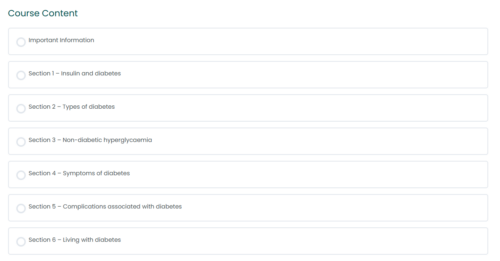
 Aim: To be able to promote the wellbeing of an individual with diabetes Objectives: By completing this course, you will be able to:
- Understand what diabetes is
- Explain the difference between Type 1 and Type 2 of diabetes
- Describe what pre-diabetes is
- Symptoms of diabetes
- Complications of diabetes
- Understand how to live a productive life with diabetes
-
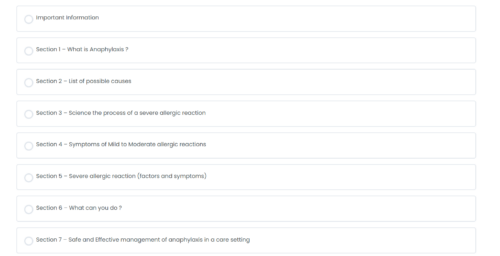
 Aim: To be able to identify and provide effective support to an individual experiencing anaphylaxis Objectives: By successfully completing this course you will be able to:
- Understand what anaphylaxis is
- List 5 possible causes of anaphylaxis
- Describe the science behind a severe allergic reaction
- List the symptoms of mild to moderate allergic reaction
- Severe allergic reaction, anaphylactic shock and full anaphylaxis
- Describe how you can provide effective support to an individual experiencing severe allergic reaction
- List 10 points for safe and efficient anaphylaxis management in a care setting
-
 Aim: To protect people and keep them safe from harm and abuse. Objectives: By successfully completing this course you will be able to:
- Recognise the 6 key principles of safeguarding adults
- Describe what harm and abuse is
- Recognise 10 forms of abuse
- List 5 things you can do to help prevent abuse
- List 3 people or points of contact you can report abuse to in order to stop it from happening
- Identify when it is appropriate to use a restrictive practise
- List 3 things that promote dignity and respect, and to be able to state why they are important
-
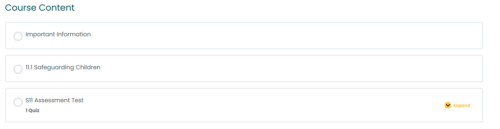
 Aim: To teach you the basics of what you need to do to safeguard children that you encounter. Objectives: By successfully completing this course you will be able to:
- Describe what harm and abuse is
- List at least 7 types of abuse that a child could suffer
- List at least 4 signs of abuse
- Describe who to contact should you be aware of child abuse
- Identify at least 3 pieces of legislation in relation to protecting and safeguarding children
-
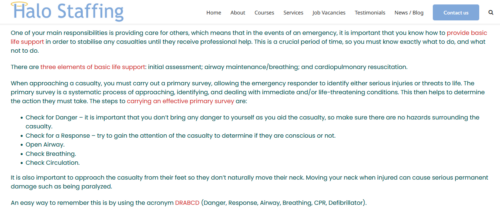
 Aim: To know how to provide basic life support, to save lives in the event of an emergency. Objectives: By successfully completing this course you will be able to:
- Identify the correct procedure to carry out basic life support
- Recall how to carry out a primary survey (initial assessment)
- Recall how to put someone in the recovery position
- Recognise the importance of airway maintenance, and how to deal with obstructed airways
- Recall how to perform cardiopulmonary resuscitation (CPR) for an adult
- Recall how to perform cardiopulmonary resuscitation (CPR) for a child
- Recall how to perform cardiopulmonary resuscitation (CPR) for an Infant
- Recall how to assist an adult that is choking
- Recall how to assist a child that is choking
- Recall how to assist an infant that is choking
- Recognise the importance of record keeping with regards to basic life support
- Identify a minimum of one piece of legislation surrounding basic life support
-
 Aims: To know how to keep yourself and others safe within the work place and how to maintain a safe environment. Objectives: By successfully completing this course you will be able to:
- Explain how to successfully complete a risk assessment
- Describe what to do in the events of a fire
- Describe how to respond to accidents and sudden illness
- Describe how to carry out a primary survey
- Identify 5 ways to keep yourself and others safe within the work place
- Identify who to contact to report health and safety issues
- Identify 4 types of legislation relating to health and safety
- Describe the symptoms, causes and treatment of Legionnaires disease
- List 5 of your own responsibilities and 5 responsibilities of others within your work place
-
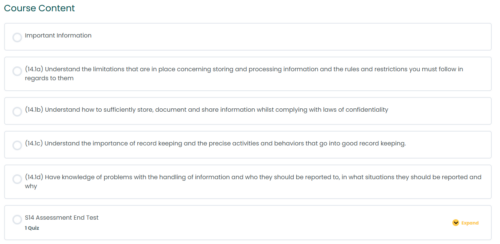
 Aim: To know how to safely and securely document, store and share information within the workplace. Objectives: By successfully completing this course you will be able to:
- Describe what is meant by agreed ways of working
- Describe what legislation is and why it is put in place
- Explain about the secure systems for recording, storing and sharing information
- List 3 ways in which you need to act to maintain confidentiality
- Describe how to keep records up to date, complete, accurate and legible
- Explain who you can report to and why when proper systems haven’t been followed
- Identify 3 different types of documentation in health and social care
- Identify 2 pieces of legislation surrounding data protection
-
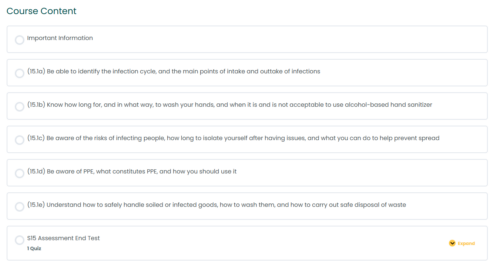
 Aim: To understand how infection is caused and how it can be prevented. Objectives: By successfully completing this course you will be able to:
- Describe the stages of the cycle of infection
- Explain how to maintain basic hand hygiene
- List 5 things you can do in your role to prevent infection
- Explain all of the steps involved in safe clinical disposal
- Describe what constitutes as a PPE
- List 5 items of PPE and describe when they must be worn
-

 Aim: To understand what the main roles and responsibilities within your job role are. Objectives: By successfully completing this course you will be able to:
- Explain what is meant by agreed ways of working
- Explain what is involved in your role
- Describe the care certificate and code of conduct
- Explain what your rights and responsibilities are in terms of your job role
-

 Aims: Understand the importance of personal development, and how to increase the speed and precision of your personal development. Objectives: By successfully completing this course you will be able to:
- Describe what a personal development plan (PDP) is
- Explain how to assess your own knowledge
- Describe how to record your progress
- Recognise flaws in your own abilities, and be able to identify how best to fix them
-
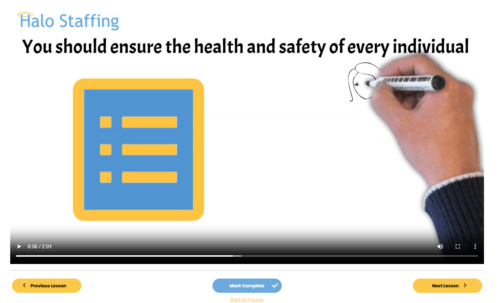
 Aim: To have a clear understanding of what your duty of care is. Objectives: By successfully completing this course you will be able to:
- Explain your duty of care
- Describe how to manage conflict and dilemmas
- Explain how to deal with a typical complaint
- Identify 3 pieces of legislation surrounding duty of care
- Describe how to manage errors and incidents
-
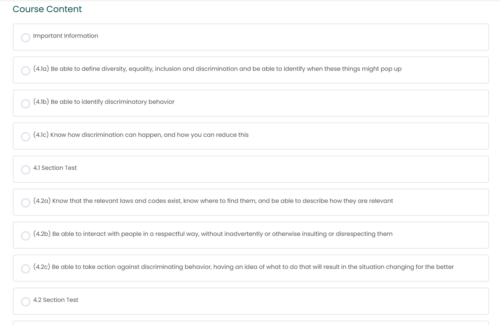
 Aim: To understand what is considered as discrimination, what can cause it, and how to respond in an effective way in order to reduce discrimination. Objectives: By successfully completing this course you will be able to:
- Explain diversity, equality and inclusion
- Explain what discrimination is
- Identify 3 pieces of legislation surrounding this topic
- Describe what you can and cannot do when you come across discrimination within your work place
- Explain how to ensure everyone is included fairly
-
 Aim: To understand person centred values and how to apply them to your role as a health and social care worker. Objectives: By successfully completing this course you will be able to:
- Explain what person-centred values are
- Identify 2 pieces of legislation surrounding person centred values and care
- Describe the importance of promoting dignity
-

 Aim: To know how to use communication effectively within your workplace and to understand its benefits. Objectives: By successfully completing this course you will be able to:
- Describe different forms of communication
- Explain the benefits of communicating
- Explain the importance of communication
- Identify 2 pieces of legislation surrounding communication
-
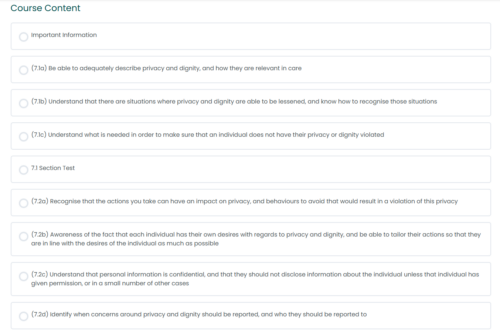
 Aim: To understand the importance of privacy and dignity within health and social care, and how to implement them into your work. Objectives: By successfully completing this course you will be able to:
- Explain what is meant by privacy and dignity
- Describe the principles behind keeping an individual’s privacy and dignity
- List 3 ways to maintain the privacy and dignity of an individual
- Explain how to support the “right to choose” of an individual
- Describe what an informed choice is, and how to support an individual to have one
- Explain what active participation is, and 3 ways to promote it
-
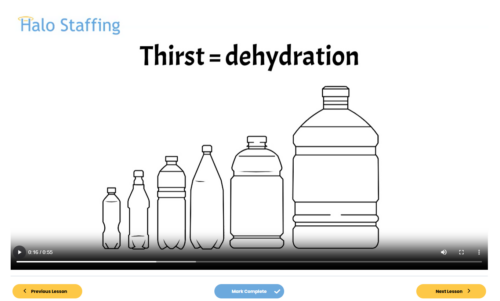
 Aim: To be able to ensure that any individual in your care is hydrated and has good nutrition. Objectives: By successfully completing this course you will be able to:
- Explain how to handle food safely
- Explain how to keep food preparation hygienic
- Explain what good and poor nutrition is, and the signs of each
- List 3 ways to support someone in line with their care plan with regards to nutrition and hydration
-

 Aim: To make you aware of mental health conditions, dementia, and learning disabilities, and the experiences people have with them. Objectives: By successfully completing this course you will be able to:
- Describe how a mental condition can change the needs of an individual
- Explain the importance of promoting positive mental health and wellbeing
- List 3 adjustments that you may need to make to personalise care delivery
- Recognise 3 early warning signs of mental health conditions, dementia, or learning disabilities
- Describe the relevant legislation
- Describe what mental capacity is and how it relates to the topic
-
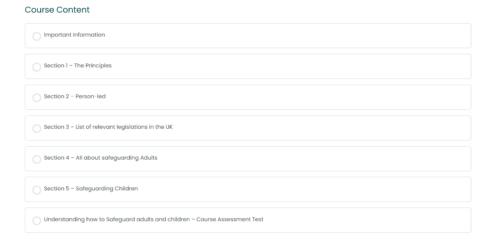
 Aim: To teach you how to safely administer the medications you are legally authorised to give and minimise the risk of administration errors. Objectives: By successfully completing this course you will be able to:
- Explain what is meant by administration of medicines
- Describe the importance of confidentiality in a health and social care setting
- Explain the importance of consent in a health and social care setting
- Explain the importance of safeguarding adults in relation to medication administration
- List the relevant legislations in the UK
- List the types and categories of medication, routes of administration
- Describe what is a MAR chart and how to record information in it
- Describe how to administer and record information about Control drugs
- Describe how to administer and record information about PRN mediation
- Describe how to administer and record information about over-the-counter medication
- Describe how to administer and record information about homely remedies
- Describe the safe administration of topical medication such as emollients and corticosteroids
- Describe how to administer and record information about transdermal patches
- Describe what should be done when placing an order and when receiving the medication
- Understand the storage requirements of medication
- Explain what to do when medication error happens
- Explain what to do when the service user has refused to take the medication
- Explain what to do when the service user has missed a dose of medication
- Explain the procedure for safe return of the refused/unwanted/damaged medication
- Explain how long the medication and their records must be kept after the service user has stopped receiving care from the service provider
- Describe your role in safe administration of medication
-

 Aim: To teach you how to safely move and handle an object or individual, and reduce the risk of manual handling injuries. Objectives: By successfully completing this course you will be able to:
- List 2-3 relevant laws
- List 3 hazards in relation to moving and handling
- Explain the risk assessment process
- Identify good/bad posture
- Explain safe lifting technique of a box from the floor
- Explain safe techniques for assisting standing and walking
- Explain the safe use of hoists, slide sheets, and turntables
-
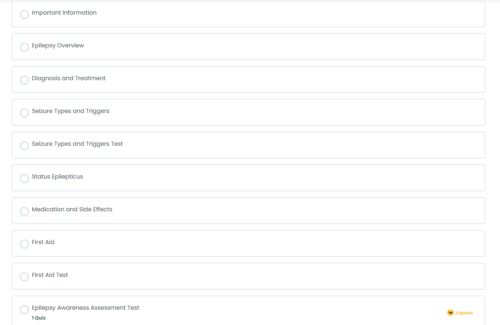
 Aim: To assist individuals with knowing what to do when caring for an individual with epilepsy. Objectives: By successfully completing this course you will be able to:
- Describe what epilepsy is
- List 5 different types of seizure
- List 5 different seizure triggers
- Describe what status epilepticus is
- Explain what to do when status epilepticus occurs
- Explain what to do in the event of a seizure
-
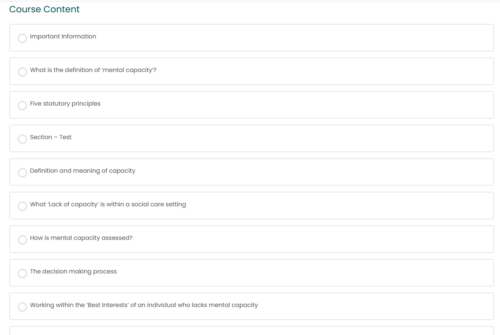
 Aim: To understand the definition of mental capacity and how it plays a vital part within a Health and Social care setting. Objectives: By successfully completing this course you will be able to:
- Explain the definition of ‘mental capacity’
- Identify at least 5 different causes of lack of mental capacity and the effects on a day-to-day basis
- Identify and list all five statutory principles
- Explain the process of assessing a person who lacks mental capacity
- Explain the decision process and why working in an individual’s best interest is vital
- Describe the powers and bodies that support the mental capacity act
- Describe the importance of code of practice
- Explain the intentions of the Deprivation of Liberty Safeguards and be familiar with restraints and restrictive practices
-

 Aim: To be able to support individuals with their behaviours in a safe. manner. Objectives: By successfully completing this course you will be able to:
- Explain what Positive Behaviour Support is
- Describe potential reasons behind particular behaviours
- Explain how to respond to particular behaviours in a way that helps the individual
- Explain how to have a degree of awareness over your own emotional reactions
- Explain how to act in such a way as to reduce the need for physical intervention
-
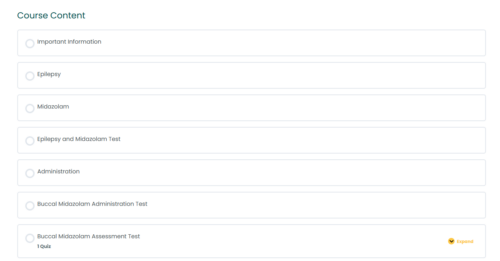
 Aim: To be able to safely administer Midazolam buccally. Objectives: By successfully completing this course you will be able to:
- Identify a situation where buccal Midazolam may be needed
- Describe how to safely and successfully administer buccal Midazolam
-

 Aim: To reduce the risk of contracting and spreading COVID-19. Objectives: By successfully completing this course you will be able to:
- Recognise when PPE is required
- List at least 3 different types of PPE
- Recognise the correct process for donning and removing PPE
- Recognise the correct process for disposing of PPE
-

 Aim: To be able to safely and efficiently work by yourself without close or direct supervision. Objectives: By successfully completing this course you will be able to:
- Describe at least 3 things to consider reducing the risks of lone working
- List at least 3 situations that may make a lone worker more at risk of violence
- Explain how to successfully complete a risk assessment
- Describe how lone working can affect stress levels and mental health
- Describe how the training needs of a lone worker can differ
-

 ⭐ TOP SELLER Aim: To be able to support individuals with dysphagia (swallowing problems). Objectives: By successfully completing this course you will be able to:
- Explain what ‘dysphagia’ is
- Identify at least 4 signs of dysphagia
- Explain the causes of dysphagia
- Explain about the complications of dysphagia
- Describe how dysphagia affects children
- Describe the treatment of dysphagia
- Explain about your role in supporting individuals with dysphagia
-

 Aim: To be able to manage your own levels of stress, and be able to gauge and increase your own resilience Objectives: By successfully completing this course you will be able to:
- Recognise four different categories of signs of stress
- Identify at least four different signs of stress
- Recognise what can contribute to a stressful situation
- Identify three things you can do to help deal with a stressful situation
- Identify three ways to reduce your stress levels
- Gauge what your level of resilience is
- List 3 things you can do to increase your level of resilience
-

 Aim: To be able to set up effective workstations that do not negatively affect your health Objectives:
- To be able to set up a workstation effectively
- To be able to set up a routine with regular breaks
- To be able to recognise when your eyes are straining
-

 Aim: To be able to handle technology and information in a lawful and secure way. Objectives: By successfully completing this course you will be able to:
- Identify the relation between Data, Information and Cyber
- Explain why data security is important in the social care sector
- Identify the 3 areas of data security
- Describe the General Data Protection Regulation (GDPR) 2018
- Explain about the cyber security landscape and the 4 major threats
- Identify counter measures to mitigate the 4 major cyber security threats
- List 5 responsibilities in handling technology and information securely
-

 Aim: To be able to effectively and responsibly respond to, manage, and react to complaints. Objectives: By successfully completing this course you will be able to:
- Recognise when an individual is making a complaint
- Describe 3 types of customer complaints
- Explain how to effectively listen to and understand customer complaints
- Describe what the customer is hoping to achieve by making the complaint
- Explain why it is important for you to understand and help the customer understand, what is achievable as a result of the complaint, and be clear as to what the possible outcomes may be
- Describe an estimate for what the timeframe for dealing with the complaint may be
- Explain how to set firm boundaries with individuals making complaints, and be able to firmly and decisively act when those boundaries are breached
-

 Aim: To be able to care for and assist individuals with being as comfortable as possible during palliative and end-of-life care. Objectives: By successfully completing this course you will be able to:
- Describe what palliative care is
- List 3 reasons an individual may require palliative care
- Describe the steps and processes involved when performing palliative care
- Describe what end-of-life care is
- Explain the steps and processes involved when performing end-of-life care
- Describe how you can help relieve the symptoms of an individual in the last weeks of their life
- Describe at least 3 actions you can take to help you cope emotionally when caring for individuals who are approaching the end of their life
-
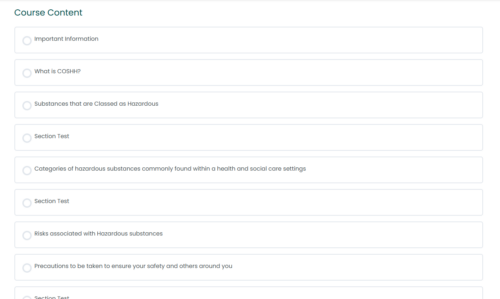
 Aim: To be able to work with hazardous substances safely and effectively. Objectives: By successfully completing this course you will be able to:
- Describe what COSHH stands for
- Identify 5 substances classed as hazardous substances
- Identify 3 different categories of hazardous substances commonly found in a health and social care setting
- List at least 6 likely risks associated with hazardous substances
- Describe the precautions to be taken to ensure your safety and the safety of others around you
- Identify 5 steps in COSHH regulations
- List 5 responsibilities you will have when handling hazardous substances
-
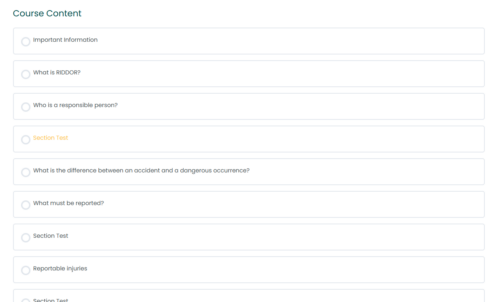
 Aim: To be able to understand the purpose of RIDDOR and comply with this regulation. Objectives: By successfully completing this course you will be able to:
- Describe what RIDDOR is
- Describe what a responsible person is, according to RIDDOR
- Identify the difference between an accident and a dangerous occurrence
- Describe what RIDDOR states must be reported
- Describe when reporting must be done
- Describe which records need to be stored and why
- Describe your role as an employee in this process
-

 Aim: To be able treat disabled individuals equally and equitably. Objectives: By successfully completing this course you will be able to:
- Explain what a disability is
- Describe what is contained in the Equality Act 2010, with regards to preventing discrimination against disabled individuals
- Explain the distinction between visible and invisible disabilities
- Describe the concepts of equality and equity
- Describe the social model of disability
- Identify 10 ways that an individual may require assistance due to a disability
- Identify 5 reasonable adjustments to your behaviour that you can make to assist disabled individuals around you
- Explain why it is important to follow the basics of etiquette, and not to make assumptions about disabled people
-

 Aim: To know how to embed inclusivity within your organisation and wider practices, with regards to disabilities and mental health. Objectives: By successfully completing this course you will be able to:
- Describe the Disability Confidence Framework
- List at least 3 benefits of the Disability Confidence Framework
- Explain about the different levels of the Disability Confidence Framework
- Describe how long a typical Disability Confidence Framework accreditation lasts for
- Describe how the Voluntary Reporting Framework works
- Describe the actions necessary to achieve or maintain the different levels of the Disability Confidence Framework
-
 Aim: To develop a culture where your team can achieve their full potential. Objectives: By successfully completing this course you will be able to:
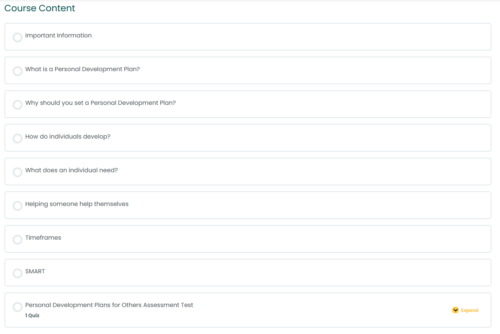
- Identify 5 important aspects of a personal development plan
- List at least 3 benefits of setting and using personal development plans
- Describe 2 key theories of personal development
- Identify what an individual needs to develop
- Explain how to help an individual identify the most effective ways for them to develop
- Describe how you can guide an individual in setting realistic timeframes for their development
- Describe what a SMART target is
-
 Aim: To be able to promote good sexual and reproductive health. Objectives: By successfully completing this course you will be able to:
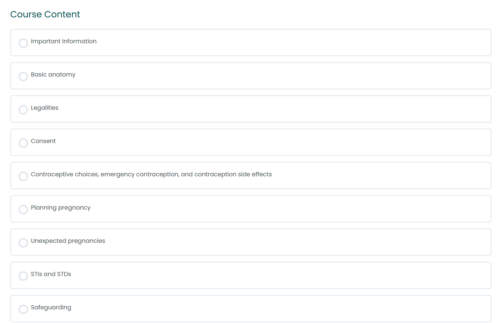
- Describe the legal standing around your involvement in caring for an individual’s sexual health
- Identify the basic anatomy involved in sexual health
- Describe the specifics of consent, and where consent has and has not been given
- List 10 different contraceptive methods, and their side effects
- Describe what do when an individual may be planning a pregnancy
- Describe what to do when an individual has an unexpected pregnancy
- Identify 5 Sexually Transmitted Infections and Sexually Transmitted Diseases
- Describe what to do when an individual is concerned they may have a Sexually Transmitted Infection or Sexually Transmitted Disease
- Identify the appropriate steps involved when safeguarding an individual’s sexual health
- Explain how to get an individual to be involved in their own sexual health
-
 Aim: To be able to support individuals with care and understanding, and reduce their need to self-harm Objectives:
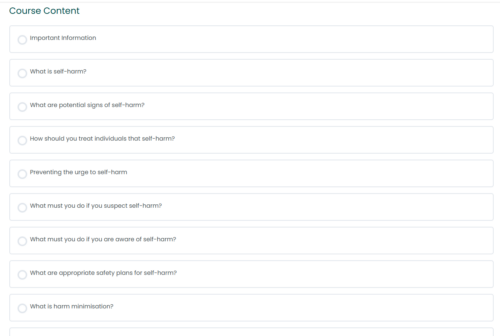
- To describe what self-harm is
- To identify at least 6 signs of self-harm
- To describe how to treat individuals that self-harm with care and compassion
- To describe your safeguarding duties if you suspect an individual is self-harming
- To be able to appropriately respond to signs of self-harm
- To describe your safeguarding duties if an individual is self-harming
- To describe how to deliver appropriate care after an individual has self-harmed
- To be able to describe what harm minimisation strategies are, and how they should be used
- To be aware of potential intervention strategies for long-term progress
-
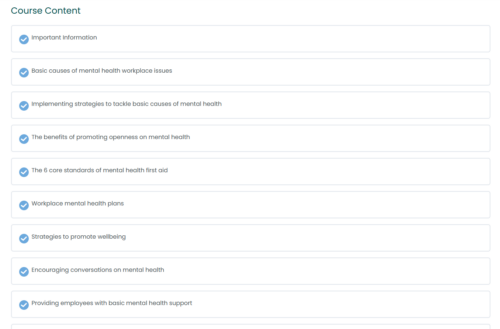
 Aim: To ensure that all members of staff are supported in the workplace. Objectives: By successfully completing this course you will be able to:
- Identify a minimum of 5 basic workplace causes of mental health issues
- Explain how to implement at least 5 strategies to tackle basic causes of basic mental health issues
- Describe the benefits of promoting openness about mental health
- Identify the 6 core standards of mental health first aid
- Explain how to create a workplace mental health plan
- List at least 6 strategies that you can implement to promote the wellbeing of all members of staff
- Identify at least 3 benefits of encouraging conversations about mental health
- Explain why it is important to provide employees with basic mental health support
- Identify at least 10 factors of the work environment of your team members that promote mental health
- Explain how to implement proactive opportunities for your team members to discuss their health and wellbeing, and the impact their work environment has on it, with their team leader(s)
- List at least 6 techniques for training individuals to be able to treat their colleagues in a way that does not negatively impact their mental health
- List at least 3 benefits of regularly monitoring the mental health of your team members
- List at least 3 methods of monitoring the mental health of your team members
- Explain what an annual wellbeing report is, and to know how to create one
-

 Aim: To keep people safe by reducing the risk of, and knowing how to react to, fire in the workplace. Objectives: By successfully completing this course you will be able to:
- Describe the characteristics of fire, smoke, and toxic fumes
- Identify at least 6 fire hazards in the work environment
- Explain how to recognise any significant findings of fire risk evaluations
- Explain how to perform basic fire prevention, and the importance of local fire safety protocols
- Describe when it is necessary to raise the fire alarm, how to raise the fire alarm, and what to do if the fire alarm is raised
- Describe the actions to take if fire breaks out or if smoke is detected
- Identify the different types of fire extinguishers
- Explain about the different uses of fire extinguishers
- Identify the safety precautions associated with fire extinguishers
- Explain about the importance of being familiar with evacuation procedures and associated escape routes
-
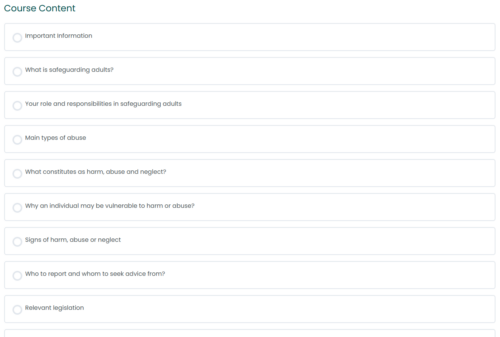
 Aim: To protect people and keep them safe from harm and abuse in a health care setting. Objectives: By successfully completing this course you will be able to:
- Describe what is meant by safeguarding adults
- Describe your role and responsibilities in safeguarding adults
- List at least 8 categories of abuse
- Identify what constitutes as harm, abuse and neglect
- Describe why an individual may be vulnerable to harm or abuse
- Identify at least 8 signs of harm, abuse or neglect
- Identify who to report if you know an individual has been abused
- To be able to describe the relevant legislation
-

 Aim: To ensure the safe and secure handling of information within a healthcare setting Objectives: By successfully completing this course, you will be able to:
- Identify at least 7 key principles of information governance
- Describe why information governance is important
- List at least 2 pieces of legislation related to information governance
- List at least 3 different types of information
- Describe how to comply with relevant legislation on information governance
- Identify at least 6 threats to data security
- Identify any breaches of data protection and how to report them
- Describe how to implement security measures to keep confidential information safe
- List the 8 Caldicott Principles
- Recognise how to gain the consent of an individual if it is deemed necessary to share information
- Identify your responsibilities as a healthcare professional under the Freedom of Information Act 2000
- State the benefits of good informational governance
-
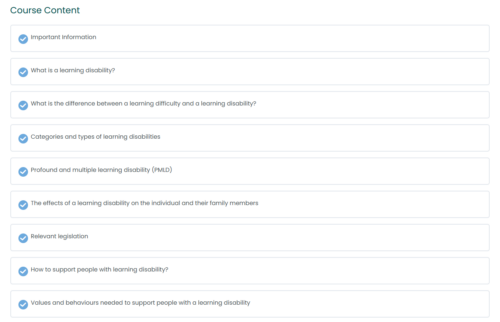
 Aim: Support disabled people to live, learn and work as independently as they choose. Objectives: By successfully completing this course you will be able to:
- Explain what a learning disability is
- Identify the difference between a learning difficulty and a learning disability
- List at least 3 categories and 10 types of learning disabilities
- Explain what is profound and multiple learning disability (PMLD)
- Explain the effects of learning disability on the person and their family
- List at least 3 pieces of legislation relevant to learning disability
- Describe how to support people with learning disability
- List 10 values and behaviours needed to support people with a learning disability
- Describe the role of partners in care and support
-
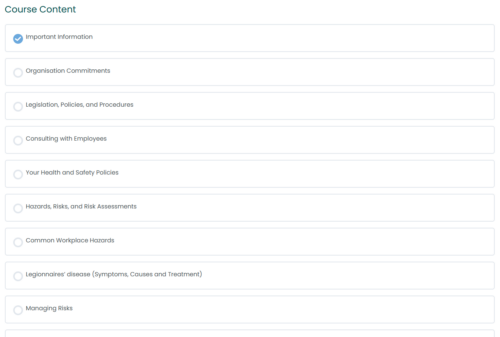
 Aim: To ensure the health, safety, and wellbeing of people in your healthcare organisation Objectives: By successfully completing this course, you will be able to:
- State why organisations have a commitment to delivering services safely
- Describe at least 4 ways of acting that are in line with the legislation, policies and procedures around the health and safety
- State how to find your organisation’s arrangements for consulting with employees on health and safety matters
- Identify how to find your organisation’s health and safety policies
- State the meaning of the terms hazard, risk, and risk assessment
- Describe at least 8 common workplace hazards
- Describe the symptoms, causes and treatment of Legionnaires disease
- Recognise how identified risks can be managed
- Identify at least 5 ways to apply and promote safe working practices in your job role
- List at least 4 actions you can take to ensure patient safety
- Recognise the importance of reporting health and safety concerns
- State the correct reporting processes used to gather information to help with managing risks
- Identify the appropriate methods to raise health and safety concerns, and who they should be raised to
- Describe your responsibilities in reporting incidents, ill health, and near misses
-
 Aim: To understand more on how to protect people safe from harm and abuse in a health care setting. Objectives: By successfully completing this course you will be able to:
- Understand what constitutes harm, abuse and neglect and be able to identify any signs of harm, abuse, or neglect
- List what actions to take if they have concerns, including to whom you should report your concerns and from whom to seek advice
- Describe what is meant by effective advocacy
- Identify your professional role, responsibilities, and professional boundaries and those of your colleagues in a multidisciplinary team and multi-agency setting
- List the risk factors for radicalisation and know who to contact regarding preventive action and supporting those persons who may be at risk of, or are being drawn into, terrorist related activity
- Describe how to maintain appropriate records including being able differentiate between fact and opinion
- Identify the appropriate and relevant information and how to share it with other teams
- Document safeguarding concerns in a format that informs the relevant staff and agencies appropriately
- Identify how and when to refer to social care in accordance with organisational policies if you have identified an adult safeguarding concern
-

 Aim: To understand what anxiety is and how to assist people who have anxiety Objectives: By successfully completing this course, you will be able to:
- Recognise at least 10 signs of anxiety
- Describe what an anxiety disorder is
- State at least 5 symptoms of a Generalised Anxiety Disorder
- Recognise that a Generalised Anxiety Disorder can affect different people in different ways
- Recognise at least 4 situations that could lead someone to develop an anxiety disorder
- Describe what Cognitive Behavioural Therapy is
- List at least 3 techniques for helping a person with anxiety to cope with the symptoms of an anxiety disorder
- List at least 3 self-help techniques for coping with the symptoms of an anxiety disorder
-

 Aim: To be able to recruit in a way that is safe for children and adults in your care Objectives: By completing this course, you will be able to:
- Recognise the importance of the recruitment and selection process
- Identify any training and safeguarding requirements
- State 11 important steps in the recruitment and selection process
- Describe what safeguarding requirements are inherent to certain jobs
- Explain how to ensure a fair process while minimising risks
- State the safeguarding requirements of a role within the application form
- Recognise the importance of an identity check
- Explain what should be included in pre-application information
- Identify the purpose of a DBS check
- State what a regulated activity is
- Describe what a single central record is
- State at least 5 essential interview skills
-
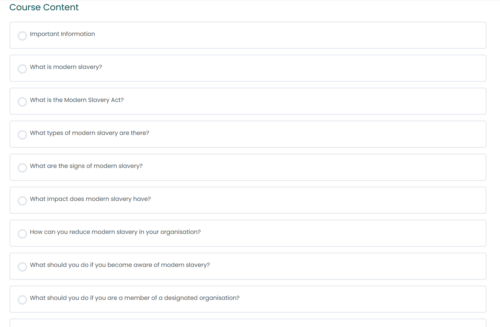
 Aim: To reduce the risk of modern slavery in your organisation Objectives: By successfully completing this course you will be able to:
- Define what modern slavery is
- Describe what the Modern Slavery Act 2015 entails
- List at least 7 types of modern slavery
- List at least 7 signs of modern slavery
- State the impact modern slavery has, on both people and businesses
- Recognise at least 6 measures to reduce modern slavery in your organisation
- Describe what to do should you have a concern about modern slavery in your organisation
- Describe what to do if you are a member of a designated organisation and you encounter an instance of modern slavery
-

 Aim: To be able to guide an individual with limited or no vision comfortably and effectively Objectives: By successfully completing this course you will be able to:
- Describe what sight loss is
- List the 6 most common eye conditions and causes of sight loss
- Describe the different levels of sight loss
- List 3 relevant legal policies concerning sight loss
- State 5 of the best ways to approach an individual who is partially sighted or severely sight impaired
- Describe the best ways to comfortably, safely, and effectively guide an individual with sight loss
-

 Aim: To be able to recognise and prevent radicalisation within healthcare Objectives: By successfully completing this course you will be able to:
- State what Prevent is
- Describe the objectives of the Prevent strategy
- List your responsibilities with regards to Prevent
- Identify 3 signs of radicalisation
- List 5 situations that may make someone more vulnerable to being radicalised
- State how direct and indirect factors can change the thoughts and behaviours of an individual
- State 2 organisations to contact if you are worried that someone is being radicalised
- State how to raise concerns
- State the importance of sharing information
-
 Aim: To develop a clear understanding of your role and the importance of personal development Objectives: By successfully completing this course you will be able to:
- Understand your role
- Work in ways that have been agreed with your employer
- Understand the concept of working relationships in adult social care
- Explain how to work in partnership with others
- Describe the importance of a personal development plan
- Agree your own personal development plan
- Explain how to develop your own knowledge, skills and understanding
-
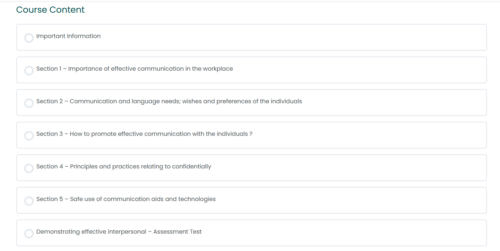
 Aim: To develop a clear understanding of effective communication and interpersonal skills Objectives: By successfully completing this course you will be able to:
- Understand the importance of effective communication in the workplace
- Understand how to meet the communication and language needs, wishes and preferences of individuals
- Understand how to promote effective communication with individuals
- Understand the principles and practices relating to confidentially
- Use a range of communication methods, and support the appropriate and safe use of communication aids and technologies
-
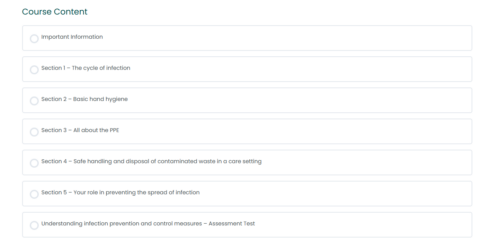
 Aim: To develop a clear understanding and demonstration of good infection prevention and control measures Objectives: By successfully completing this course you will be able to:
- Describe the cycle of infection
- Demonstrate how to maintain basic hand hygiene
- To know what constitutes PPE, name five items of PPE, and be able to describe when it must be worn
- Understand the steps involved in safe handling and disposal of contaminated waste in a care setting
- Describe the things you can do to prevent the spread of infection
-
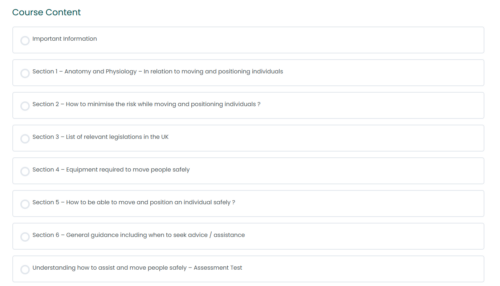
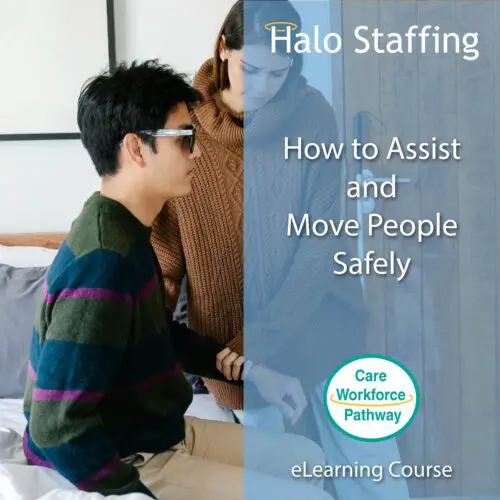 Aim: To develop a clear understanding of assisting and moving people safely in order to avoid any manual handling injuries Objectives: By successfully completing this course you will be able to:
- Understand anatomy and physiology in relation to moving and positioning individuals
- Describe how to minimise the risk while moving and positioning individuals
- List the relevant legislations in the UK
- List the equipment that may be required to move people safely
- Move and position and individual safely in order to avoid any manual handling injuries
- Know when to seek advice and/or assistance from others with regards to moving and positioning an individual
-
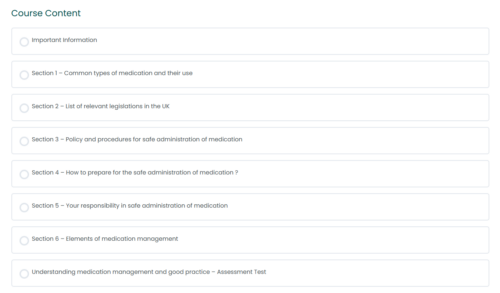
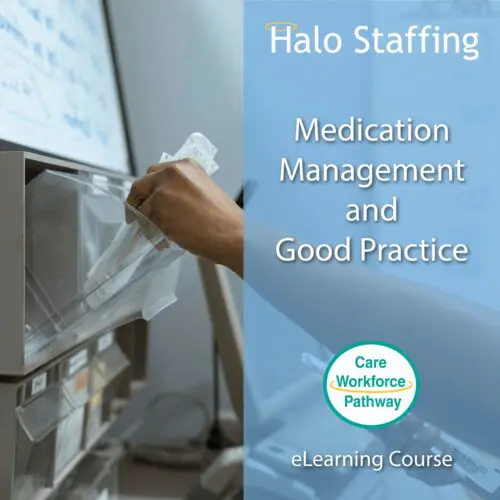 Aim: To develop and clear understanding of medication management and good practice Objectives: By successfully completing this course you will be able to:
- Know about the common types of medication and their use
- List of relevant legislations in the UK
- Understand policy and procedures relevant to safe administration of medication
- Explain how to prepare for the safe administration of medication
- Describe your responsibility in safe administration of medication
- Understand the elements of medication management
-
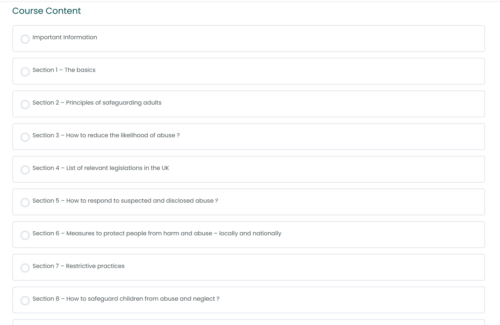
 Aim: To develop and clear understanding of how to reduce the likelihood of harm and abuse Objectives: By successfully completing this course you will be able to:
- Establish the basics about this subject
- Understand the principles of safeguarding adults
- Describe how to reduce the likelihood of abuse
- List of relevant legislations in the UK
- Describe how to respond to suspected or disclosed abuse
- Understand how to protect people from harm and abuse - locally and nationally
- Understand restrictive practices
- Explain how to safeguard children
- Describe how you can demonstrate dignity and respect when providing heath and care services
- List your responsibilities in safeguarding individuals
- Explain where you can get more information to prevent and protect individuals from harm and abuse